Translating recipes - 6 Minute English
TL;DR
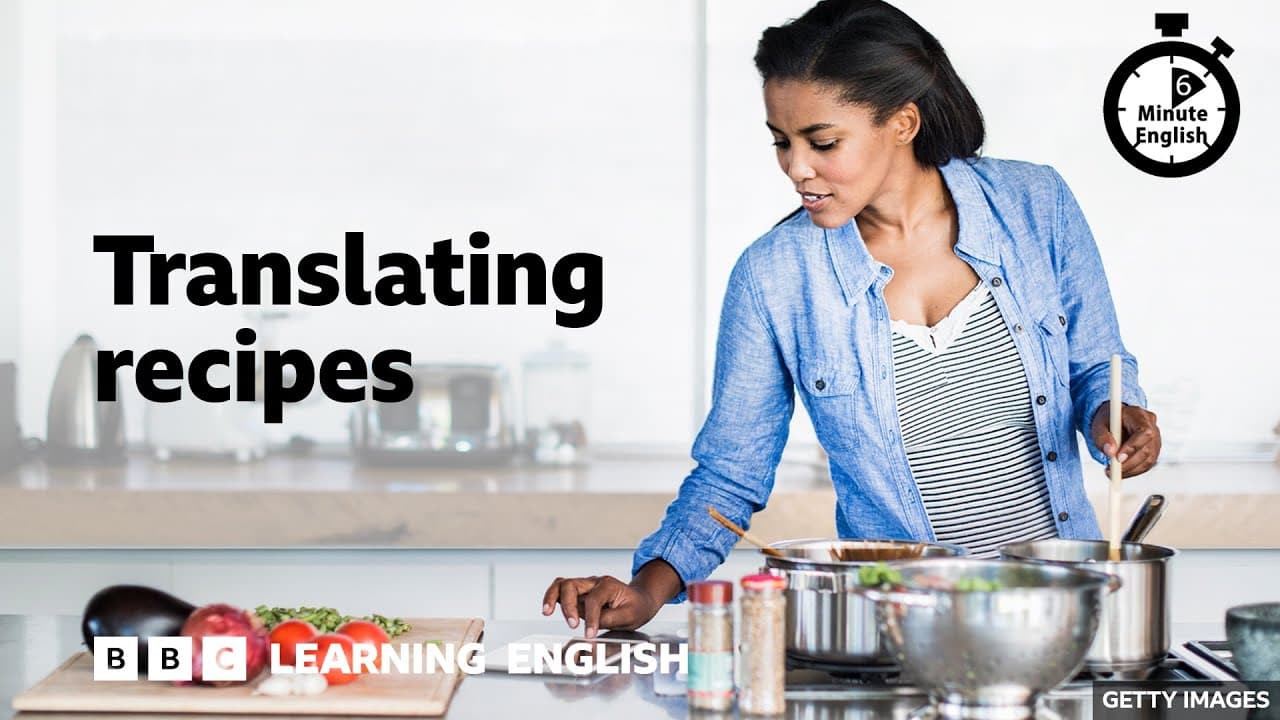
Recipe translators bring international dishes to British tables by translating ingredients and instructions into English while preserving each recipe’s heart. Rosa Llopis explains that this requires culinary knowledge, cultural understanding, and practical substitutions; when lemongrass is difficult to find, for example, she recommends lemon juice to mimic its flavour. Read on to discover how translators help cooks replicate recipes and learn the programme’s key vocabulary.
Transcript
Hello, this is 6 Minute English from BBC Learning English. I'm Sam. And I'm Rob. The British are not famous for their food or rather they are famous, but for bad food. While French and Italian cooking is admired around the world, the UK has a reputation for overboiled vegetables, mushy peas and black pudding, a dish made from pig's blood. Oh, that ... Read More
Key Insights
- British cuisine is historically known for its blandness, but recent decades have seen a surge in international and non-traditional foods.
- Recipe translators play a crucial role in making international recipes accessible by translating instructions and ingredients into English.
- Translators must understand both the culinary vocabulary and the cultural context of recipes to preserve their essence.
- Rosa Llopis, a recipe translator, highlights the lack of specialization in gastronomic translation in Spain, prompting her career in this niche.
- Translators often face challenges with ingredients that are not available in the target country, requiring them to find suitable substitutes.
- The goal of recipe translation is to enable readers to replicate dishes accurately, preserving the original taste and experience.
- The process involves more than direct translation; it requires creativity and culinary knowledge to maintain the integrity of the dish.
- Despite improvements in British cuisine, some traditional foods like haggis still carry a negative reputation according to surveys.
Install to Summarize YouTube Videos and Get Transcripts
Explore YouTube Video Summarizer or Get YouTube Transcript Extractor
Questions & Answers
Q: What do recipe translators do?
Recipe translators translate a recipe’s ingredients and cooking instructions from one language into another, such as English. They also preserve the heart of the recipe so readers can reproduce the intended dish.
Q: Why did Rosa Llopis specialise in recipe translation?
Rosa began working as an interpreter for Le Cordon Bleu, the French cuisine school. She realised there was no specialisation in gastronomy or cooking translation in Spain, so she decided to focus on recipe translation.
Q: What challenges do recipe translators face?
They must know vocabulary for ingredients and cooking techniques while preserving the recipe’s heart. They may also need to address ingredients that are difficult to find in the country where readers will prepare the dish.
Q: How do recipe translators handle ingredients that readers cannot find?
They offer substitute ingredients that can mimic the original flavour or result. Rosa says this is necessary because readers need to be able to replicate the recipes in her cookbook.
Q: What can replace lemongrass when it is difficult to find?
Rosa recommends using lemon juice to mimic the flavour of lemongrass. This gives readers an accessible alternative when lemongrass is unavailable in shops.
Q: What does it mean to replicate a recipe?
To replicate something means to make or do it again in exactly the same way. For Rosa, a successful cookbook must enable readers to replicate its dishes.
Q: How has British food changed over the last twenty years?
Britons have embraced international foods such as Indian curry and Asian rice dishes. Vegetarian and vegan food has also become part of the rise in non-traditional cooking.
Q: Which UK food was voted the worst in the 2019 YouGov survey?
Haggis was voted the worst UK food in the 2019 YouGov survey discussed in the programme. The Scottish dish is made using a sheep’s stomach.
Summary & Key Takeaways
-
The podcast discusses the evolving landscape of British cuisine, which has embraced international flavors and non-traditional cooking styles over recent years. Recipe translators are essential in this process, helping to bridge cultural and linguistic gaps by translating international recipes into English.
-
Rosa Llopis, a recipe translator, shares her experience and the challenges she faces in her work. She emphasizes the importance of understanding both culinary terms and cultural nuances to produce accurate and accessible cookbooks for English-speaking audiences.
-
Translators must often find alternative ingredients to mimic unavailable ones, ensuring that readers can replicate the dishes authentically. The podcast also touches on the enduring negative perceptions of certain British dishes, despite the country's culinary improvements.
Read in Other Languages (beta)
Share This Summary 📚
Summarize YouTube Videos and Get Video Transcripts with 1-Click
Try YouTube Summary with ChatGPT & Claude or YouTube Transcript Generator
Explore More Summaries from BBC Learning English 📚
Summarize YouTube Videos and Get Video Transcripts with 1-Click
Try YouTube Summary with ChatGPT & Claude or YouTube Transcript Generator