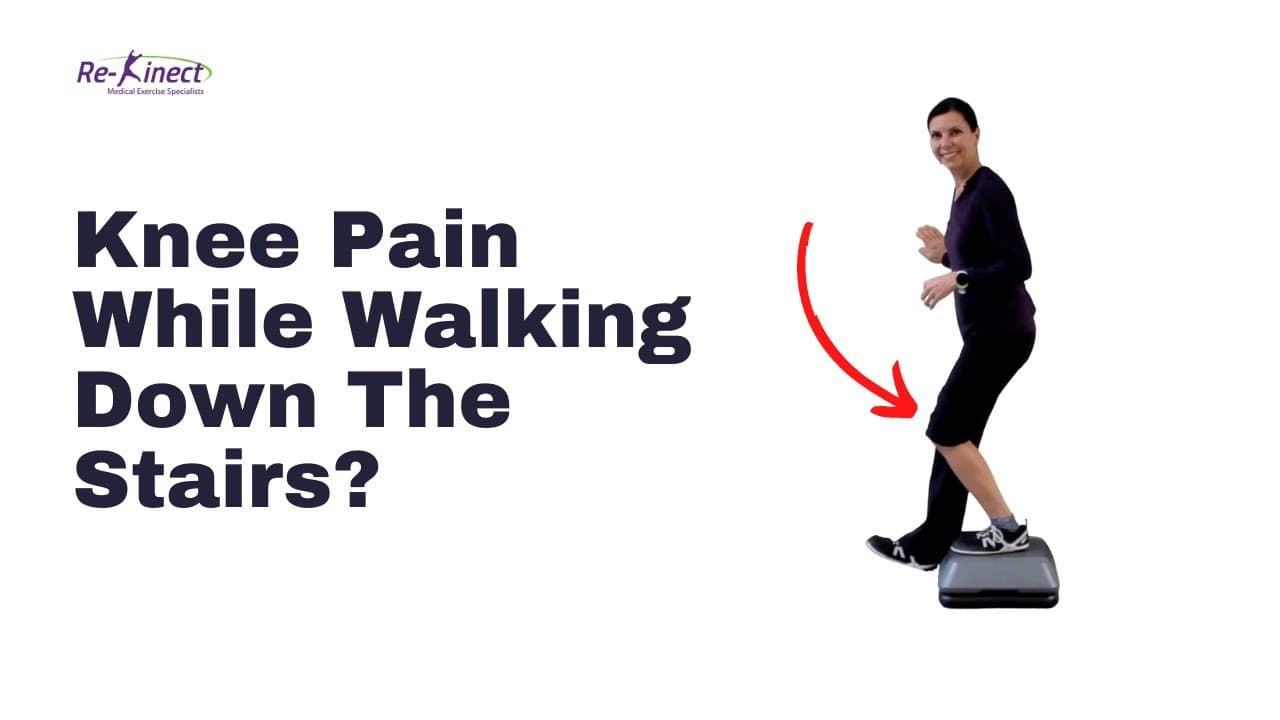
Knee Pain When Walking Down The Stairs? Do this!
TL;DR
Learn simple mobility exercises to improve ankle and knee mechanics when walking downstairs and reduce knee pain.
Transcript
the content of this video is not medical advice or substitute for physical therapy please consult your physician or physical therapist before starting any exercise program today I want to share with you some tips on how you can improve your mechanics walking downstairs so you don't have knee pain now whether you started having knee pain walking dow... Read More
Key Insights
- 🏥 Knee pain while walking downstairs is likely a mobility issue, even after physical therapy.
- 🦵 Ankle mobility exercises, such as using an elastic band, can help improve mechanics and reduce knee pain.
- 💪 Tension along the quadriceps tendon may cause discomfort when stepping down, but stretching may not be as effective as mobility work.
- ♀️ Going down on all fours or using a dog leash can help improve knee flexion and lengthen the quadriceps tendon.
- 🔁 Repeat ankle and knee mobility exercises 8-10 times for best results.
- ⚕️ Consult with a physician or physical therapist before starting any exercise program.
- 💼 Share this video with friends and family who may benefit from the information.
- 👣 Remember to bend the ankle and knee first while stepping down, allowing the hip to follow naturally for added motion.
Install to Summarize YouTube Videos and Get Transcripts
Explore YouTube Video Summarizer or Get YouTube Transcript Extractor
Questions & Answers
Q: How can ankle exercises with an elastic band improve mechanics when walking downstairs?
Ankle exercises with an elastic band can improve mechanics when walking downstairs by improving ankle bending and joint gliding. By strengthening the ankle and ensuring proper foot positioning, the exercises help reduce knee pain caused by improper mechanics.
Q: Can mobility work for the quadriceps tendon help reduce tension and discomfort in the knee when stepping down?
Yes, mobility work for the quadriceps tendon can help reduce tension and discomfort in the knee when stepping down. By performing exercises that focus on improving knee flexion and lengthening the quadriceps tendon, individuals can experience greater ease and reduced pain when descending stairs.
Q: What if I'm unable to be on my knees for mobility work?
If you are unable to be on your knees for mobility work, you can use a dog leash or stretching strap to bend your knee while lying on your belly. By performing the bending and straightening motion, you can still work on improving the length of the quadriceps tendon without putting pressure on your knees.
Q: Is it natural to lower the opposite hip when stepping down?
Yes, it is natural to lower the opposite hip when stepping down. By bending the ankle and knee first, individuals can then lower the other hip slightly to gain additional motion. This motion mimics the natural movement when walking downhill and can provide a little extra support and ease when descending stairs.
Q: How often should the ankle and quadriceps mobility exercises be performed?
It is recommended to perform the ankle and quadriceps mobility exercises eight to ten times each session. It is important to ensure that the exercises are done within a pain-free range of motion and to gradually increase the intensity and repetitions over time for optimal results.
Summary & Key Takeaways
-
Knee pain when walking downstairs is often due to a mobility problem, even after physical therapy.
-
Ankle exercises with an elastic band can help improve ankle bending and joint gliding.
-
Mobility work for the quadriceps tendon can reduce tension and discomfort in the knee when stepping down.
Read in Other Languages (beta)
Share This Summary 📚
Summarize YouTube Videos and Get Video Transcripts with 1-Click
Try YouTube Summary with ChatGPT & Claude or YouTube Transcript Generator