How to Troubleshoot Espresso Extraction Issues
TL;DR
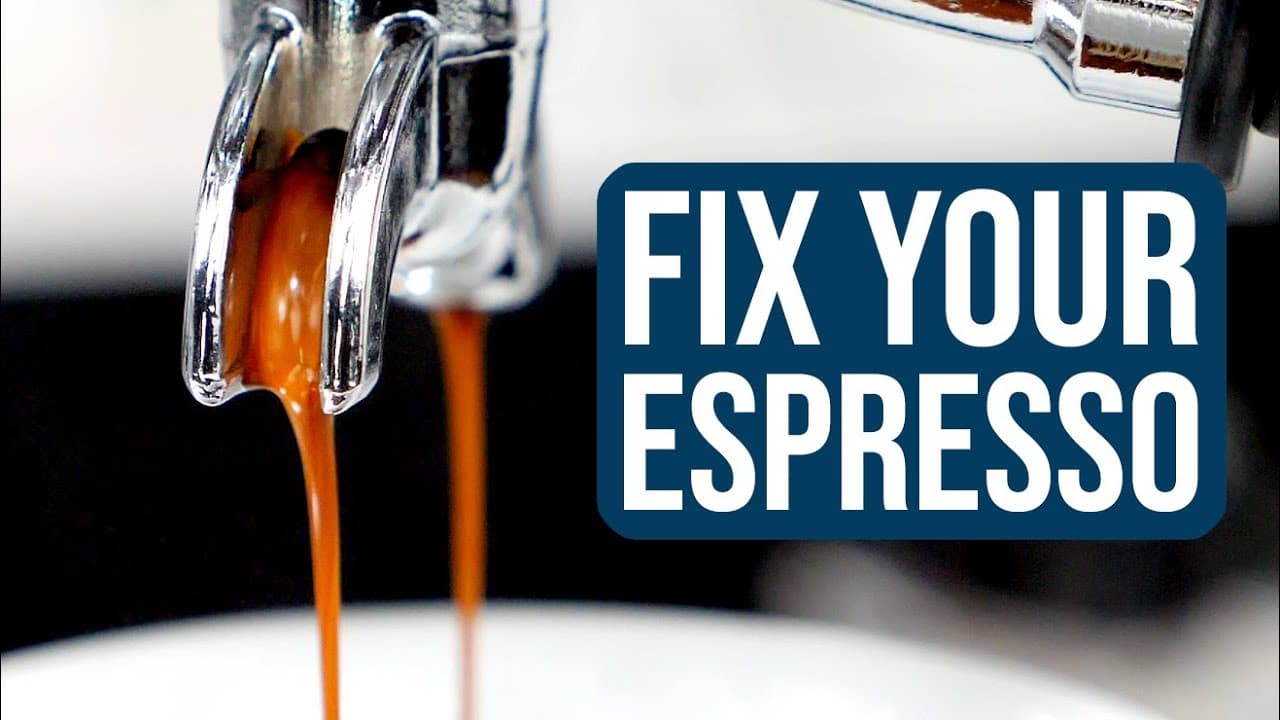
To fix common espresso extraction issues, adjust your grind size, coffee dose, and brew temperature. For fast shots, grind finer; for slow shots, grind coarser. Sour tastes indicate under-extraction, requiring finer grinds or longer shots. Bitter tastes suggest over-extraction, needing coarser grinds or shorter shots. Consistency in technique is key to achieving the desired flavor.
Transcript
hey everyone i'm aj from whole latte love today i'm going to go over some of the most common issues that people encounter when starting out making espresso and how to fix them i'll cover common questions like why is my shot running too fast or too slow why does my espresso taste sour or bitter where's the crema or why am i getting channeling before... Read More
Key Insights
- Consistency is crucial in espresso making; control variables like grind size and dose for repeatable results.
- Grind size affects shot timing; finer grinds slow extraction, while coarser grinds speed it up.
- Sour espresso indicates under-extraction; solve by grinding finer or increasing brew temperature.
- Bitter espresso suggests over-extraction; solve by grinding coarser or reducing brew temperature.
- Crema is not essential for a good shot; it's influenced by bean freshness and roast type.
- Channeling occurs when water finds paths of least resistance; monitor with a bottomless portafilter.
- Proper puck preparation minimizes channeling; distribute and tamp grounds evenly.
- Adjustments may be needed over time due to changes in beans, temperature, and humidity.
Install to Summarize YouTube Videos and Get Transcripts
Explore YouTube Video Summarizer or Get YouTube Transcript Extractor
Questions & Answers
Q: How to fix an espresso shot that runs too fast?
If your espresso shot runs too fast, it indicates under-extraction. To fix this, grind your coffee beans finer to increase the surface area and slow down the extraction process. Ensure your coffee dose is consistent and check your equipment for any necessary purging of old grounds. Consistency in technique is crucial for achieving the desired shot timing.
Q: What causes espresso to taste sour?
Sour espresso is typically a result of under-extraction. This can occur when the grind is too coarse, leading to insufficient contact time between water and coffee grounds. To correct sourness, grind your beans finer, increase the brew temperature, or extend the extraction time. These adjustments will enhance the dissolution of coffee solids, balancing the flavors.
Q: Why does my espresso taste bitter?
Bitter espresso usually indicates over-extraction, which occurs when the grind is too fine or the extraction time is too long. To reduce bitterness, grind your beans coarser, decrease the brew temperature, or shorten the extraction time. These changes will help prevent excessive dissolution of bitter compounds, resulting in a more balanced shot.
Q: How to increase crema in espresso shots?
To increase crema, use fresher beans, as they retain more carbon dioxide, which contributes to crema formation. Additionally, dark roasts and robusta beans tend to produce more crema. However, remember that crema is not essential for a good shot, and taste should be prioritized over appearance. Experiment with different beans and roasts to find your preference.
Q: What is channeling in espresso extraction?
Channeling occurs when water finds paths of least resistance through the coffee puck, leading to uneven extraction. It results in a muddy, unbalanced shot with both under- and over-extracted flavors. To minimize channeling, ensure even distribution and tamping of grounds, use a bottomless portafilter for monitoring, and consider grinding coarser if necessary.
Q: How to achieve consistent espresso shots?
Consistency in espresso shots is achieved by controlling variables such as grind size, coffee dose, and brew temperature. Use a scale for precise dosing, maintain uniform grind distribution, and adjust settings based on environmental changes like humidity. Regularly calibrate your equipment and make one change at a time to isolate and fix issues effectively.
Q: What is the ideal espresso extraction time?
The ideal espresso extraction time for a standard double shot is between 20 to 30 seconds, aiming for around two ounces of espresso, including crema. If using a scale, target a 1:2 brew ratio, meaning twice the weight of espresso as the coffee dose. Adjust grind size and dose to stay within this time frame while prioritizing taste over strict timing.
Q: How does grind size affect espresso extraction?
Grind size significantly affects espresso extraction by altering the surface area and flow rate. Finer grinds increase surface area, slow down the flow, and enhance extraction, while coarser grinds do the opposite. Adjusting grind size is essential for achieving the desired balance between sourness and bitterness, ensuring optimal flavor extraction in your espresso shots.
Summary & Key Takeaways
-
Espresso extraction issues often stem from grind size, coffee dose, and brew temperature inconsistencies. Finer grinds and increased brew temperature can fix sour tastes, while coarser grinds and reduced temperature address bitterness. Consistent technique and equipment adjustments are key.
-
Crema, although visually appealing, is not necessary for a good espresso shot. It is influenced by bean freshness and roast type. Channeling, which leads to uneven extraction, can be minimized by proper puck preparation and using a bottomless portafilter.
-
To achieve the best espresso extraction, control variables like grind size, coffee dose, and brew temperature. Regular adjustments may be needed as beans age and environmental conditions change. Consistency in technique is essential for achieving the desired flavor.
Read in Other Languages (beta)
Share This Summary 📚
Summarize YouTube Videos and Get Video Transcripts with 1-Click
Try YouTube Summary with ChatGPT & Claude or YouTube Transcript Generator
Explore More Summaries from Whole Latte Love 📚
Summarize YouTube Videos and Get Video Transcripts with 1-Click
Try YouTube Summary with ChatGPT & Claude or YouTube Transcript Generator