How to Win Any Argument Using Schopenhauer's Tactics
TL;DR
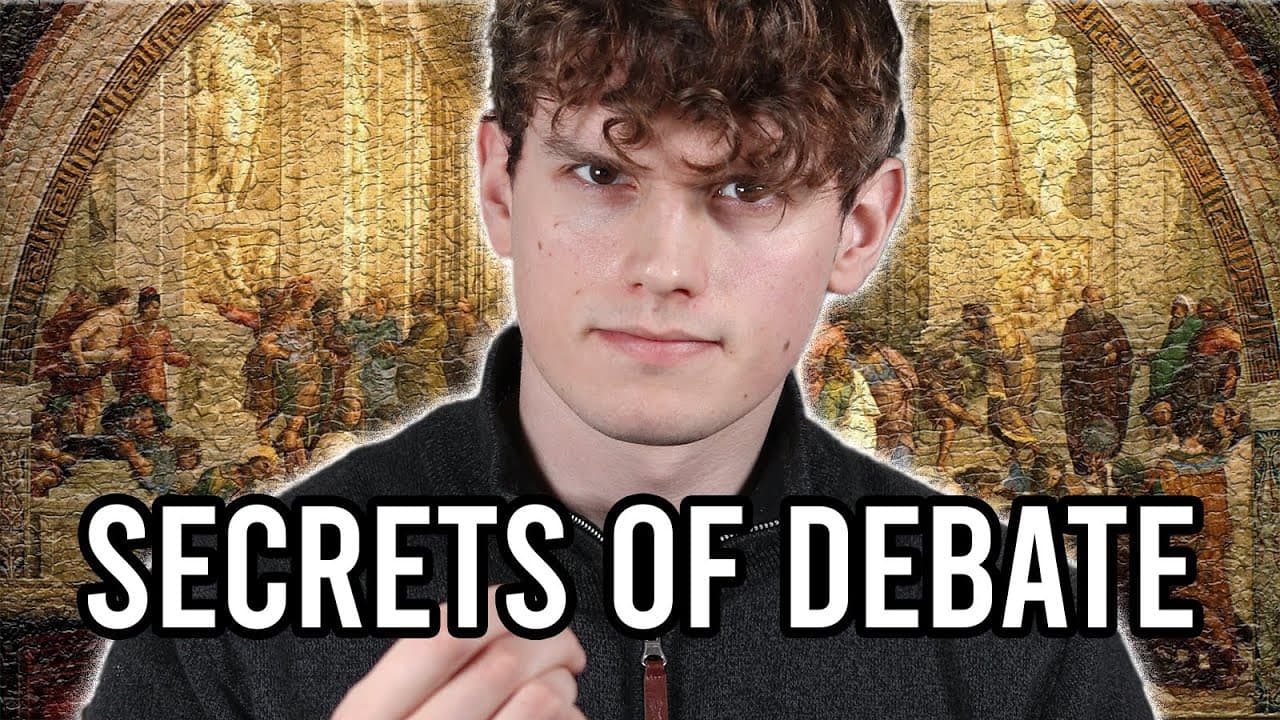
Schopenhauer's essay outlines tactics to win arguments by using deceitful techniques rather than logical reasoning. Techniques include exaggeration, interruption, and manipulation of metaphors to confuse opponents and sway audiences. These methods prioritize victory over truth, highlighting the importance of critical thinking to discern genuine arguments from sophistry.
Transcript
throughout history most philosophers have cared about a few key things truth logic and open inquiry but they have failed to provide what we really want to know how do we dominate our opponents in a debate making them look like a fool and us really really clever for that matter how do we do this even if they are right and we are wrong after all trut... Read More
Key Insights
- Schopenhauer's essay provides strategies for winning arguments through deceit rather than truth.
- Exaggeration is a key tactic, misrepresenting opponents' statements to make them appear unreasonable.
- Mot and Bailey arguments allow for shifting between strong and weak positions as needed.
- Endless questioning can confuse opponents, making them appear less knowledgeable.
- Controlling metaphors and labels can frame the debate in your favor, influencing audience perception.
- Common sense appeals can make complex arguments seem unnecessarily convoluted.
- Interrupting opponents can disrupt their arguments, making them appear less coherent.
- Making opponents angry can lead to emotional responses, undermining their credibility.
Install to Summarize YouTube Videos and Get Transcripts
Explore YouTube Video Summarizer or Get YouTube Transcript Extractor
Questions & Answers
Q: How can exaggeration be used in arguments?
Exaggeration is used by misrepresenting an opponent's statements to make them appear unreasonable. By taking their words to extreme conclusions, one can create a straw man argument that is easier to attack. This tactic distracts from the original point and makes the opponent's position seem less credible.
Q: What is a Mot and Bailey argument?
A Mot and Bailey argument involves presenting a strong, defensible position (the Mot) and a weaker, more controversial one (the Bailey). When challenged, the arguer retreats to the Mot, which is harder to refute. This tactic allows for shifting between positions to maintain an advantage in debate.
Q: How do endless questions confuse opponents?
Endless questions keep opponents on their toes, forcing them to address irrelevant or misleading inquiries. This barrage of questions prevents them from forming coherent thoughts, making them appear less knowledgeable. The tactic aims to undermine their credibility by presenting them as unable to handle the debate.
Q: Why is controlling metaphors important in arguments?
Controlling metaphors and labels frames the debate in one's favor, influencing how the audience perceives the issue. By choosing positive connotations for one's position and negative ones for the opponent's, the arguer can sway public opinion and make their stance appear more reasonable and appealing.
Q: How does appealing to common sense work in arguments?
Appealing to common sense involves using simple explanations that seem intuitively correct, even if they are not. This tactic exploits the preference for simplicity over complexity, making opponents' detailed explanations appear convoluted. It can lead audiences to favor the seemingly straightforward argument.
Q: What is the effect of interrupting opponents?
Interrupting opponents disrupts their arguments, causing them to lose their train of thought and appear less coherent. This tactic can make it difficult for them to present their points effectively, leading the audience to perceive them as unprepared or unsure of their position.
Q: How can making opponents angry benefit an arguer?
Making opponents angry can lead to emotional responses that undermine their credibility. When people become upset, they are more likely to drift off topic or become incoherent, making it easier for the arguer to dismiss their points and appear more composed and rational in comparison.
Q: What is the purpose of using a word salad in arguments?
Using a word salad involves speaking in complex, technical language to create the appearance of expertise. This tactic aims to impress the audience with perceived intelligence, even if the content lacks substance. It can intimidate opponents and make it difficult for them to challenge the arguer's points effectively.
Summary & Key Takeaways
-
Schopenhauer's essay offers a sarcastic take on winning arguments by using dishonest tactics rather than logical reasoning. Techniques include exaggeration, endless questioning, and controlling metaphors to confuse opponents and sway audiences. These methods highlight the importance of critical thinking to discern genuine arguments from sophistry.
-
The essay highlights the use of Mot and Bailey arguments, where one shifts between strong and weak positions as needed. It also emphasizes the power of controlling metaphors and labels to frame debates in one's favor, influencing audience perception.
-
Interrupting opponents and making them angry are tactics to disrupt their arguments and undermine their credibility. Schopenhauer's work serves as both a guide for manipulating arguments and a warning against such deceitful practices.
Read in Other Languages (beta)
Share This Summary 📚
Summarize YouTube Videos and Get Video Transcripts with 1-Click
Try YouTube Summary with ChatGPT & Claude or YouTube Transcript Generator
Explore More Summaries from Unsolicited advice 📚



Summarize YouTube Videos and Get Video Transcripts with 1-Click
Try YouTube Summary with ChatGPT & Claude or YouTube Transcript Generator