Could you give up fast fashion? 6 Minute English
TL;DR
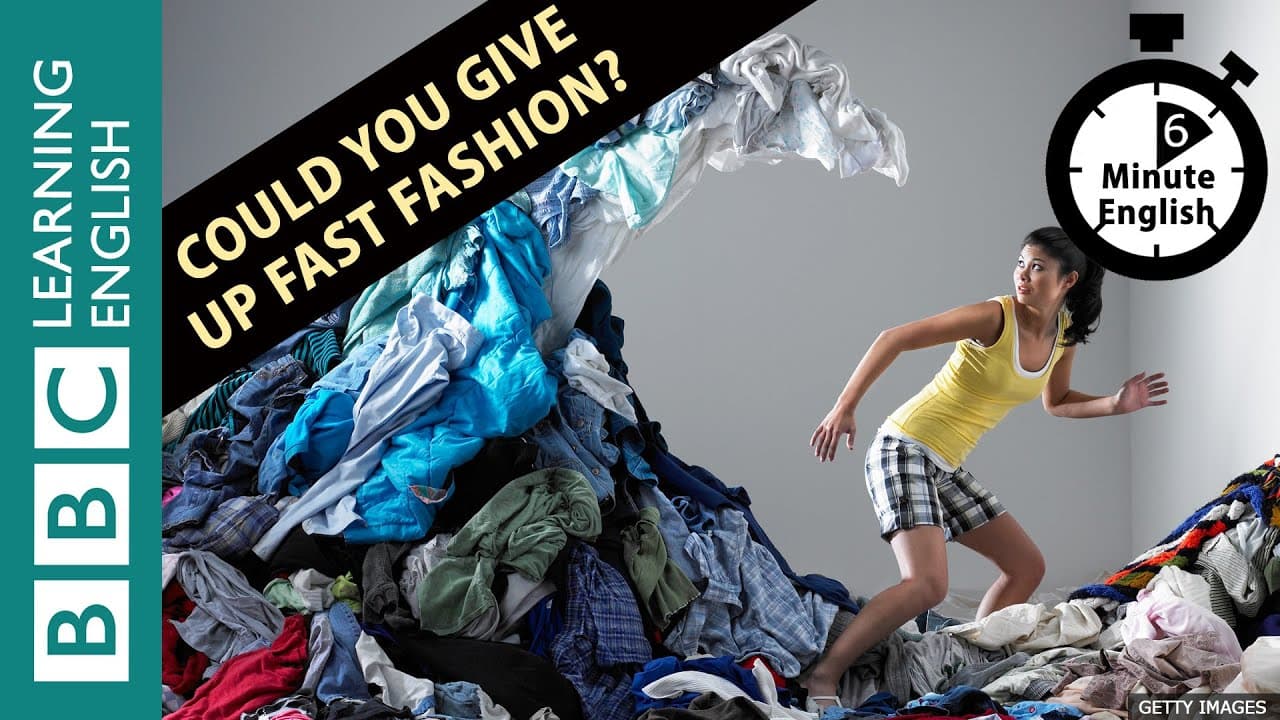
Yes, giving up fast fashion can mean buying second-hand or vintage clothes, making do with what you own, and mending items instead of replacing them. The programme reports that 234 million clothing items were sent to UK landfill in 2017, while social media and falling prices encourage frequent purchases. Read on to understand what drives fast fashion, its environmental effects, and the vocabulary used to discuss it.
Transcript
Georgina: Hello. This is 6 Minute English from BBC Learning English. I'm Georgina... Neil: And I'm Neil. Georgina: In this programme, we're talking about buying clothes and only wearing them a few times before buying more clothes! Neil: This is something known as fast fashion - it's popular, it might make us feel good, but it's not great for the en... Read More
Key Insights
- Fast fashion contributes significantly to global warming and increases landfill waste, with millions of clothing items discarded annually.
- The outsourcing of clothing production to developing countries has led to cheaper clothing prices in developed countries.
- Social media, particularly Instagram, fuels the trend of constantly buying new clothes to avoid being seen in the same outfit twice.
- The fashion industry engages in 'chasing the cheapest needle,' constantly seeking cheaper production options to undercut competitors.
- A backlash against fast fashion is emerging, with some people pledging to buy second-hand or vintage clothing instead.
- The global fashion industry is responsible for 1.2 billion tonnes of carbon emissions, highlighting its environmental impact.
- The concept of pledging involves publicly promising to make a change, such as buying no new clothes for a year.
- Fast fashion's rise stems from social media influence, leading to illogical consumer behavior driven by emotional rather than practical reasons.
Install to Summarize YouTube Videos and Get Transcripts
Explore YouTube Video Summarizer or Get YouTube Transcript Extractor
Questions & Answers
Q: What is fast fashion, and why is it a problem?
Fast fashion is the practice of buying clothes, wearing them only a few times, and then buying more. It contributes to global warming, sends discarded clothing to landfill, and releases fibre fragments into the sea when clothes are washed.
Q: Could you give up fast fashion?
The programme suggests buying second-hand or vintage clothes, making do with clothes you already have, and mending items when needed. Some people are publicly promising, or pledging, to buy no new clothes.
Q: How much clothing was sent to landfill in the UK in 2017?
In 2017, 234 million items of clothing were sent to landfill in the UK, according to the Enviro Audit Committee. The figure was much higher than the alternative guess of 23 million items.
Q: How does social media encourage fast fashion?
Fashion journalist Lauren Bravo says the feeling that people cannot be seen wearing the same thing twice stems particularly from social media. Some people buy outfits specifically to photograph and post on Instagram, while their friends' behavior creates invisible pressure to keep wearing something new.
Q: Why have clothes become cheaper?
Much clothing production has been outsourced to developing countries such as Indonesia, India, Bangladesh, and China. Fashion companies continually seek producers that can undercut competitors, making clothes cheaper for consumers in developed countries.
Q: What does “chasing the cheapest needle” mean?
“Chasing the cheapest needle” describes the fashion industry's constant search for companies that can manufacture clothing more cheaply. When one producer undercuts another by charging less for the same job, clothing prices continue to fall.
Q: What environmental impacts of fashion does the programme identify?
The programme says the global fashion industry releases 1.2 billion tonnes of carbon emissions. It also highlights discarded clothes accumulating in landfill and fibre fragments entering the sea when garments are washed.
Q: What does “backlash” mean in the discussion of fast fashion?
A backlash is a strong negative reaction to what is happening. Here, it refers to people resisting fast fashion by buying second-hand or vintage clothes, keeping what they already own, and repairing items.
Summary & Key Takeaways
-
Fast fashion, while popular and affordable, poses significant environmental challenges due to its contribution to landfill waste and carbon emissions. The trend is exacerbated by social media, which pressures individuals to constantly buy new clothes. A growing backlash sees people pledging to buy second-hand clothing instead.
-
The fashion industry's pursuit of cheaper production costs has led to outsourcing to developing countries, reducing clothing prices in developed nations. This practice is described as 'chasing the cheapest needle,' with companies undercutting each other to offer lower prices, contributing to overconsumption.
-
Social media platforms like Instagram drive a trend where people buy new clothes frequently to avoid repeating outfits in photos. This behavior is seen as wasteful and illogical, prompting some to pledge to buy fewer new clothes and focus on sustainable fashion choices.
Read in Other Languages (beta)
Share This Summary 📚
Summarize YouTube Videos and Get Video Transcripts with 1-Click
Try YouTube Summary with ChatGPT & Claude or YouTube Transcript Generator
Explore More Summaries from BBC Learning English 📚

Summarize YouTube Videos and Get Video Transcripts with 1-Click
Try YouTube Summary with ChatGPT & Claude or YouTube Transcript Generator