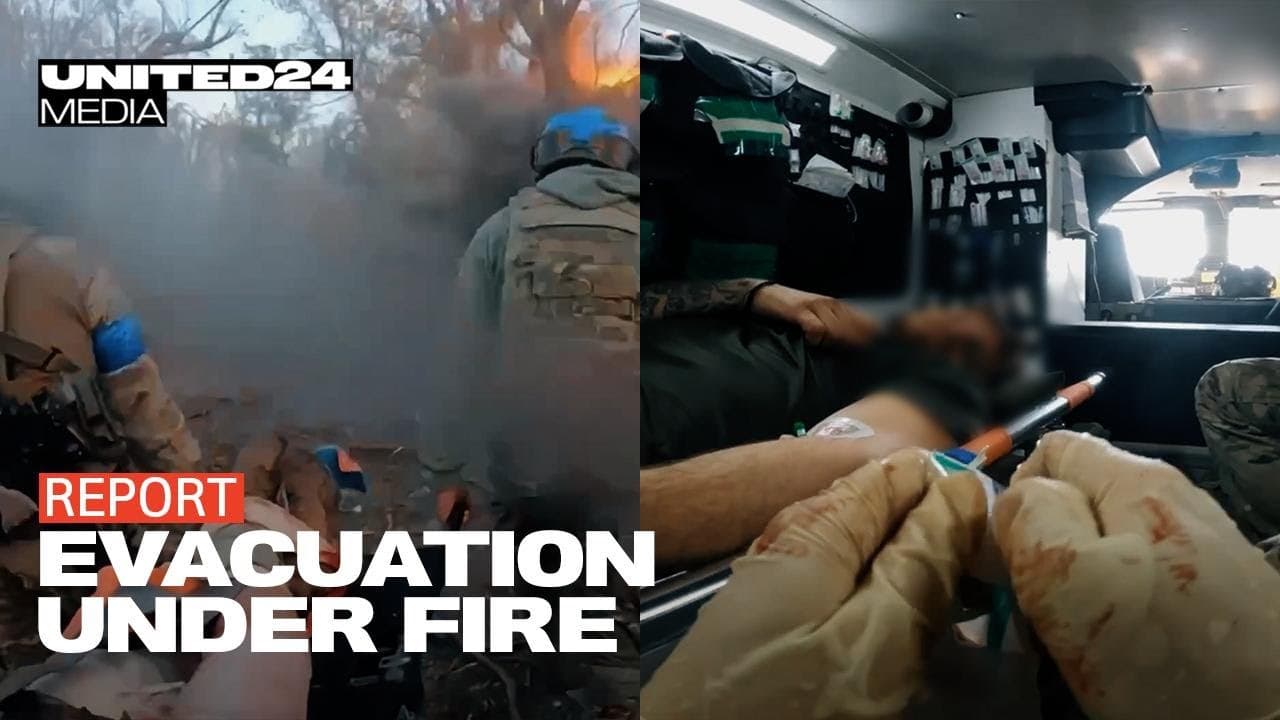
How Ukrainian Сombat Medics Fights to Save Infantry on the Frontline. 'Snake' Special Medical Unit
TL;DR
Combat medics risk lives to save Ukrainian soldiers.
Transcript
Read and summarize the transcript of this video on Glasp Reader (beta).
Key Insights
- The Snake Medical Group operates under the Defense Intelligence of Ukraine, performing complex medical evacuations in high-risk areas.
- Combat medics are dual-role professionals who provide medical aid and engage in combat, ensuring wounded soldiers receive timely care.
- Evacuation missions are perilous, involving minefields and drone threats, requiring meticulous planning and armored vehicles.
- The role of a driver in these missions is extraordinarily dangerous, as they navigate treacherous conditions to ensure safe evacuation.
- Advanced technology, including unmanned systems and UAVs, is increasingly used to support medics with supplies and reconnaissance.
- Despite technological aids, human involvement remains crucial due to the unpredictability and potential failures of robotic systems.
- Evacuation missions can take several hours or days, depending on battlefield conditions, highlighting the need for resilience and adaptability.
- The Snake Medical Group's efforts are vital for maintaining infantry morale and operational capability, enabling continued resistance.
Install to Summarize YouTube Videos and Get Transcripts
Explore YouTube Video Summarizer or Get YouTube Transcript Extractor
Questions & Answers
Q: What is the role of the Snake Medical Group?
The Snake Medical Group operates under Ukraine's Defense Intelligence, performing high-risk medical evacuations on the front lines. They navigate minefields and evade drone threats to ensure wounded soldiers receive timely medical care. Their operations are crucial for maintaining the morale and operational capability of the Ukrainian infantry.
Q: What challenges do combat medics face?
Combat medics face numerous challenges, including the dual responsibility of providing medical care and engaging in combat. They operate in dangerous conditions, often under fire, and must navigate minefields and evade drone attacks. Their role is critical in ensuring that wounded soldiers receive timely medical attention.
Q: Why is the role of a driver in these missions dangerous?
Drivers in medical evacuation missions face extreme danger as they navigate treacherous conditions, including minefields and drone threats. Their role is crucial in ensuring the safe transport of wounded soldiers. The use of armored vehicles is essential, but the unpredictable nature of the battlefield makes their job extraordinarily risky.
Q: How does technology aid medical evacuations?
Technology, including unmanned systems and UAVs, aids medical evacuations by providing supplies and reconnaissance support. These advancements help medics navigate dangerous conditions and deliver necessary equipment. However, the unpredictability of technology necessitates continued human involvement to ensure mission success.
Q: What is the future of battlefield rescue?
The future of battlefield rescue involves integrating advanced technology, such as unmanned systems and UAVs, to support medics with supplies and reconnaissance. Despite technological advancements, human involvement remains crucial due to the unpredictable nature of the battlefield and potential failures of robotic systems.
Q: How do combat medics contribute to military operations?
Combat medics contribute to military operations by ensuring that wounded soldiers receive prompt medical care, enabling the infantry to maintain strength and morale. Their dual role as fighters and medics is vital for operational success, allowing soldiers to continue their missions with confidence in medical support.
Q: What are the key components of a successful evacuation mission?
A successful evacuation mission involves meticulous planning, the use of armored vehicles, and the ability to navigate dangerous conditions, such as minefields and drone threats. Human involvement is essential, as is the integration of technology to support medics with supplies and reconnaissance. Resilience and adaptability are key.
Q: Why is human involvement still necessary in medical evacuations?
Human involvement is necessary in medical evacuations due to the unpredictable nature of technology and the battlefield. While unmanned systems and UAVs provide valuable support, they can fail or be compromised. Human adaptability and decision-making are crucial for overcoming unforeseen challenges and ensuring mission success.
Summary & Key Takeaways
-
The Snake Medical Group is part of Ukraine's Defense Intelligence, tasked with high-risk medical evacuations on the front lines. Their operations involve navigating minefields, avoiding drone attacks, and ensuring wounded soldiers receive prompt medical care. Despite technological advancements, human involvement remains crucial due to the unpredictable nature of the battlefield.
-
Combat medics in the Snake Medical Group serve dual roles, providing medical aid while engaging in combat. Their missions are meticulously planned, utilizing armored vehicles to navigate dangerous conditions. The group's efforts are essential for maintaining infantry strength and morale, allowing soldiers to continue fighting effectively.
-
The future of battlefield rescue involves integrating unmanned systems and UAVs to support medics with supplies and reconnaissance. However, the unpredictable nature of technology necessitates continued human involvement. The Snake Medical Group's resilience and adaptability are key to their success in saving lives under fire.
Read in Other Languages (beta)
Share This Summary 📚
Summarize YouTube Videos and Get Video Transcripts with 1-Click
Try YouTube Summary with ChatGPT & Claude or YouTube Transcript Generator
Explore More Summaries from UNITED24 📚
Summarize YouTube Videos and Get Video Transcripts with 1-Click
Try YouTube Summary with ChatGPT & Claude or YouTube Transcript Generator