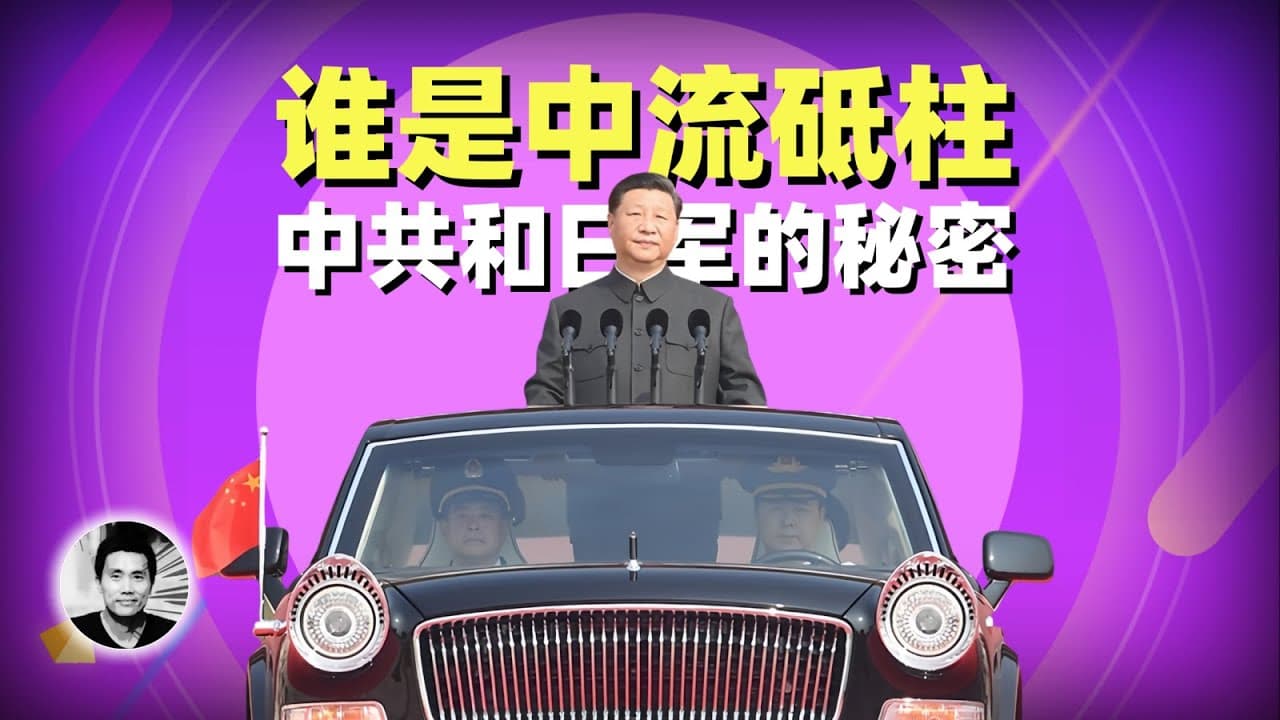
谁是中流:中共和日军的秘密
TL;DR
The CCP's complex relationship with Japan during the war is explored.
Transcript
Read and summarize the transcript of this video on Glasp Reader (beta).
Key Insights
- Mao Zedong expressed gratitude to Japan for indirectly aiding the CCP's rise, highlighting the complex relationship between the two during the war.
- The CCP's strategy during the Anti-Japanese War focused more on self-development than active resistance, as evidenced by Mao's policies.
- The CCP engaged in secret negotiations and collaborations with Japanese forces to counter the Nationalist government.
- Pan Hannian played a crucial role in the CCP's intelligence operations, establishing contacts with Japanese and Wang Jingwei's regime.
- The Hundred Regiments Campaign, although significant, was criticized by Mao for exposing CCP's strength to the Japanese.
- The CCP's collaboration with Japanese forces included agreements to cease hostilities and exchange strategic materials.
- Chiang Kai-shek was aware of the CCP's covert operations with the Japanese but was unable to counter them effectively.
- The CCP's narrative of the Anti-Japanese War has been shaped to emphasize its role as the main resistor, overshadowing other contributions.
Install to Summarize YouTube Videos and Get Transcripts
Explore YouTube Video Summarizer or Get YouTube Transcript Extractor
Questions & Answers
Q: What was Mao Zedong's perspective on Japan's role during the Anti-Japanese War?
Mao Zedong viewed Japan's invasion as an indirect aid to the CCP's rise to power. He believed that the Japanese occupation created conditions that allowed the CCP to expand its influence and territory. Mao expressed gratitude to Japan for this, despite the public stance of resistance, highlighting the complex relationship between the CCP and Japan during the war.
Q: How did the CCP's strategy differ from the Nationalist government's during the Anti-Japanese War?
The CCP's strategy during the Anti-Japanese War focused on self-preservation and development rather than direct confrontation with Japanese forces. Mao Zedong's policies emphasized guerrilla warfare and territorial expansion, using the war as an opportunity to strengthen the CCP. In contrast, the Nationalist government engaged in large-scale battles and suffered significant casualties, highlighting a more direct approach to resistance.
Q: What role did Pan Hannian play in the CCP's wartime strategy?
Pan Hannian was a key figure in the CCP's intelligence operations during the Anti-Japanese War. He established secret contacts with Japanese forces and the Wang Jingwei regime, facilitating negotiations and intelligence exchanges. His efforts helped the CCP secure strategic advantages and maintain a tacit understanding with the Japanese, despite the public narrative of resistance.
Q: Why was the Hundred Regiments Campaign criticized by Mao Zedong?
The Hundred Regiments Campaign was criticized by Mao Zedong because it exposed the CCP's strength to the Japanese, prompting a reassessment of CCP capabilities by the Japanese forces. Mao was concerned that such large-scale operations would draw unwanted attention and retaliation, which could jeopardize the CCP's strategic objectives of self-preservation and development during the war.
Q: What was the nature of the CCP's collaboration with Japanese forces?
The CCP's collaboration with Japanese forces involved secret negotiations, non-aggression pacts, and intelligence exchanges. The CCP agreed to protect Japanese transportation routes in exchange for strategic materials and tacit acceptance of CCP operations in Japanese-occupied areas. This collaboration was strategically beneficial but contradicted the CCP's public stance of resistance against Japanese aggression.
Q: How did Chiang Kai-shek respond to the CCP's covert operations with Japan?
Chiang Kai-shek was aware of the CCP's covert operations and collaboration with Japanese forces but was unable to effectively counter them. Despite knowing the CCP's strategies, Chiang's government was focused on direct military engagements with Japan, which limited its ability to address the CCP's maneuvers. This situation allowed the CCP to expand its influence during the war.
Q: What impact did the CCP's wartime strategy have on its post-war position?
The CCP's wartime strategy of self-preservation and territorial expansion allowed it to emerge from the war in a strong position. By avoiding direct confrontation with Japanese forces and focusing on expanding its base areas, the CCP was able to consolidate power and influence. This strategic positioning contributed to the CCP's eventual victory in the Chinese Civil War and its establishment as the ruling party in China.
Q: How has the CCP's narrative of the Anti-Japanese War been shaped over time?
The CCP's narrative of the Anti-Japanese War has been shaped to emphasize its role as the main resistor and downplay its collaborations with Japanese forces. This narrative portrays the CCP as the backbone of resistance, overshadowing other contributions, particularly those of the Nationalist government. The narrative serves to legitimize the CCP's historical role and reinforce its authority in the present.
Summary & Key Takeaways
-
The CCP's relationship with Japan during the Anti-Japanese War was marked by secret negotiations and strategic collaborations, focusing more on self-preservation and development rather than direct resistance.
-
Mao Zedong's policies prioritized the expansion of the CCP's influence and territory over engaging in decisive battles against the Japanese, leading to a complex narrative of gratitude and resistance.
-
The CCP's collaboration with Japanese forces involved intelligence exchanges and non-aggression pacts, which were strategically beneficial but contradicted the public anti-Japanese stance.
Read in Other Languages (beta)
Share This Summary 📚
Summarize YouTube Videos and Get Video Transcripts with 1-Click
Try YouTube Summary with ChatGPT & Claude or YouTube Transcript Generator
Explore More Summaries from 二爷故事 📚
Summarize YouTube Videos and Get Video Transcripts with 1-Click
Try YouTube Summary with ChatGPT & Claude or YouTube Transcript Generator