What Did Scientists Discover About Rat Telepathy?
TL;DR
Scientists found that rats can communicate through electrode implants in their brains, allowing one rat to send signals to another miles away. This breakthrough suggests potential applications in prosthetics for amputees and raises ethical considerations regarding brain-to-brain communication.
Transcript
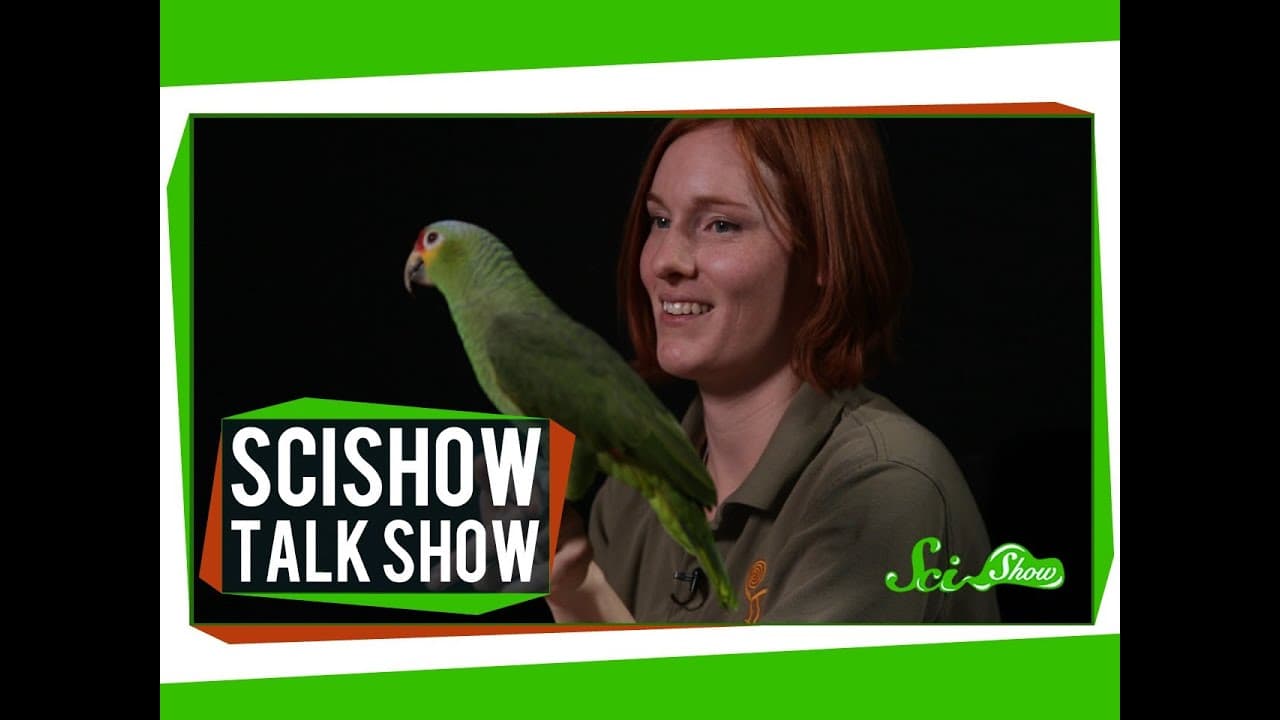
[Intro Music] are joined by our very special guest Emily Grassley of the brain scoop thanks for joining us thank you for having me today you're going to have to stop me and then we're going to talk about some news and then we're going to visit an animal that sound like a plan that sounds awesome okay i don't know i have no idea about any of those t... Read More
Key Insights
- 👻 Crabeater seals have specialized teeth that allow them to sieve water and capture krill efficiently.
- 🥳 Rat telepathy, where rats communicate through brain implants, opens possibilities for amputees with prosthetics and learning new skills.
- 🐦 Birds like Amazon parrots are messy eaters, contributing to seed dispersal in the jungle.
- 🥳 Rat telepathy could have ethical implications, and wireless communication is being explored for human adaptation.
- 🥳 Rat telepathy technology could potentially be used by the military but also has positive applications, such as recreating sensations for amputees.
- 🙊 Amazon parrots are vocal birds, with different species exhibiting varying speaking abilities.
- 🦜 Some parrots, like the yellow-headed Amazon parrot and African gray parrot, are known for their exceptional speaking skills.
Install to Summarize YouTube Videos and Get Transcripts
Explore YouTube Video Summarizer or Get YouTube Transcript Extractor
Questions & Answers
Q: What is unique about the crabeater seal's teeth and feeding behavior?
The crabeater seal has specialized teeth with ridges called tubercles that fit together, allowing it to sieve water and capture krill. They can feed for about 16 hours a day using this feeding strategy.
Q: How does rat telepathy work?
Rat telepathy involves implanting electrode brain implants in rats, allowing them to communicate. One rat solves a problem, and the encoded signal is sent to another rat in a different location, which then solves the same problem in the dark.
Q: How do scientists plan to adapt rat telepathy to humans?
Scientists are exploring the possibility of making the communication wireless and using it to recreate sensations and feelings for amputees with prosthetics or teaching new skills without the need for conventional learning.
Q: What is the benefit of being a messy eater for birds like Amazon parrots?
Birds like Amazon parrots are messy eaters because they live in the jungle and need to eat quickly and move on. By dropping seeds or fruit while eating, they contribute to seed dispersal and aid in plant growth.
Summary & Key Takeaways
-
Emily Grassley brings in various animal skulls, including that of a crabeater seal, highlighting its unique teeth and feeding behavior.
-
The hosts discuss a scientific study on rat telepathy, where rats communicate through electrode brain implants, enabling one rat to solve problems and send the encoded signal to another rat, allowing it to solve the same task in the dark.
Read in Other Languages (beta)
Share This Summary 📚
Summarize YouTube Videos and Get Video Transcripts with 1-Click
Try YouTube Summary with ChatGPT & Claude or YouTube Transcript Generator
Explore More Summaries from SciShow 📚


Summarize YouTube Videos and Get Video Transcripts with 1-Click
Try YouTube Summary with ChatGPT & Claude or YouTube Transcript Generator