What Did the 2010 Nobel Prize in Chemistry Recognize?
TL;DR
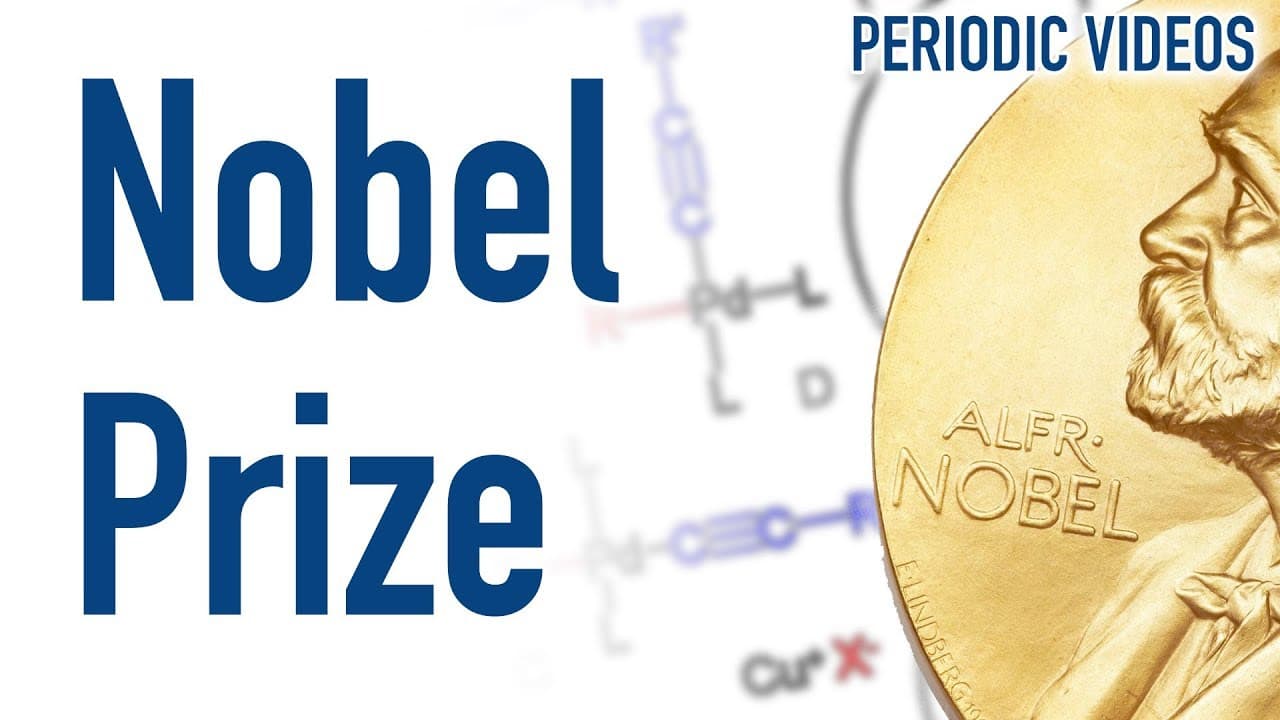
The 2010 Nobel Prize in Chemistry was awarded for research on palladium-catalyzed cross-coupling reactions, which allow the formation of carbon-carbon bonds in organic molecules. This innovation is crucial for synthesizing pharmaceuticals and natural products, revolutionizing the field of organic chemistry.
Transcript
so I'm waiting for the announcement of the 2010 Nobel Prize in chemistry the physics prize yesterday was for graphine almost chemistry so it be interesting to see what happens today whose names will be revealed we're literally moments away from finding out people talk about who might win the prize but really very few people have any idea because th... Read More
Key Insights
- 😵 The Nobel Prize in Chemistry in 2010 recognized the importance of palladium-catalyzed cross-coupling reactions in organic chemistry.
- 👻 These reactions allow for the controlled synthesis of carbon-carbon bonds in organic molecules.
- 😒 The use of palladium as a catalyst revolutionized the pharmaceutical industry by facilitating the production of complex molecules.
Install to Summarize YouTube Videos and Get Transcripts
Explore YouTube Video Summarizer or Get YouTube Transcript Extractor
Questions & Answers
Q: What is the significance of the Nobel Prize in Chemistry in 2010?
The 2010 Nobel Prize in Chemistry recognized the groundbreaking work of three chemists who developed palladium-catalyzed cross-coupling reactions, which have revolutionized organic chemistry.
Q: What is the purpose of palladium in these reactions?
Palladium serves as a catalyst, enabling the formation of carbon-carbon bonds in organic molecules. It facilitates the transfer of bonds between carbon atoms, allowing for the synthesis of complex molecules.
Q: How do palladium-catalyzed cross-coupling reactions impact the pharmaceutical industry?
These reactions have greatly impacted the pharmaceutical industry by enabling the controlled synthesis of carbon-carbon bonds in active pharmaceutical ingredients. This has revolutionized the way molecules are designed and produced in the pharmaceutical sector.
Q: How did the Nobel Prize in Chemistry in 2010 honor the work of the laureates?
The Nobel Prize was awarded to three chemists who made significant contributions to the development of palladium-catalyzed cross-coupling reactions. Unfortunately, one of the initial contributors, John Stey, passed away before the award could be given.
Summary & Key Takeaways
-
The 2010 Nobel Prize in Chemistry was awarded to three chemists, two in the United States and one in Japan, for their research on palladium-catalyzed cross-coupling reactions.
-
These reactions allow for the formation of carbon-carbon bonds in organic molecules, a process that is crucial in the synthesis of pharmaceuticals and natural products.
-
Palladium, a transition metal, acts as a catalyst in these reactions, facilitating the bonding of carbon atoms.
Read in Other Languages (beta)
Share This Summary 📚
Summarize YouTube Videos and Get Video Transcripts with 1-Click
Try YouTube Summary with ChatGPT & Claude or YouTube Transcript Generator
Explore More Summaries from Periodic Videos 📚




Summarize YouTube Videos and Get Video Transcripts with 1-Click
Try YouTube Summary with ChatGPT & Claude or YouTube Transcript Generator