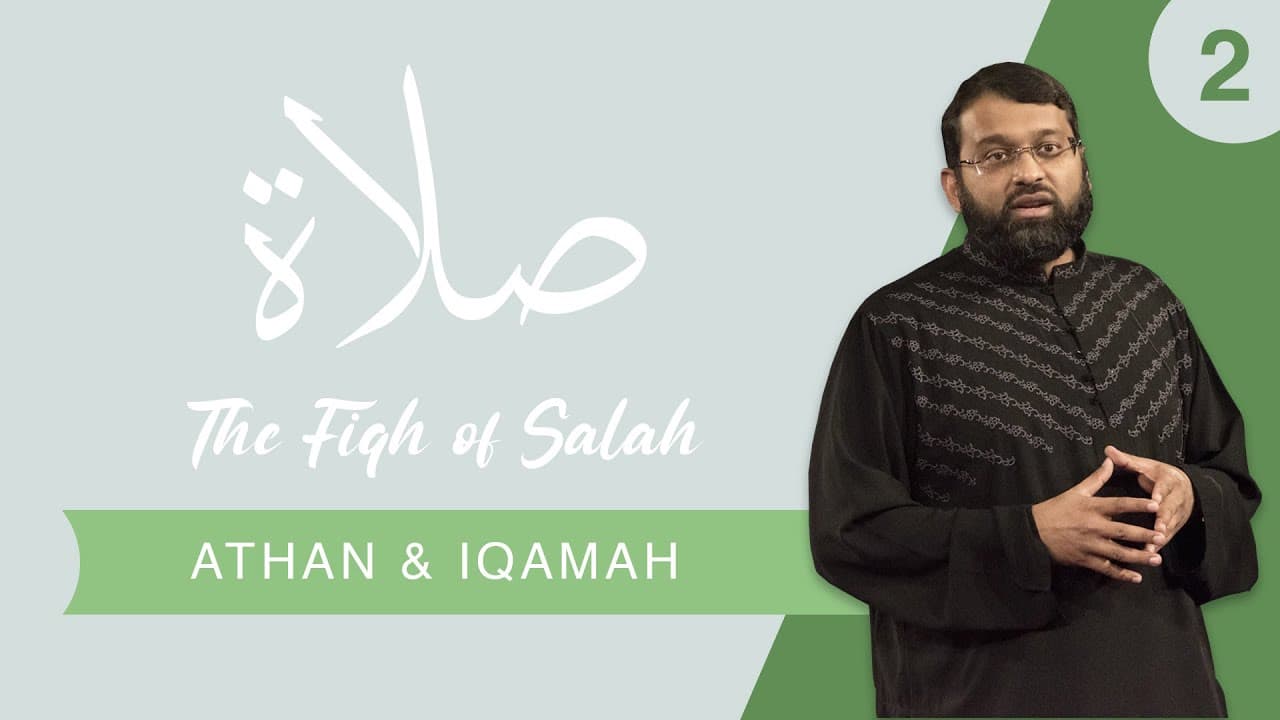
The Fiqh of Salah - Episode 2: The Rulings of Athan & Iqamah | Shaykh Dr. Yasir Qadhi
TL;DR
Discussion on the rulings and significance of Athan and Iqamah.
Transcript
Read and summarize the transcript of this video on Glasp Reader (beta).
Key Insights
- The Athan and Iqamah are legislated for the five daily prayers and are not required for any other prayers. The Athan is particularly significant in calling the community to prayer.
- In the Hambali tradition, the Athan is considered a communal obligation (fard kifaya), meaning someone in the community must perform it.
- The Athan consists of 15 phrases, while the Iqamah has 11 phrases according to the Hambali, Maliki, and Shafi'i schools. The Hanafi school has a different structure, with the Iqamah consisting of 17 phrases.
- The Athan should be given by someone who is trustworthy and has a good voice, as it is a position of trust and respect within the community.
- It is encouraged to give the Athan standing up, in a state of purity, from a high place, and facing the Qibla, although these are not strict requirements.
- The Athan for Fajr includes an additional phrase, 'As-salatu khayrun minan-nawm,' which is not required for other prayers.
- It is encouraged to repeat the phrases of the Athan when heard, except for 'Hayya 'ala-s-Salah' and 'Hayya 'ala-l-Falah,' where a specific supplication is recited instead.
- Giving the Athan is a highly rewarded act in Islam, with the muadhdhin being promised special recognition and rewards on the Day of Judgment.
Install to Summarize YouTube Videos and Get Transcripts
Explore YouTube Video Summarizer or Get YouTube Transcript Extractor
Questions & Answers
Q: What is the significance of Athan and Iqamah in Islam?
The Athan and Iqamah are essential elements in Islamic practice, serving as calls to prayer for the Muslim community. The Athan is a public announcement of the prayer time, inviting Muslims to gather and perform the prayer in congregation. The Iqamah is recited just before the prayer begins, signaling the readiness of the congregation to commence the Salah. These calls are deeply rooted in Islamic tradition and hold significant spiritual and communal value.
Q: How do the different Islamic schools of thought view the Athan?
Different Islamic schools of thought have varying views on the Athan. In the Hambali tradition, the Athan is considered a communal obligation (fard kifaya), meaning that someone in the community must perform it. Other schools, like the Shafi'i and Maliki, also emphasize its importance but may have slight variations in the phrases used. The Hanafi school, for example, has a different structure for the Iqamah, consisting of 17 phrases. Despite these differences, all schools agree on its significance as a call to prayer.
Q: What are the requirements for someone to give the Athan?
The person giving the Athan should be trustworthy, as they hold a position of respect within the community. They should have a good, strong voice to ensure the call is heard clearly. While it is encouraged for the muadhdhin to be in a state of purity (wudu) and to stand while giving the Athan, these are not strict requirements. The primary concern is that the person is reliable and can accurately announce the prayer times.
Q: Are there any specific phrases added to the Fajr Athan?
Yes, the Fajr Athan includes the phrase 'As-salatu khayrun minan-nawm' (prayer is better than sleep), which is not included in the Athan for other prayers. This phrase is recited twice and serves as an additional reminder of the importance of the Fajr prayer, encouraging Muslims to wake up and perform it. This practice is rooted in tradition and is observed by most Islamic schools of thought.
Q: What is the significance of repeating the Athan when heard?
Repeating the Athan when heard is encouraged as it is an act of worship that brings spiritual rewards. The Prophet Muhammad (peace be upon him) advised Muslims to repeat the phrases of the Athan, except for 'Hayya 'ala-s-Salah' and 'Hayya 'ala-l-Falah,' where a specific supplication is recited instead. This practice reinforces the communal aspect of prayer and helps individuals prepare mentally and spiritually for the upcoming Salah.
Q: Why is the Athan given from a high place?
Traditionally, the Athan was given from a high place to ensure that the call to prayer could be heard by as many people as possible in the surrounding area. This practice was common before the advent of modern amplification systems. While it is no longer necessary due to microphones and speakers, the tradition highlights the importance of making the Athan audible to the community, emphasizing its role in gathering people for prayer.
Q: What rewards are promised for giving the Athan?
The muadhdhin, or the person who gives the Athan, is promised significant rewards in the Hereafter. The Prophet Muhammad (peace be upon him) stated that if people knew the blessings of the Athan, they would compete for the opportunity to perform it. The muadhdhin will have the longest necks on the Day of Judgment, symbolizing their special recognition and status. Additionally, everything that hears the Athan, including inanimate objects, will testify on behalf of the muadhdhin on the Day of Judgment.
Q: Can the Athan be given before its designated time?
The Athan should not be given before its designated time except for the Fajr prayer, where it is permissible to have two Athans. The first Athan for Fajr is given as a sunnah to wake people up and remind those praying Tahajjud to prepare for Fajr. The second Athan is given at the actual time of Fajr and is the primary call to prayer. For other prayers, the Athan must be given at the correct time to ensure the community is accurately informed about the prayer timing.
Summary & Key Takeaways
-
The lecture by Shaykh Dr. Yasir Qadhi discusses the rulings and significance of the Athan and Iqamah in Islamic tradition. He explains the differences in practice among various Islamic schools of thought and emphasizes the importance of these calls to prayer.
-
The Athan is a communal obligation and should be performed by someone trustworthy with a good voice. It is a significant act that calls the community to prayer and is rewarded with special recognition on the Day of Judgment.
-
The lecture also highlights the specific practices associated with the Athan and Iqamah, such as standing while giving the Athan, facing the Qibla, and the unique phrases included in the Fajr Athan. These practices are rooted in tradition and serve to enhance the communal aspect of prayer.
Read in Other Languages (beta)
Share This Summary 📚
Summarize YouTube Videos and Get Video Transcripts with 1-Click
Try YouTube Summary with ChatGPT & Claude or YouTube Transcript Generator
Explore More Summaries from Yasir Qadhi 📚



Summarize YouTube Videos and Get Video Transcripts with 1-Click
Try YouTube Summary with ChatGPT & Claude or YouTube Transcript Generator