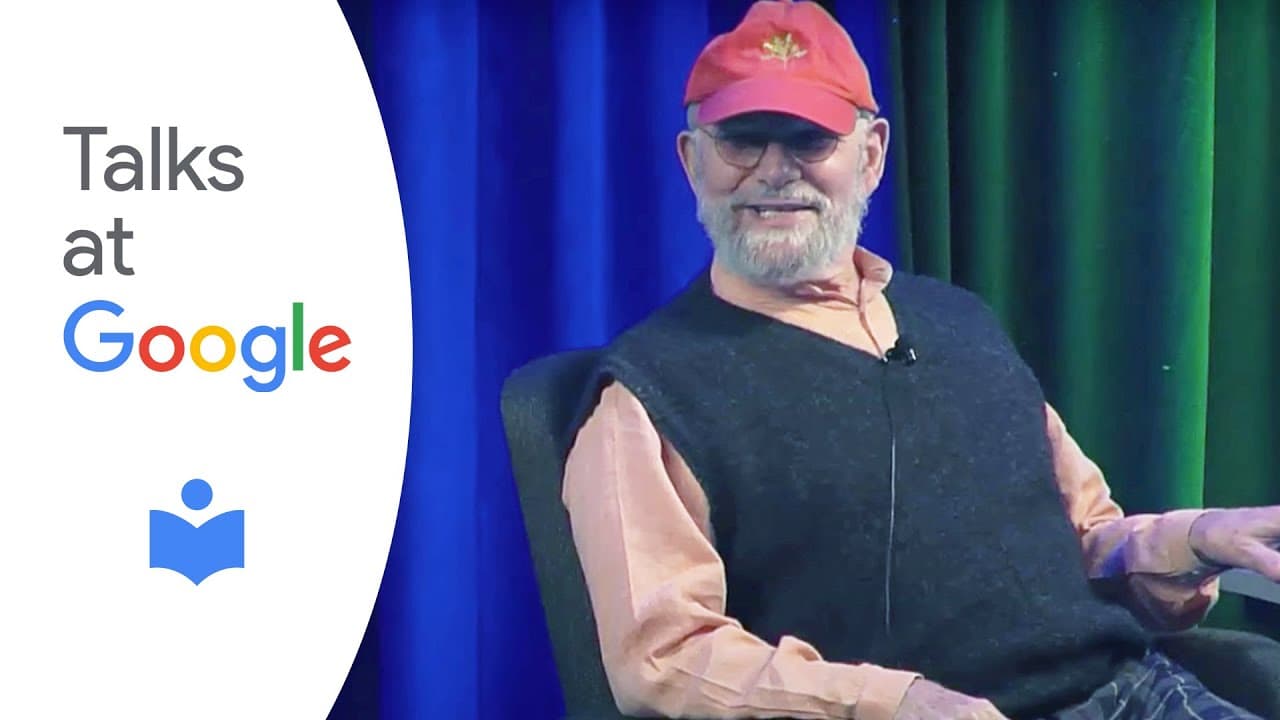
The Mind's Eye | Oliver Sacks | Talks at Google
TL;DR
Dr. Oliver Sacks discusses his book "The Mind's Eye" and explores topics such as vision loss, fear of heights, and the adaptability of the brain.
Transcript
Presenter: All right. Well, we're very pleased to have Dr. Oliver Sacks with us today. Dr. Sacks is a physician and a professor of neurology and psychology at the Columbia University Center. He's also the author of more than ten books, some of which I have here. So for example, we have The Man Who Mistook His Wife for a Hat. Awakenings. Musicophi... Read More
Key Insights
- 🧠 The human brain is capable of adapting to sensory changes, whether due to pathology or intentional development of new senses.
- 😚 Blindness can lead to different experiences, with some blind individuals losing the ability to visualize and others living in a visual world through hyper-imagination.
- 😋 The phenomena of blind-sightedness and tongue vision demonstrate the brain's ability to rely on other senses for navigation and perception.
- 🖐️ Language, gesture, and music are unique to human beings and play a significant role in bonding, culture, and defining humanity.
Install to Summarize YouTube Videos and Get Transcripts
Explore YouTube Video Summarizer or Get YouTube Transcript Extractor
Questions & Answers
Q: How does the concept of Flatland relate to Dr. Sacks's experience with declining vision?
Flatland, a fictional world where objects and people emerge and disappear, resonates with Dr. Sacks's experience of losing vision in one eye, making him aware of his own "Flatland."
Q: Can people who lack a sense of depth perform well under specific conditions?
Dr. Sacks doubts this possibility, as lacking a sense of depth can be disabling, especially in situations that require an understanding of depth perception.
Q: Why does Dr. Sacks feel queasy when looking at images of heights, despite knowing they are two-dimensional?
Dr. Sacks suggests that it may be due to individual upbringing or a physiological reaction related to the semicircular canals in the ears.
Q: Can blind individuals who regain their vision through surgery redevelop the ability to process visual information?
Dr. Sacks mentions a case where a congenitally blind individual had difficulty redeveloping the ability to process visual information after surgery, highlighting the complexity of adaptation and the brain's plasticity.
Summary & Key Takeaways
-
Dr. Sacks discusses the concept of "Flatland" from Edwin Abbott's book, where objects and people seem to emerge and disappear, resonating with his own declining vision.
-
He talks about losing his fear of heights and the possibility of people lacking a sense of depth, but emphasizes the dangerous nature of not perceiving depth.
-
Dr. Sacks describes the experiences of blind individuals who either lose or retain their ability to visualize, emphasizing the variability in how people perceive the world without sight.
-
He mentions the phenomenon of blind-sightedness, where people who are blind have the ability to unconsciously navigate obstacles, and the potential for people to develop new senses.
Read in Other Languages (beta)
Share This Summary 📚
Summarize YouTube Videos and Get Video Transcripts with 1-Click
Try YouTube Summary with ChatGPT & Claude or YouTube Transcript Generator
Explore More Summaries from Talks at Google 📚
Summarize YouTube Videos and Get Video Transcripts with 1-Click
Try YouTube Summary with ChatGPT & Claude or YouTube Transcript Generator