The Supplements Increasing Cancer Risk (That No One Warns You About)
TL;DR
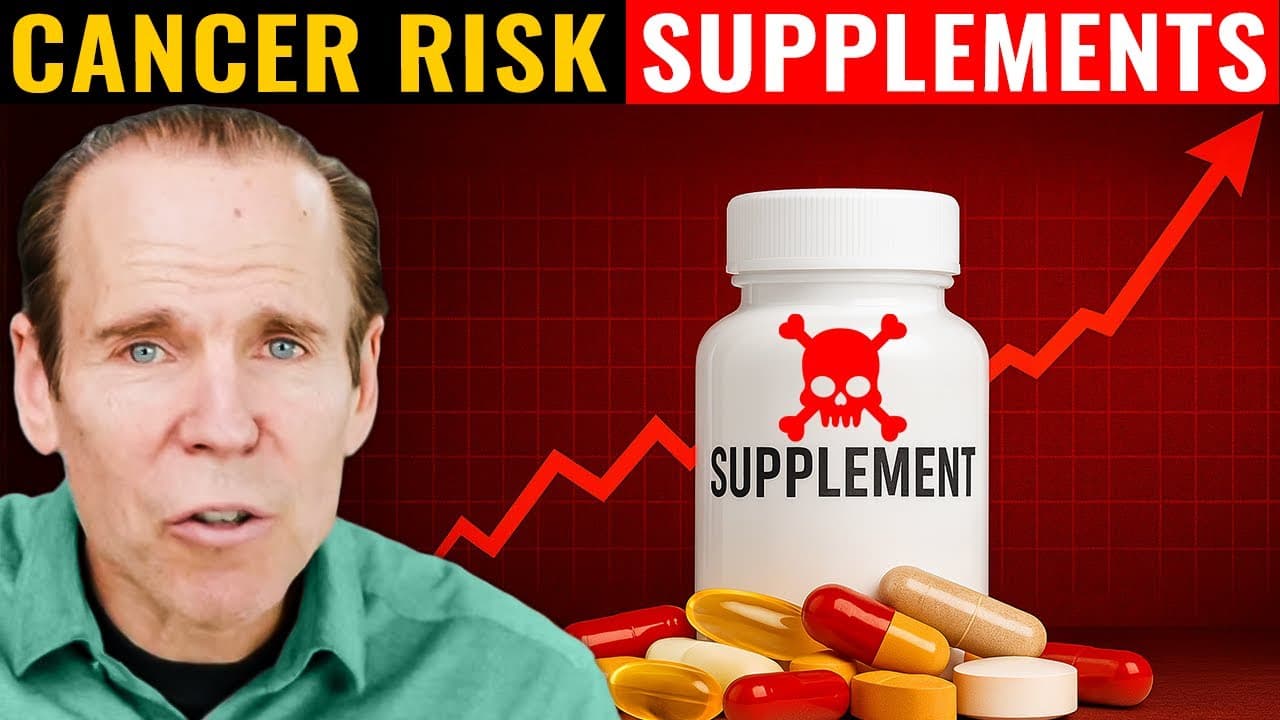
Some supplements like folic acid and vitamin A may increase cancer risk.
Transcript
Read and summarize the transcript of this video on Glasp Reader (beta).
Key Insights
- Folic acid and vitamin A are linked to increased cancer risk according to multiple studies, highlighting the dangers of certain supplements.
- A 10-year study showed women taking multivitamins with folic acid had a 20-30% increased breast cancer risk.
- Folic acid is a synthetic form, unlike folate found in vegetables, and may increase cancer risk despite reducing neural tube defects.
- The medical community often recommends folic acid supplements during pregnancy, potentially contributing to childhood cancer rates.
- Natural food sources of nutrients are generally safer and more effective than synthetic supplements, which can disrupt natural body balance.
- Cochrane reviews indicate vitamin A supplements increase all-cause mortality risk, suggesting natural sources are preferable.
- Over-supplementation of nutrients like selenium can negate the benefits of consuming nutrient-rich foods like Brazil nuts.
- Vitamin E from nuts and seeds provides a broader spectrum of benefits compared to single-fragment supplements.
Install to Summarize YouTube Videos and Get Transcripts
Explore YouTube Video Summarizer or Get YouTube Transcript Extractor
Questions & Answers
Q: Why are some supplements considered harmful?
Some supplements, such as folic acid and vitamin A, are considered harmful because they have been linked to an increased risk of cancer and other health issues. Studies indicate that synthetic forms of nutrients can disrupt the body's natural balance, leading to negative health outcomes.
Q: What are the risks associated with folic acid supplements?
Folic acid supplements are linked to increased cancer risk, particularly breast cancer in women. While they reduce neural tube defects, they may also contribute to childhood cancers and other health problems due to their synthetic nature, which differs from naturally occurring folate.
Q: How do synthetic nutrients differ from natural ones?
Synthetic nutrients, like folic acid, differ from natural ones in their biochemical properties. While natural nutrients are part of complex food matrices, synthetic versions can lead to imbalances and health risks, as they do not offer the same protective effects as nutrients from whole foods.
Q: What did the Cochrane reviews reveal about vitamin A supplements?
Cochrane reviews revealed that vitamin A supplements are associated with an increased risk of all-cause mortality. The reviews suggest that obtaining vitamin A from natural food sources is safer and more beneficial than relying on synthetic supplements.
Q: Why is it better to get nutrients from whole foods?
Whole foods provide a complex array of nutrients that work synergistically, offering broader health benefits and reducing the risk of over-supplementation. Synthetic supplements often lack this complexity, which can lead to imbalances and increased health risks.
Q: What are the potential effects of over-supplementation?
Over-supplementation can lead to nutrient imbalances, reducing the body's ability to absorb and utilize nutrients effectively. It can also increase the risk of chronic diseases, including cancer, as seen with excessive intake of synthetic nutrients like folic acid and vitamin A.
Q: How does vitamin E supplementation differ from natural sources?
Vitamin E from natural sources like nuts and seeds provides a variety of fragments that work together for optimal health benefits. In contrast, vitamin E supplements often contain only one fragment, which can limit efficacy and potentially interfere with nutrient absorption.
Q: What is the recommendation for using nutritional yeast?
The recommendation is to use unfortified nutritional yeast, as fortified versions may contain synthetic folic acid, which can pose health risks. Unfortified yeast allows individuals to benefit from its nutrients without the added risks associated with synthetic supplementation.
Summary & Key Takeaways
-
The video discusses the potential health risks associated with supplements like folic acid and vitamin A, which are linked to increased cancer risk. It emphasizes the importance of obtaining nutrients from whole foods rather than synthetic supplements.
-
Folic acid, a synthetic nutrient, is commonly recommended during pregnancy but may contribute to childhood cancers. The speaker argues for a focus on natural sources of folate, such as green vegetables, to reduce health risks.
-
Cochrane reviews highlight increased mortality risks from vitamin A supplements. The video advocates for obtaining nutrients from natural food sources to avoid the negative effects of synthetic supplements on health.
Read in Other Languages (beta)
Share This Summary 📚
Summarize YouTube Videos and Get Video Transcripts with 1-Click
Try YouTube Summary with ChatGPT & Claude or YouTube Transcript Generator
Explore More Summaries from Dr. Fuhrman 📚


Summarize YouTube Videos and Get Video Transcripts with 1-Click
Try YouTube Summary with ChatGPT & Claude or YouTube Transcript Generator