Bob Destroys Hadith Reliability - Sharia Law Unmasked | Speakers Corner
TL;DR
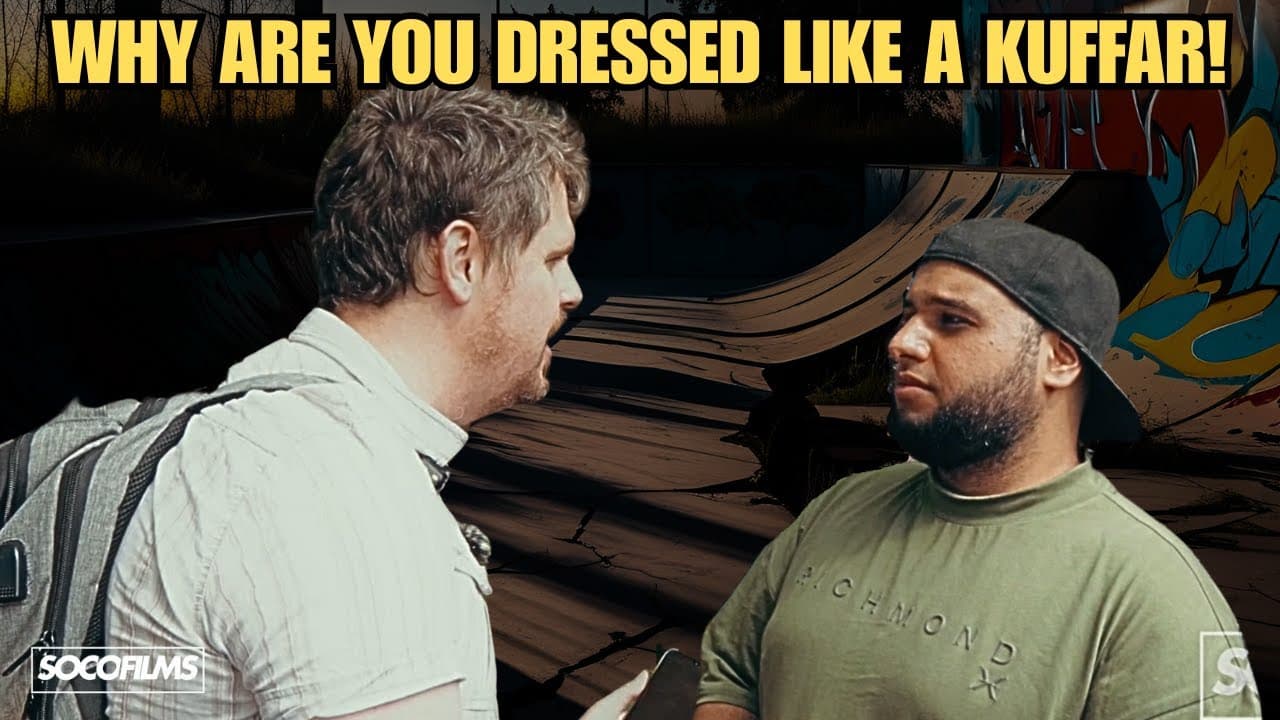
A debate on the reliability of the Bible and Hadiths.
Transcript
Read and summarize the transcript of this video on Glasp Reader (beta).
Key Insights
- The debate centers on the reliability of the Bible and Hadiths, with arguments challenging the authenticity of Hadith literature.
- The speaker argues that forgeries within Hadiths undermine their credibility and, by extension, the interpretation of the Quran.
- The speaker compares the Bible's inspiration to the Hadiths, noting differences in how Christians and Muslims view their sacred texts.
- The discussion touches on the science of Isnad and its role in determining the authenticity of Hadiths, with criticisms of its reliability.
- Examples are given of inconsistencies within Sahih Bukhari, questioning the reliability of the Hadiths and the process of their authentication.
- The debate includes a discussion on the role of Islamic scholars and their authority in interpreting religious texts.
- The speaker challenges the Islamic claim that the Quran is unmatched in its linguistic and literary style, using the example of the Surah of the Jinn.
- The conversation also touches on broader religious and moral issues, including the practices and beliefs of Christians and Muslims.
Install to Summarize YouTube Videos and Get Transcripts
Explore YouTube Video Summarizer or Get YouTube Transcript Extractor
Questions & Answers
Q: What is the main argument against the reliability of Hadiths?
The main argument against the reliability of Hadiths is the presence of forgeries within the Hadith literature. The speaker claims that if forgeries can be demonstrated, then the entire corpus of Hadiths becomes unreliable, which in turn affects the interpretation of the Quran, as Hadiths are used to understand and apply Quranic teachings.
Q: How does the speaker compare the Bible and the Hadiths?
The speaker compares the Bible and the Hadiths by highlighting that Christians believe the Bible is inspired by God but written in human words, whereas Muslims view the Hadiths as the sayings and actions of the Prophet Muhammad, which are crucial for interpreting the Quran. The speaker argues that the Bible's inspiration is limited to teaching right doctrine and values, unlike the Hadiths, which are more directly tied to divine commands.
Q: What is the role of Isnad in Hadith authentication?
Isnad is the method used in Islam to authenticate Hadiths by examining the chain of transmission from the Prophet Muhammad to those who recorded the sayings. The speaker criticizes Isnad, arguing that it is unreliable due to the potential forgeries and errors that could have been introduced over time, especially given that biographies of transmitters were written long after the events they describe.
Q: What example does the speaker use to question Hadith reliability?
The speaker uses the example of a Hadith from Sahih Bukhari that claims knowledge of private events involving the Roman Emperor Heraclius. The speaker argues that it is implausible for anyone in the Isnad chain to have had access to such information, thereby questioning the Hadith's authenticity and, by extension, the reliability of the entire collection.
Q: What is the Quranic challenge mentioned in the debate?
The Quranic challenge mentioned in the debate is the claim that no one can produce a surah like those in the Quran, which is presented as evidence of its divine origin. The speaker argues that this challenge has been met by the Surah of the Jinn, where Allah quotes the speech of the Jinn, suggesting that the Quran itself acknowledges a surah like it has been produced.
Q: How does the speaker address the role of Islamic scholars?
The speaker addresses the role of Islamic scholars by questioning their authority and the concept of consensus (Ijma) in Islam. The speaker argues that consensus does not guarantee truth and that the scholars' agreement on religious matters is self-serving, as it claims infallibility without clear divine endorsement.
Q: What moral criticisms does the speaker make about Islam?
The speaker criticizes Islam on moral grounds, pointing to practices like polygamy, the treatment of women, and the allowance of slavery and concubinage. The speaker argues that these practices are immoral by modern standards and questions the moral authority of Islam to lecture others on ethical behavior.
Q: What is the speaker's response to claims about the decline of Christianity?
The speaker refutes claims about the decline of Christianity by citing studies that show Christianity continues to grow globally in line with population growth. The speaker argues that such claims are based on misconceptions and that there is evidence of a revival in church attendance, contrary to the assertion that Christianity is not widely practiced.
Summary & Key Takeaways
-
The debate questions the reliability of Hadith literature, arguing that demonstrated forgeries undermine the ability to interpret the Quran accurately. The speaker compares this to the Bible's inspiration, which is seen as divinely guided but not verbatim from God.
-
The discussion delves into the science of Isnad, which evaluates the chain of transmission for Hadiths. The speaker criticizes its reliability, citing inconsistencies and possible forgeries even within Sahih Hadith collections.
-
The conversation extends to a broader critique of Islamic practices and beliefs, including the authority of scholars and the challenge of replicating the Quran's linguistic style. The speaker argues that the Quran's challenge has been met, questioning its divine origin.
Read in Other Languages (beta)
Share This Summary 📚
Summarize YouTube Videos and Get Video Transcripts with 1-Click
Try YouTube Summary with ChatGPT & Claude or YouTube Transcript Generator
Explore More Summaries from SOCO Films 📚
Summarize YouTube Videos and Get Video Transcripts with 1-Click
Try YouTube Summary with ChatGPT & Claude or YouTube Transcript Generator