How Did the Pakistan Movement Begin? 1857-1905
TL;DR
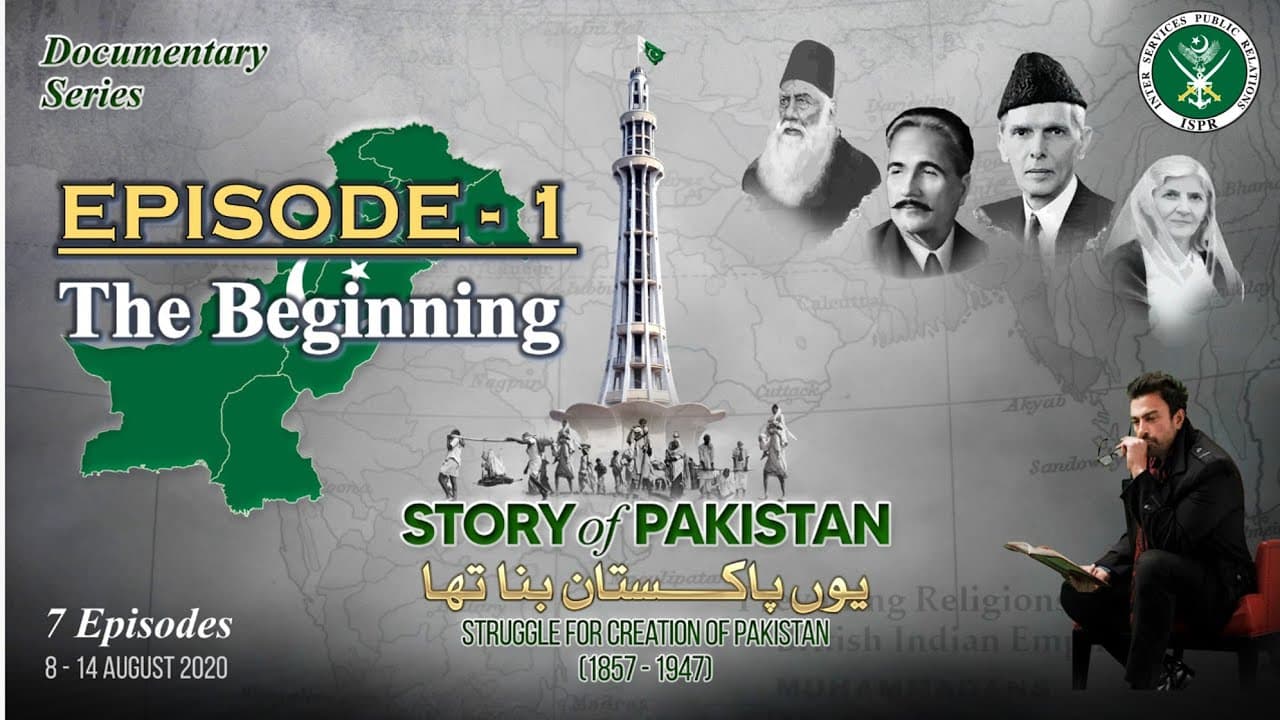
The Pakistan Movement's roots trace back to 1857, following the collapse of the Mughal Empire and British colonial dominance. Key figures like Sir Syed Ahmed Khan played pivotal roles in advocating for Muslim education and political awareness, laying groundwork for future independence. The episode explores these early struggles and the socio-political landscape leading to Pakistan's creation.
Transcript
Assalam-u-Alaikum, Pakistan Broadcasting Service, we are live from Lahore. At 12 at night between 13 and 14 August of years 1947… the dawn of independent Morning This subcontinent, from 1857 to 1947, created a history whose example cannot be found in world. You will get to know in “Story of Pakistan” that how Muslims changed the map of the world i... Read More
Key Insights
- The Pakistan Movement began with the aftermath of the 1857 War of Independence.
- Bahadur Shah Zafar's tragic end marked the fall of the Mughal Empire.
- The British Raj's brutalities aimed to suppress any rebellion against their rule.
- Sir Syed Ahmed Khan was instrumental in promoting Muslim education and political awareness.
- Sir Syed Ahmed Khan founded the Muhammaden Educational Conference to uplift Muslim society.
- The partition of Bengal highlighted Congress's lack of sincerity towards Muslim interests.
- Sir Syed Ahmed Khan advised Muslims to focus on education rather than politics initially.
- The episode includes expert opinions from Pakistani historians on pre-partition struggles.
Install to Summarize YouTube Videos and Get Transcripts
Explore YouTube Video Summarizer or Get YouTube Transcript Extractor
Questions & Answers
Q: How did the Pakistan Movement begin?
The Pakistan Movement began in the aftermath of the 1857 War of Independence, with the fall of the Mughal Empire and the establishment of British colonial rule. Key figures like Sir Syed Ahmed Khan advocated for Muslim education and political awareness, setting the foundation for future independence and the eventual creation of Pakistan.
Q: What role did Sir Syed Ahmed Khan play in the Pakistan Movement?
Sir Syed Ahmed Khan was pivotal in the Pakistan Movement by promoting Muslim education and political awareness. He founded the Muhammaden Educational Conference and advised Muslims to focus on education rather than politics initially. His efforts helped preserve Muslim identity and rights, crucial for future independence.
Q: Why was the partition of Bengal significant for Muslims?
The partition of Bengal was significant for Muslims as it highlighted the Indian National Congress's lack of sincerity towards Muslim interests. It underscored the need for a separate Muslim identity and political representation, eventually leading to the formation of the All India Muslim League and strengthening the Pakistan Movement.
Q: What were the British Raj's brutalities during their rule?
The British Raj's brutalities included suppressing any rebellion against their rule through severe measures, such as executing rebels and instilling fear among the populace. These actions aimed to maintain control and prevent uprisings, contributing to the socio-political tensions that fueled the Pakistan Movement.
Q: How did the fall of the Mughal Empire impact the Pakistan Movement?
The fall of the Mughal Empire marked the end of Muslim political dominance in the region, leading to British colonial rule. This shift motivated Muslim leaders like Sir Syed Ahmed Khan to advocate for education and political awareness among Muslims, laying the groundwork for the Pakistan Movement and future independence.
Q: What was the Muhammaden Educational Conference?
The Muhammaden Educational Conference, founded by Sir Syed Ahmed Khan, was an initiative to promote Muslim education and socio-political awareness. It aimed to uplift Muslim society by encouraging the establishment of educational institutions, thereby empowering Muslims to participate in the socio-political landscape and resist colonial oppression.
Q: Why did Sir Syed Ahmed Khan advise against early political involvement?
Sir Syed Ahmed Khan advised Muslims against early political involvement to focus on education and understand the socio-political dynamics of British rule. He believed that without education, Muslims would remain disadvantaged and unable to effectively participate in politics, thereby risking further marginalization and loss of identity.
Q: Who were the key figures in the early Pakistan Movement?
Key figures in the early Pakistan Movement included Bahadur Shah Zafar, the last Mughal emperor, and Sir Syed Ahmed Khan, who played a crucial role in advocating for Muslim education and political awareness. Their efforts laid the foundation for the movement that eventually led to Pakistan's independence.
Summary & Key Takeaways
-
The episode highlights the origins of the Pakistan Movement from 1857 to 1905, focusing on the collapse of the Mughal Empire and British colonial rule. It emphasizes the critical role of Sir Syed Ahmed Khan in advocating for Muslim education and political awareness, setting the stage for future independence.
-
Sir Syed Ahmed Khan's efforts to educate Muslims and his strategic advice to avoid early political involvement were crucial in preserving Muslim identity and rights. His establishment of educational institutions and campaigns played a vital role in empowering Muslims against colonial oppression.
-
The partition of Bengal and the formation of the All India Muslim League were significant events that underscored the need for a separate Muslim identity. The episode also touches on the socio-political dynamics and the brutalities faced by Muslims under British rule, shaping the path to Pakistan's creation.
Read in Other Languages (beta)
Share This Summary 📚
Summarize YouTube Videos and Get Video Transcripts with 1-Click
Try YouTube Summary with ChatGPT & Claude or YouTube Transcript Generator