What Is HIV and How Does It Affect the Body?
TL;DR
HIV, part of the Retroviridae family, targets CD4 positive immune cells, leading to AIDS if untreated. It has two types, HIV-1 and HIV-2, with HIV-1 being more prevalent and virulent. Transmission occurs through body fluids, and the virus integrates into the host genome, causing chronic infection. Testing involves detecting antibodies and viral components.
Transcript
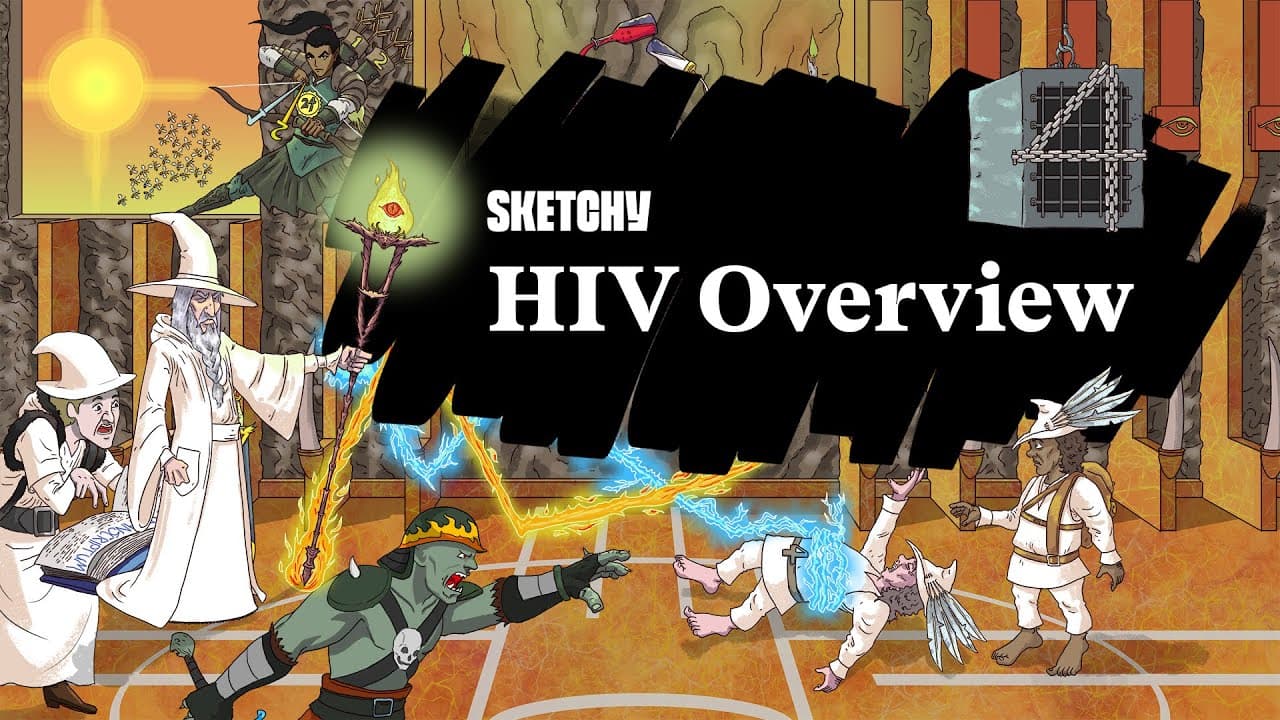
an epic war has raged between the evil white Wizard and the T Squires a battle that has endured for decades and the battle we're referring to is none other than the one against HIV so let's draw in our white wizard here who will represent HIV also known as human immunodeficiency virus and we've aptly titled this character the white wizard because H... Read More
Key Insights
- HIV is a member of the lentavirus genus within the Retroviridae family, functioning as a retrovirus by converting RNA to DNA.
- There are two types of HIV: HIV-1, which is more common and virulent, and HIV-2, which is less infectious.
- HIV targets CD4 positive immune cells, including helper T lymphocytes and macrophages, leading to immunocompromised states.
- The virus requires binding to CD4 and a co-receptor, either CCR5 or CXCR4, to enter host cells.
- Transmission of HIV occurs through body fluids, such as blood, semen, and vaginal fluids, and can also occur from mother to child.
- HIV infection progresses through stages: acute infection, clinical latency, and AIDS, marked by declining CD4 counts and increasing viral load.
- AIDS is diagnosed when CD4 counts fall below 200 or when AIDS-defining illnesses occur.
- Testing for HIV includes a fourth-generation test detecting antibodies and p24 antigen, followed by confirmation tests for antibodies or early detection using nucleic acid testing.
Install to Summarize YouTube Videos and Get Transcripts
Explore YouTube Video Summarizer or Get YouTube Transcript Extractor
Questions & Answers
Q: How does HIV infect the body?
HIV infects the body by targeting CD4 positive immune cells, including helper T cells and macrophages. It binds to the CD4 receptor and a co-receptor, either CCR5 or CXCR4, to enter the cells. Once inside, the virus converts its RNA into DNA, integrating into the host's genome, which allows it to replicate along with the host cell, leading to a chronic infection.
Q: What are the main types of HIV?
The main types of HIV are HIV-1 and HIV-2. HIV-1 is the most prevalent and virulent form, responsible for the majority of infections worldwide and nearly all cases in the U.S. HIV-2 is less virulent, causing a slower decline in the host's immune system, and is mainly found in West Africa, Portugal, Spain, and India.
Q: How is HIV transmitted?
HIV is transmitted through body fluids, including blood, semen, vaginal fluids, and breast milk. It can be spread via unprotected sexual contact, sharing of contaminated needles, blood transfusions, and from mother to child during childbirth or breastfeeding. Effective screening and preventive measures have reduced transmission risks in medical settings.
Q: What happens during the stages of HIV infection?
HIV infection progresses through three main stages: acute infection, clinical latency, and AIDS. Initially, there is a rapid increase in viral load and a temporary decrease in CD4 counts, often with flu-like symptoms. This is followed by a long asymptomatic period called clinical latency. Without treatment, the infection progresses to AIDS, characterized by severely depleted CD4 counts and opportunistic infections.
Q: How is AIDS diagnosed?
AIDS is diagnosed when a person's CD4 count falls below 200 cells/mm³ or when they develop one or more AIDS-defining illnesses, which are opportunistic infections or cancers that occur due to the weakened immune system. These conditions are typically mediated by viral, bacterial, fungal, or protozoal infections that the body can no longer effectively fight off.
Q: What are the key proteins involved in HIV structure?
Key proteins in HIV's structure include the gag proteins like p24, forming the capsid; the pol proteins, such as reverse transcriptase, for viral replication; and the envelope proteins gp120 and gp41, which facilitate attachment and entry into host cells. These proteins are crucial for the virus's ability to infect and replicate within the host.
Q: What role do co-receptors play in HIV infection?
Co-receptors, CCR5 and CXCR4, play a crucial role in HIV infection by allowing the virus to enter host cells. HIV strains that use the CCR5 co-receptor, known as R5 viruses, predominate early in infection. Some viruses later acquire the ability to use CXCR4, known as X4 strains. Individuals with CCR5 mutations may exhibit resistance to HIV infection.
Q: How is HIV detected through testing?
HIV detection typically starts with a fourth-generation test that identifies HIV-1 and 2 antibodies and the p24 antigen. If positive, an antibody differentiation test confirms the presence of antibodies and distinguishes between HIV-1 and HIV-2. Early detection is possible using nucleic acid testing, which identifies viral RNA before antibodies develop, during the serological window.
Summary & Key Takeaways
-
HIV, a retrovirus, integrates its RNA into the host's DNA, leading to chronic infection. It primarily infects CD4 positive immune cells, causing a gradual decline in immune function. Transmission occurs through body fluids, and without treatment, progresses to AIDS.
-
There are two types of HIV: HIV-1, more prevalent globally, and HIV-2, less virulent and mainly found in certain regions. The virus requires CD4 and co-receptor binding for cell entry, with CCR5 and CXCR4 being key co-receptors.
-
HIV progresses through acute infection, clinical latency, and eventually AIDS if untreated. Testing involves detecting antibodies and viral components, with early detection possible through nucleic acid testing before seroconversion.
Read in Other Languages (beta)
Share This Summary 📚
Summarize YouTube Videos and Get Video Transcripts with 1-Click
Try YouTube Summary with ChatGPT & Claude or YouTube Transcript Generator
Explore More Summaries from Sketchy Learning 📚



Summarize YouTube Videos and Get Video Transcripts with 1-Click
Try YouTube Summary with ChatGPT & Claude or YouTube Transcript Generator