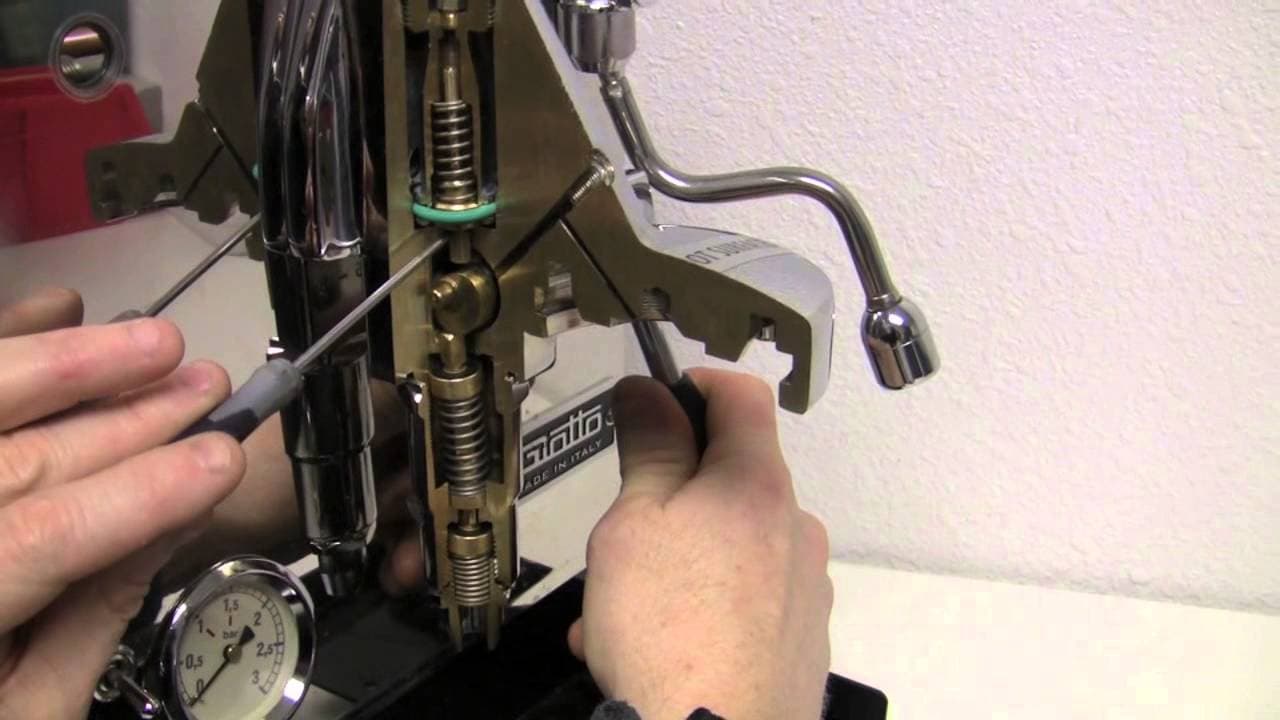
Internals of an E61 Brew Head
TL;DR
Explains the internal mechanics of an E61 brew head.
Transcript
Read and summarize the transcript of this video on Glasp Reader (beta).
Key Insights
- The E61 brew head features a heat exchanger model where one boiler is inside another, facilitating heat exchange between the steam and brew boilers.
- A thermosyphon system circulates water slowly through the E61 group head, maintaining its temperature and ensuring consistent brewing conditions.
- The E61's mechanical three-way valve system controls water intake, exhaust, and coffee flow, allowing precise brewing and pressure release.
- The dual exhaust valves help prevent clogging by diluting residual coffee, although the reason for having two adjacent valves is not entirely clear.
- Regular maintenance, including replacing rubber gaskets and addressing scale buildup, is essential to prevent leaks and ensure optimal performance.
- Backflushing is crucial for maintaining cleanliness, as it prevents dirty coffee water from contaminating subsequent brews.
- Elevation does not significantly affect the brew boiler's pressure, though it may slightly impact the steam boiler due to water vapor dynamics.
- The E61 technology is consistent across different manufacturers, with minor variations, ensuring a standard setup for espresso enthusiasts.
Install to Summarize YouTube Videos and Get Transcripts
Explore YouTube Video Summarizer or Get YouTube Transcript Extractor
Questions & Answers
Q: What is the role of the heat exchanger in the E61 brew head?
The heat exchanger in the E61 brew head plays a crucial role in maintaining consistent brewing temperatures. It consists of a dual boiler system where one boiler is inside the other, allowing for efficient heat transfer between the steam and brew boilers. This setup ensures that the water temperature remains stable, which is essential for extracting espresso with optimal flavor and aroma. By circulating water through the thermosyphon system, the heat exchanger keeps the group head at the desired temperature, contributing to the overall quality of the espresso shots produced.
Q: How does the mechanical three-way valve system function in the E61?
The mechanical three-way valve system in the E61 brew head is designed to control the flow of water during the espresso brewing process. It consists of three ports: one for water intake, one for exhaust, and one for coffee flow. When the brew valve is opened, water flows through the system, filling the chamber and reaching the coffee. After brewing, the valve system releases the pressure by opening the exhaust valve, allowing any remaining water to exit. This design ensures precise control over the brewing process, enabling the creation of high-quality espresso shots.
Q: Why are there two exhaust valves in the E61 design?
The presence of two exhaust valves in the E61 design serves to prevent clogging by diluting the residual coffee that exits the system. Although the exact reason for having two adjacent valves is not entirely clear, this design helps ensure that any leftover coffee is mixed with additional hot water before being expelled. This process reduces the likelihood of blockages in the exhaust pathway, contributing to the overall reliability and performance of the espresso machine. Regular maintenance, including replacing these valves, is essential to keep the system functioning optimally.
Q: What maintenance is necessary for the E61 brew head?
Maintaining the E61 brew head involves several key practices to ensure its optimal performance. Regular backflushing is crucial to prevent dirty coffee water from contaminating subsequent brews. Additionally, replacing rubber gaskets that seal against the copper surfaces is necessary, as these components can harden over time and cause leaks. Addressing scale buildup is also important, as chipped scale can interfere with the sealing surfaces, leading to leaks. By performing these maintenance tasks, users can prolong the lifespan of their E61 brew head and maintain the quality of their espresso.
Q: How does backflushing work in the E61 system?
Backflushing in the E61 system is a cleaning process designed to maintain the cleanliness of the internal pathways. During backflushing, water is pressurized and forced through the system, flushing out any residual coffee or debris. When the machine is turned off, the pressurized water is released, carrying any contaminants out through the exhaust port. This process helps prevent dirty coffee water from contaminating fresh brews, ensuring that each espresso shot is made with clean water. Regular backflushing is essential for maintaining the performance and hygiene of the E61 brew head.
Q: Does elevation affect the E61 brew head's performance?
Elevation does not significantly affect the performance of the E61 brew head in terms of brew pressure. The brew boiler is a closed system, fully filled with water, so changes in atmospheric pressure due to elevation have minimal impact. However, elevation can slightly affect the steam boiler, as it involves a combination of water vapor and liquid water. While the boiling point of water changes with elevation, any impact on pressure or performance is generally negligible. The E61 system is designed to function reliably across various elevations, ensuring consistent espresso quality.
Q: What happens when the E61 brew head's rubber gaskets wear out?
When the rubber gaskets in the E61 brew head wear out, they can no longer effectively seal against the copper surfaces, leading to leaks. Over time, the rubber hardens, requiring more pressure to maintain a proper seal. If the gaskets become too hard, the springs in the system may not provide enough force to create a tight seal, resulting in water leakage. This issue can manifest as excessive leaking from the exhaust port or intake valve. To address this, users should replace the worn gaskets with new ones to restore the system's integrity and prevent leaks.
Q: Is the E61 technology consistent across different manufacturers?
Yes, the E61 technology is largely consistent across different manufacturers, with only minor variations. The core design principles, such as the mechanical three-way valve system and thermosyphon circulation, remain the same. This consistency ensures that users can expect similar performance and functionality from E61 group heads, regardless of the manufacturer. However, some manufacturers may introduce slight modifications or enhancements to the design, but the fundamental technology remains unchanged. This standardization allows espresso enthusiasts to enjoy a reliable and familiar brewing experience with E61-equipped machines.
Summary & Key Takeaways
-
The E61 brew head uses a heat exchanger model with a thermosyphon system to maintain temperature consistency. This setup allows for efficient brewing by circulating water through the group head, ensuring optimal conditions for espresso extraction.
-
A mechanical three-way valve system in the E61 controls water intake, exhaust, and coffee flow. This design facilitates precise brewing and pressure release, essential for creating high-quality espresso shots with consistent flavor and aroma.
-
Regular maintenance, including backflushing, gasket replacement, and addressing scale buildup, is vital for the E61's performance. These practices prevent leaks, maintain cleanliness, and ensure that the espresso machine functions optimally over time.
Read in Other Languages (beta)
Share This Summary 📚
Summarize YouTube Videos and Get Video Transcripts with 1-Click
Try YouTube Summary with ChatGPT & Claude or YouTube Transcript Generator