What Happens If You Don't Exercise? Insights from a Doctor
TL;DR
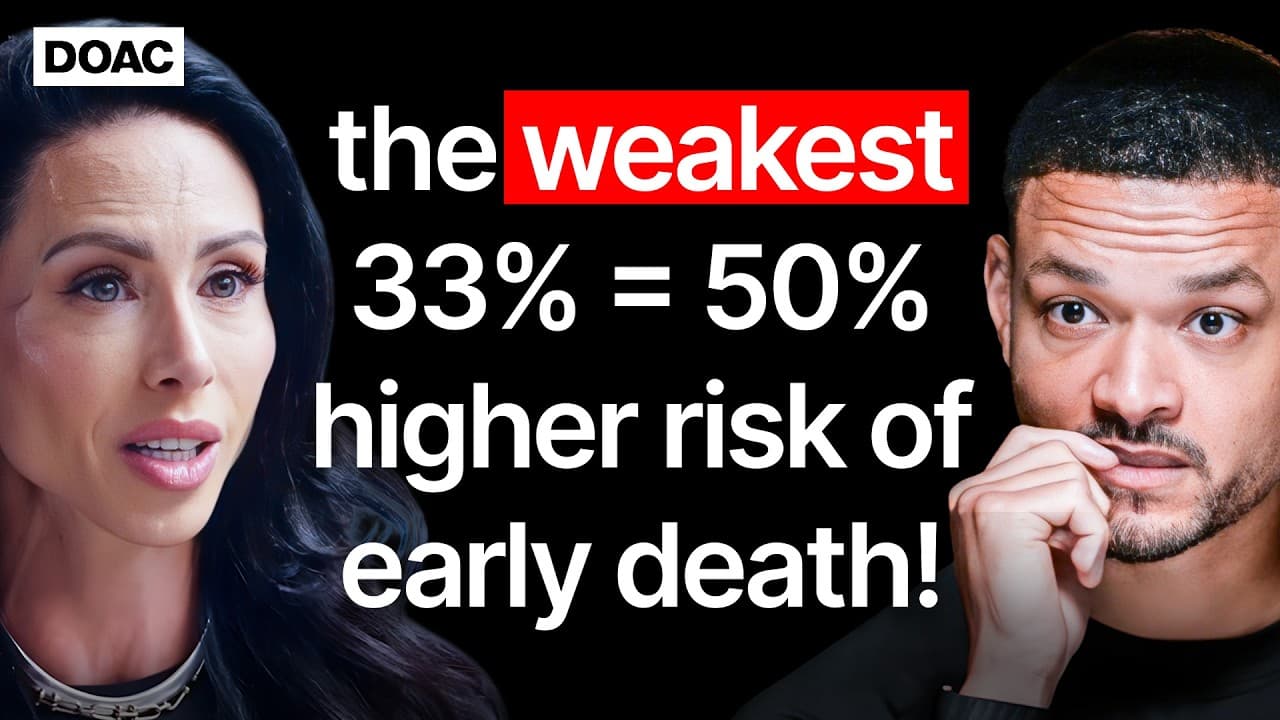
Neglecting exercise can lead to a 50% higher risk of premature death, exacerbating health issues like obesity and cardiovascular disease. Prioritizing strength training is crucial for longevity, as skeletal muscle plays a vital role in overall health. A holistic approach that includes muscle development, nutrition, and mental well-being is necessary for optimal health and performance.
Transcript
to this day everybody focuses on Obesity but obesity is not our problem if you are in the lower one-third of strength you have a 50% greater risk of dying from nearly anything you have to prioritize skeletal muscle what is that this is the organ of longevity the only organ system that you have voluntary control over and there's only two ways to sti... Read More
Key Insights
- ☠️ The decline in skeletal muscle mass correlates with increases in various chronic diseases and higher mortality rates.
- 😀 Only a small percentage of adults adhere to recommended resistance training guidelines, resulting in a largely sedentary population that faces health risks.
- 🧑⚕️ Mental health and physical health are closely intertwined; a focus on muscle health can enhance cognitive function and overall well-being.
- 💪 Nutritional support, particularly protein intake, is essential to maximize the benefits of resistance training and muscle recovery.
- 🤕 Aging does not predetermine a decline in health; individuals can actively maintain and build muscle strength at any age.
- 🧑⚕️ Health is not merely the absence of illness; it revolves around physical capability, energy levels, and overall fitness.
- ❓ Comparisons to others can hinder personal progress; focusing on individual performance and improvement is more beneficial.
- 🎙️ More videos with Gabrielle Lyon:
Install to Summarize YouTube Videos and Get Transcripts
Explore YouTube Video Summarizer or Get YouTube Transcript Extractor
Questions & Answers
Q: Why is skeletal muscle considered the "organ of longevity"?
Skeletal muscle acts as a critical endocrine organ that regulates metabolism and supports various bodily functions. It influences glucose metabolism, hormone production, and overall energy levels, making it essential for longevity and reducing the risk of chronic diseases.
Q: How can muscle mass impact fertility?
Muscle mass has been linked to improved fertility for both men and women. For men, a higher muscle mass correlates with increased testosterone levels, enhancing sperm quality and concentration. For women, adequate muscle mass can help regulate insulin sensitivity, which is crucial for reproductive health.
Q: What role does resistance training play in preventing aging-related diseases?
Resistance training strengthens skeletal muscle, improves metabolic health, and mitigates the risks of chronic conditions such as type 2 diabetes, cardiovascular disease, and cognitive decline. It enhances overall physical function, contributing to a higher quality of life as one ages.
Q: What are the primary ways to stimulate skeletal muscle growth?
The two primary methods to stimulate muscle growth are resistance training and adequate dietary protein intake. Resistance exercises create microtears in muscle fibers, prompting repair and growth, while protein provides the necessary building blocks for muscle recovery and development.
Q: What potential consequences arise from a sedentary lifestyle?
A sedentary lifestyle leads to increased risks of obesity, cardiovascular disease, type 2 diabetes, and cognitive decline. Over time, inactivity can result in significant muscle loss, decreased strength, and a higher likelihood of various chronic conditions.
Q: How does the perception of stress impact health?
The way individuals perceive and interpret stress can significantly affect their physiological responses. Stress can trigger fight-or-flight reactions or can lead to positive effects like "tend and befriend," showing that mindset influences health outcomes.
Q: What are the implications of low testosterone in young men?
Young men with low testosterone may experience increased difficulty in muscle gain, fatigue, reduced motivation, and changes in mood. Addressing lifestyle factors such as diet, exercise, and sleep is important for restoring healthy testosterone levels.
Q: How can someone start a resistance training regimen effectively?
To start resistance training, it’s recommended to begin with basic exercises, such as bodyweight squats, push-ups, or using resistance bands. Aim for training two to three times a week, gradually increasing the intensity and complexity of exercises as strength improves.
Summary & Key Takeaways
-
Skeletal muscle is vital for longevity and health, providing not only physical strength but also influencing metabolic health and disease prevention. A strong muscle base reduces mortality risk by 50%.
-
Resistance training is severely underperformed, with only 6-8% of adults meeting guidelines, leading to increased health risks like cardiovascular diseases and obesity.
-
A holistic approach to health involves prioritizing muscle training, nutrition, and mental well-being. True health and performance stem from choices that promote muscle strength and overall vitality.
Read in Other Languages (beta)
Share This Summary 📚
Summarize YouTube Videos and Get Video Transcripts with 1-Click
Try YouTube Summary with ChatGPT & Claude or YouTube Transcript Generator
Explore More Summaries from All The Diary Of A CEO Episodes 📚




Summarize YouTube Videos and Get Video Transcripts with 1-Click
Try YouTube Summary with ChatGPT & Claude or YouTube Transcript Generator