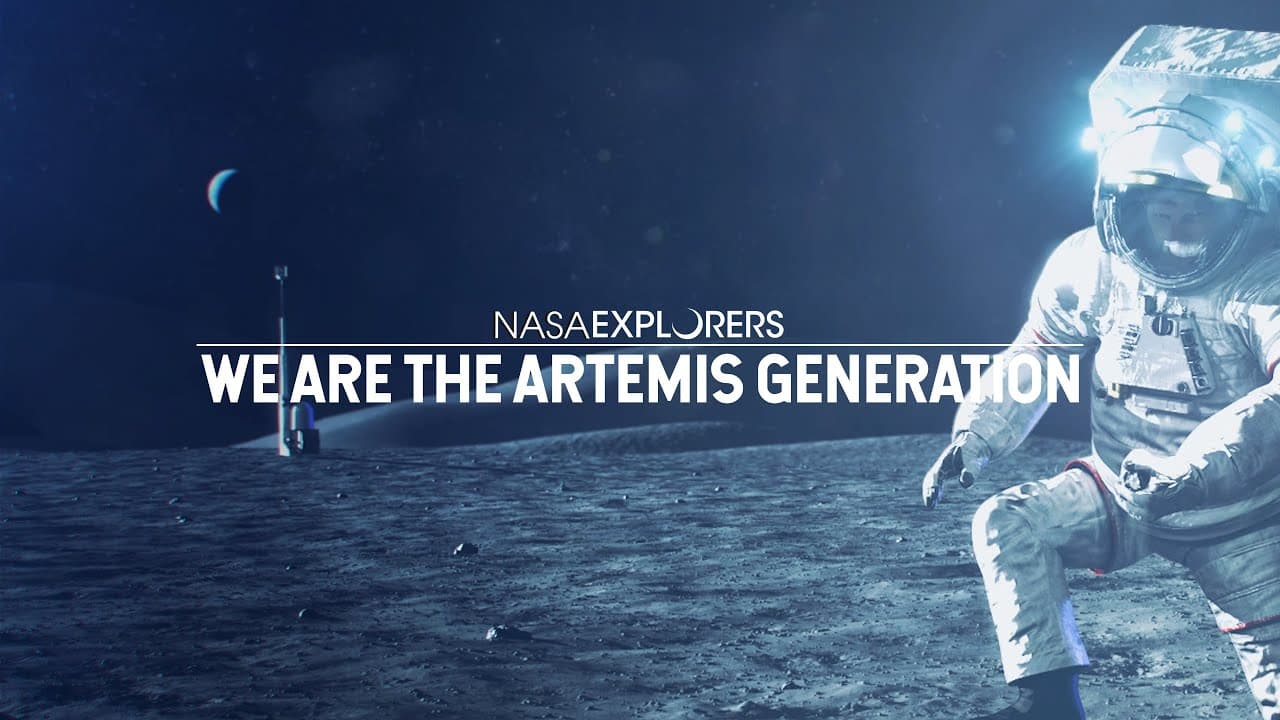
NASA Explorers: Season 5, Episode 1
TL;DR
NASA's Artemis program aims to send humans back to the Moon for long-term exploration, uncovering natural resources and answering questions about the history of the Moon, Earth, and Solar System.
Transcript
(music throughout) More than 50 years ago, NASA's Apollo program sent humans to the moon with less computing power than is in your mobile phone. Since then, technology has transformed space exploration. We've landed rovers on Mars and sent robotic explorers to the outer reaches of our solar system. Now we're ready to send humans into space again. S... Read More
Key Insights
- 👾 The Artemis program represents NASA's commitment to exploring and understanding the Moon as a stepping stone for future space exploration.
- 🎟️ The mission's focus on the Moon's South Pole provides a unique opportunity to study the region's resources and geological features.
- 😤 The Artemis team consists of scientists, engineers, technicians, and astronauts who work together to design investigations, analyze samples, and build tools for lunar exploration.
- 👋 NASA aims to deliver the best tools, containers, and crew for the Artemis mission to ensure the collection and preservation of high-quality moon samples for scientific study.
- 🥺 Personal stories from diverse individuals, such as Dr. Watkins, Dr. Mitchell, and Dr. Aponte, highlight the different paths that led them to contribute to NASA's space exploration efforts.
- 🖐️ Curators play a crucial role in preserving and making available the lunar samples and materials for future generations of scientists.
- ❓ The Apollo program not only made history with its lunar landing but also prioritized scientific exploration and discovery.
Install to Summarize YouTube Videos and Get Transcripts
Explore YouTube Video Summarizer or Get YouTube Transcript Extractor
Questions & Answers
Q: What is the goal of NASA's Artemis program?
The goal of the Artemis program is to return humans to the Moon for long-term exploration, focusing on the Moon's South Pole to study its resources and geological history.
Q: What role does a curator play in NASA's lunar sample return missions?
Curators, like Dr. Julie Mitchell, are responsible for storing and preserving moon rocks and other sample return missions' materials, ensuring they are available for scientific study.
Q: How did Dr. Jessica Watkins become interested in becoming an astronaut?
Dr. Watkins became interested in becoming an astronaut at a young age after learning about Judy Resnik, an astronaut, and her career path. Her love for science, research, and exploration further solidified her interest.
Q: How did Dr. Jose Aponte develop an interest in chemistry and astrobiology?
Dr. Aponte developed an interest in chemistry after performing an experiment with cleaning products as a child. This curiosity led to his interest in astrobiology, studying organic compounds in meteorites and searching for clues about the origins of life.
Summary & Key Takeaways
-
NASA's Apollo program sent humans to the Moon with limited computing power, but now technology has transformed space exploration.
-
The Artemis mission will focus on the Moon's South Pole, a region rich in resources and geological features.
-
The video introduces the scientists, engineers, technicians, and astronauts involved in Artemis, who are designing investigations, analyzing moon dust, building lunar exploration tools, and training for science on the Moon's surface.
Read in Other Languages (beta)
Share This Summary 📚
Summarize YouTube Videos and Get Video Transcripts with 1-Click
Try YouTube Summary with ChatGPT & Claude or YouTube Transcript Generator
Explore More Summaries from NASA 📚

Summarize YouTube Videos and Get Video Transcripts with 1-Click
Try YouTube Summary with ChatGPT & Claude or YouTube Transcript Generator