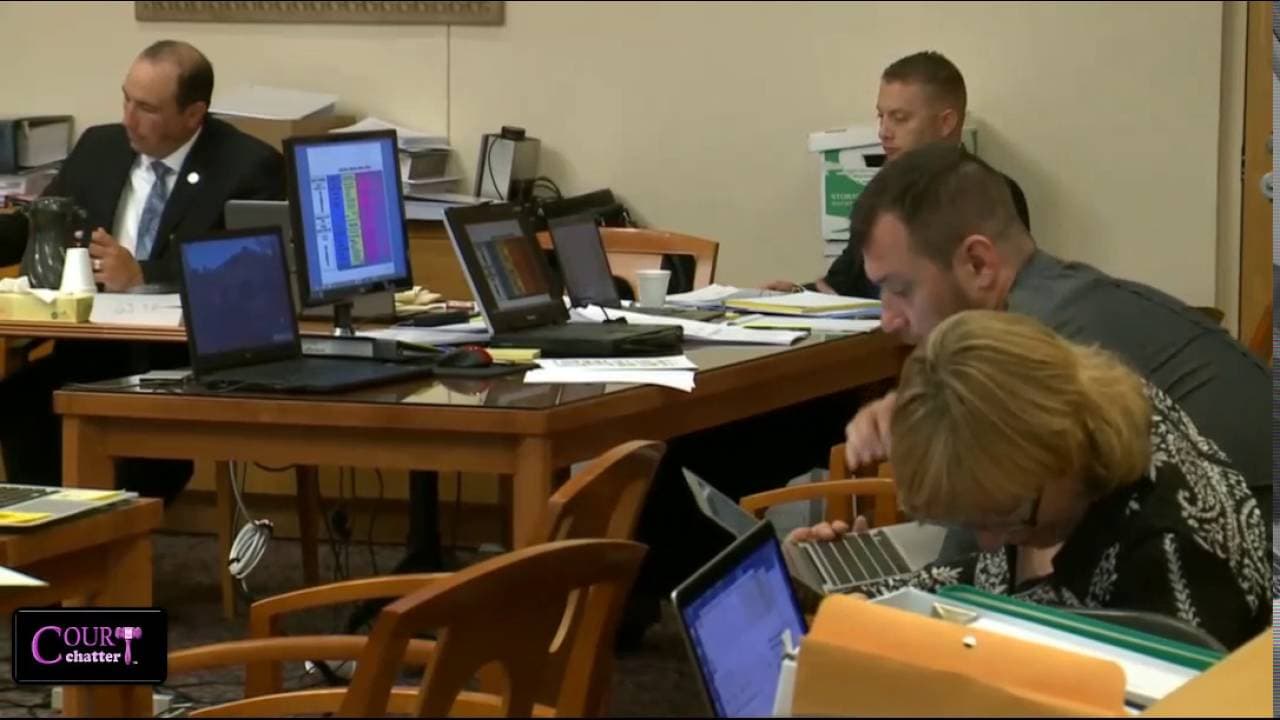
Sandy and Perez Trial Day 11 Part 2 10/04/16
TL;DR
Law enforcement officer explains their specialized training in use of force, including the reactive control model. The officer emphasizes the importance of perception, response time, and appropriate use of force in different situations.
Transcript
now what specialized training did you receive so that you could actually teach this topic use of force it was a train-the-trainer course not in Santa Fe when we went up there it was actually an instructor course who taught the train to trainer class it was a three gentlemen that actually designed the program which was a Darrell heart tonga lesbian ... Read More
Key Insights
- 👮 Specialized training in use of force is necessary for law enforcement officers to appropriately respond to different levels of threats.
- 👮 The reactive control model provides a framework for officers to assess and react to subject behavior.
- 🖐️ Perception and response time play a vital role in an officer's ability to handle a potential threat.
- 😒 The use of force should be proportionate to the level of threat and officers must continually assess the situation to minimize harm to themselves and others.
- 👮 Stress can impact an officer's response time, underscoring the importance of training and preparation.
- 💨 The power curve concept highlights the advantage of an attacker who can initiate an attack faster than an officer can respond, emphasizing the need for quick and decisive action.
- ❓ Continual training and skill development are necessary to effectively respond to dangerous situations.
Install to Summarize YouTube Videos and Get Transcripts
Explore YouTube Video Summarizer or Get YouTube Transcript Extractor
Questions & Answers
Q: Who developed the reactive control model?
The reactive control model was developed by Darrell Hart, Tom Gillespie, and John Boren, who were involved with the New Mexico Department of Public Safety hierarchy.
Q: How did the officer implement the reactive control model in their training of cadets?
The officer followed the curriculum mandated by the Department of Public Safety and used the reactive control model to teach officers how to assess and react to a suspect's behavior. They incorporated verbal directions, show of force, and different levels of physical control techniques depending on the situation.
Q: How did the officer teach cadets to assess the immediacy of a threat?
The officer used acronyms like "tool your drill" and "CORE" to teach cadets about assessing the immediacy of a threat. They emphasized the factors of intent, ability/means, and opportunity/closeness to determine the appropriate response.
Q: How does stress affect an officer's response time?
Stress can slow down an officer's response time, depending on their ability to handle stress and stay mentally focused. It is crucial for officers to remain calm and make quick decisions in high-pressure situations.
Summary & Key Takeaways
-
The officer received specialized training in use of force through a train-the-trainer course conducted by the New Mexico Department of Public Safety.
-
The training focused on the reactive control model, which helps officers assess and respond to different levels of threat.
-
The officer taught various courses, including defensive tactics, high-risk patrol tactics, and report writing, in addition to use of force training.
-
They served as a sergeant in the Albuquerque Police Department, overseeing the Academy and SWAT team.
Read in Other Languages (beta)
Share This Summary 📚
Summarize YouTube Videos and Get Video Transcripts with 1-Click
Try YouTube Summary with ChatGPT & Claude or YouTube Transcript Generator
Explore More Summaries from Law&Crime Network 📚



Summarize YouTube Videos and Get Video Transcripts with 1-Click
Try YouTube Summary with ChatGPT & Claude or YouTube Transcript Generator