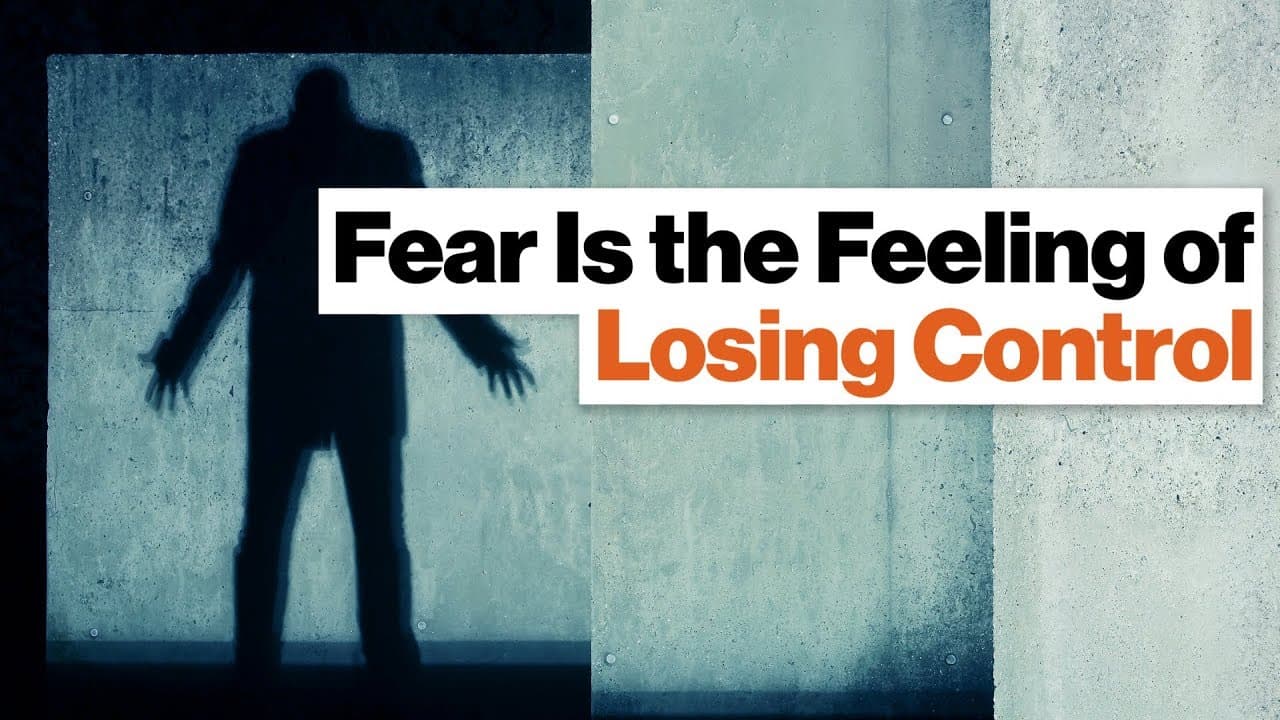
Why We Fear What We Can't Control: Airplanes, Hospital, Old Age | Tali Sharot | Big Think
TL;DR
Giving people a sense of control and agency over their choices motivates them and increases their perception of value.
Transcript
When we want to change people’s behavior, we often say, “Do this. Don’t to do that.” Basically we are, a lot of times, giving orders—whether it is to our kids, people in our family, people that we work with—we are exerting control over others or at least attempting to exert control over others. But what we find is that what the brain is trying to d... Read More
Key Insights
- 🧠 Control is a major goal of the brain, as it is associated with rewards and avoiding losses.
- 👯 Giving people a sense of agency and control motivates them and puts them in a reward-focused mindset.
- 🎮 People are willing to sacrifice other rewards, such as monetary gain, in order to maintain control.
- 🎮 When individuals have agency and feel in control, they value the outcomes more, whether it's a product or an idea.
- 🥇 The perception of agency and control is enough to increase the value an individual places on something.
- 🎮 Age-related loss of control, such as in nursing homes, can induce stress, highlighting the importance of restoring a sense of control for older individuals.
- 👻 Allowing children to have a say in decision-making rather than giving orders increases their satisfaction and sense of agency.
Install to Summarize YouTube Videos and Get Transcripts
Explore YouTube Video Summarizer or Get YouTube Transcript Extractor
Questions & Answers
Q: How does the brain respond to having control over choices?
When people have the opportunity to make a choice, the same part of the brain associated with receiving food rewards is activated. This demonstrates that control is rewarding to the brain.
Q: Why do people prefer to make their own choices, even if experts could make better decisions?
People value their own agency and sense of control. They are willing to sacrifice potential monetary rewards in order to keep the choice-making process in their own hands.
Q: Are there any situations where people prefer to give away their choice?
In complex situations or under high levels of stress, people may prefer to have someone else make the choice for them. Additionally, when individuals fear regret or loss of control, they may opt to have someone else decide for them.
Q: How does the fear of losing control impact anxiety?
The fear of losing control can lead to anxiety. Examples include the fear of flying, where individuals feel anxious because they no longer have control over their environment. Similarly, being in a hospital can cause anxiety as decisions are made by experts, further diminishing a sense of control.
Summary & Key Takeaways
-
The brain seeks to control its environment to obtain rewards and avoid losses.
-
Having the opportunity to make a choice activates the reward center of the brain.
-
Control in and of itself is rewarding, and people are willing to give up other rewards to have control.
Read in Other Languages (beta)
Share This Summary 📚
Summarize YouTube Videos and Get Video Transcripts with 1-Click
Try YouTube Summary with ChatGPT & Claude or YouTube Transcript Generator
Explore More Summaries from Big Think 📚

Summarize YouTube Videos and Get Video Transcripts with 1-Click
Try YouTube Summary with ChatGPT & Claude or YouTube Transcript Generator