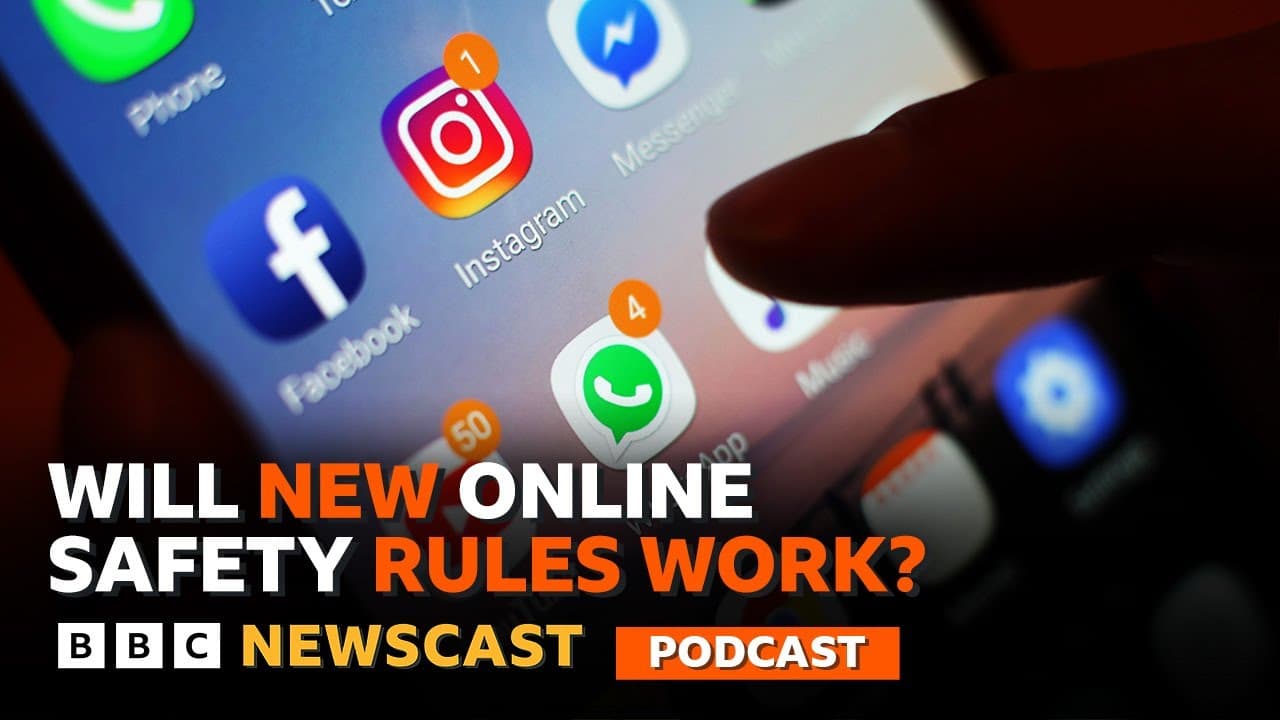
Will The Plan To Keep Kids Safe Online Work? | BBC Newscast
TL;DR
Ofcom's Online Safety Act aims to protect children online.
Transcript
Read and summarize the transcript of this video on Glasp Reader (beta).
Key Insights
- The Online Safety Act will enforce child safety measures by July 2025, requiring age checks to screen harmful content.
- There is criticism that legislation is outdated due to rapid technological advancements, particularly with AI.
- Ofcom aims to enforce cultural changes in Silicon Valley to ensure compliance with the new safety measures.
- The debate continues on whether smartphones should be banned in schools, with varying opinions on its feasibility.
- Parents and politicians express concern over children's access to harmful online content and the slow legislative response.
- The NHS is facing potential strikes by resident doctors, with salary negotiations being a point of contention.
- Unite union's potential disaffiliation from the Labour Party could impact political support and funding.
- BBC leadership faces scrutiny over its handling of content related to the Gaza-Israel conflict, with Ofcom questioning its effectiveness.
Install to Summarize YouTube Videos and Get Transcripts
Explore YouTube Video Summarizer or Get YouTube Transcript Extractor
Questions & Answers
Q: What is the main goal of the Online Safety Act?
The Online Safety Act aims to protect children from harmful online content by enforcing age verification measures on tech platforms. These measures are set to be implemented by July 2025 and will require platforms to screen out material inappropriate for under-18s, such as pornography and self-harm content.
Q: Why is there criticism of the Online Safety Act?
Critics argue that the Online Safety Act is already outdated due to the rapid advancement of technology, particularly AI. They believe that the legislation does not move fast enough to address the potential dangers posed to children by new technologies, and that more updated measures may be necessary soon.
Q: What are the concerns regarding smartphones in schools?
There is an ongoing debate about whether smartphones should be banned in schools. Some parents and politicians believe that banning phones could prevent children from accessing harmful content. However, others argue that phones are necessary for safety and communication, and that simple bans may not address complex individual needs.
Q: What challenges does Ofcom face in enforcing the Online Safety Act?
Ofcom faces the challenge of enforcing a cultural shift in Silicon Valley to ensure compliance with the Online Safety Act. The regulator must navigate the complexities of rapidly evolving technology and industry resistance while implementing effective age verification measures to protect children from harmful online content.
Q: What is the current status of the NHS strikes?
The NHS is facing potential strikes by resident doctors, primarily over salary disputes. Negotiations have stalled, with the government offering a 5.4% pay rise after previous increases. The strikes could disrupt efforts to reduce waiting lists, and public opinion on the strikes appears to be waning compared to previous healthcare worker actions.
Q: How might Unite's relationship with the Labour Party change?
Unite union is considering disaffiliation from the Labour Party, which could significantly impact Labour's political support and funding. This potential shift is due to dissatisfaction with Labour's policies and handling of union-related issues. Unite's disaffiliation could lead to changes in how union funds are allocated politically.
Q: What issues is the BBC facing regarding its leadership?
The BBC's leadership is under scrutiny for its handling of content related to the Gaza-Israel conflict. Ofcom has questioned the BBC's effectiveness in managing its coverage, and there are concerns about the corporation's ability to maintain public confidence. The situation highlights ongoing tensions between the BBC, government, and regulatory bodies.
Q: What political dynamics are affecting the Labour Party?
The Labour Party is navigating complex political dynamics, including potential disaffiliation from Unite union and internal disputes over policy direction. Tensions exist between traditional Labour backers and the party's current leadership, with some members seeking alternatives. These dynamics could influence Labour's strategy and electoral prospects.
Summary & Key Takeaways
-
The Online Safety Act is set to enforce child protection measures by July 2025, requiring tech platforms to implement age checks to restrict harmful content. Ofcom aims to drive cultural changes in Silicon Valley to ensure compliance, but concerns remain about the legislation's relevance due to rapid technological changes.
-
The NHS is preparing for potential strikes by resident doctors over salary disputes, complicating efforts to reduce waiting lists. Meanwhile, Unite union's potential disaffiliation from the Labour Party could affect political dynamics and funding, as tensions rise over Labour's policies and union relations.
-
BBC leadership is under scrutiny for its coverage of the Gaza-Israel conflict, with Ofcom questioning its effectiveness. The debate over smartphone bans in schools continues, with parents and politicians expressing concerns about children's access to harmful online content and the slow pace of legislative responses.
Read in Other Languages (beta)
Share This Summary 📚
Summarize YouTube Videos and Get Video Transcripts with 1-Click
Try YouTube Summary with ChatGPT & Claude or YouTube Transcript Generator
Explore More Summaries from BBC News 📚





Summarize YouTube Videos and Get Video Transcripts with 1-Click
Try YouTube Summary with ChatGPT & Claude or YouTube Transcript Generator