How to Identify Strong, Weak, and Non-Electrolytes
TL;DR
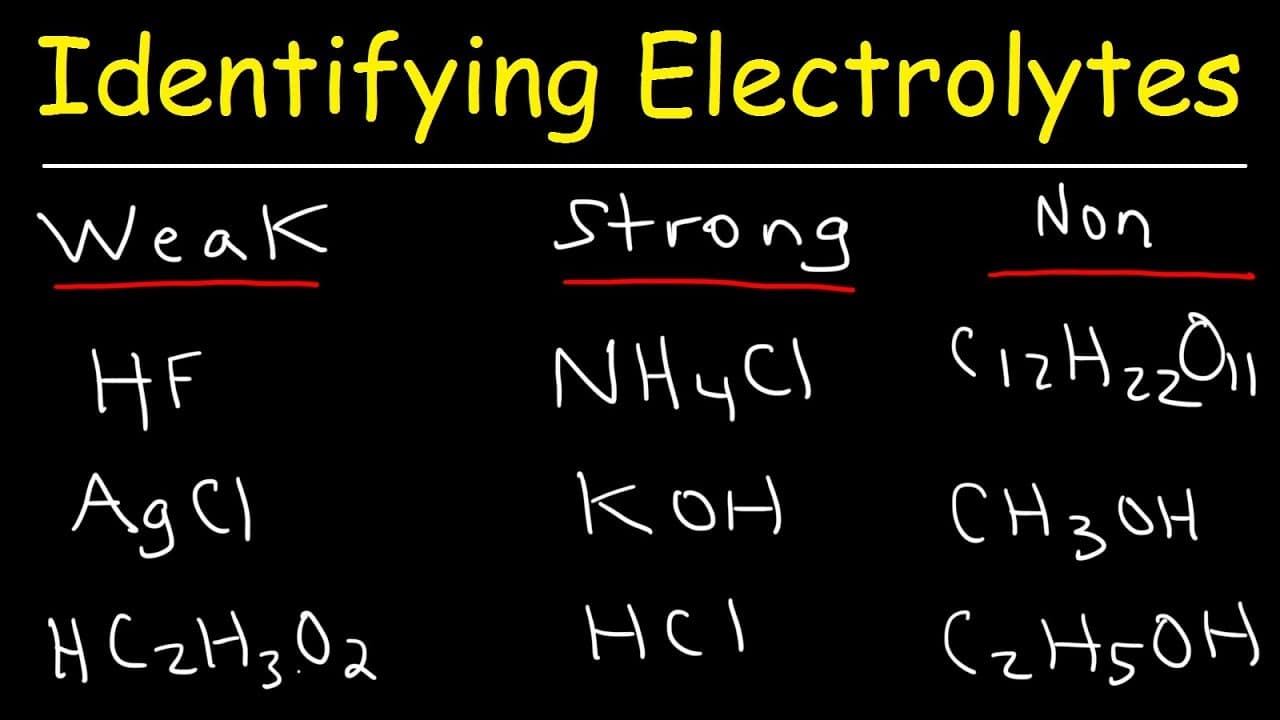
Strong electrolytes completely ionize in water and conduct electricity well, while weak electrolytes partially ionize and conduct electricity to a lesser extent. Non-electrolytes do not ionize at all and do not conduct electricity. Examples include strong acids and bases as strong electrolytes, weak acids and insoluble ionic compounds as weak electrolytes, and sugars and alcohols as non-electrolytes.
Transcript
in this video we're going to talk about how to identify a weak electrolyte a strong electrolyte and a non-electrolyte so first what's the difference between these three types of electrolytes what you need to know is that a strong electrolyte conducts electricity very well a weak electrolyte conducts it just a little and a non-electrolyte does not c... Read More
Key Insights
- 💪 Strong electrolytes conduct electricity very well, weak electrolytes conduct it partially, and non-electrolytes do not conduct electricity at all.
- 💪 Strong electrolytes include strong acids, strong bases, and highly soluble ionic compounds.
- ❓ Weak electrolytes can be insoluble ionic compounds, weak acids, weak bases, or compounds that ionize only partially.
- 💦 Non-electrolytes, such as sugars and alcohols, do not ionize in water and do not conduct electricity.
- 📏 Solubility rules can help determine whether a compound is soluble or insoluble, which can influence its electrolyte category.
- 💪 Soluble ionic compounds generally behave as strong electrolytes, while insoluble ionic compounds behave as weak electrolytes.
- 💪 Strong bases, like potassium hydroxide, and weak bases, like ammonia, can be classified as weak electrolytes.
Install to Summarize YouTube Videos and Get Transcripts
Explore YouTube Video Summarizer or Get YouTube Transcript Extractor
Questions & Answers
Q: What is the main difference between a strong electrolyte, a weak electrolyte, and a non-electrolyte?
The main difference lies in their ability to conduct electricity in water. Strong electrolytes conduct it very well, weak electrolytes conduct it to a lesser extent, and non-electrolytes do not conduct electricity at all.
Q: Can you provide examples of strong electrolytes?
Yes, examples of strong electrolytes include strong acids (e.g., hydrochloric acid), strong bases (e.g., potassium hydroxide), and highly soluble ionic compounds (e.g., sodium chloride).
Q: What are some examples of weak electrolytes?
Weak electrolytes can be insoluble ionic compounds (e.g., silver chloride), weak acids (e.g., acetic acid), weak bases (e.g., ammonia), or compounds that ionize only partially in water.
Q: What makes a compound a non-electrolyte?
A non-electrolyte is a compound that does not ionize in water, such as sugars (e.g., sucrose, glucose) and alcohols (e.g., methanol). They do not conduct electricity.
Summary & Key Takeaways
-
A strong electrolyte conducts electricity very well, while a weak electrolyte conducts it to a lesser extent, and a non-electrolyte does not conduct electricity in water.
-
Strong electrolytes include strong acids, strong bases, and highly soluble ionic compounds, which ionize completely in water.
-
Weak electrolytes can be insoluble ionic compounds, weak acids, weak bases, or compounds that ionize only partially.
-
Non-electrolytes, such as sugars and alcohols, do not ionize in water and do not conduct electricity.
Read in Other Languages (beta)
Share This Summary 📚
Summarize YouTube Videos and Get Video Transcripts with 1-Click
Try YouTube Summary with ChatGPT & Claude or YouTube Transcript Generator
Explore More Summaries from The Organic Chemistry Tutor 📚



Summarize YouTube Videos and Get Video Transcripts with 1-Click
Try YouTube Summary with ChatGPT & Claude or YouTube Transcript Generator