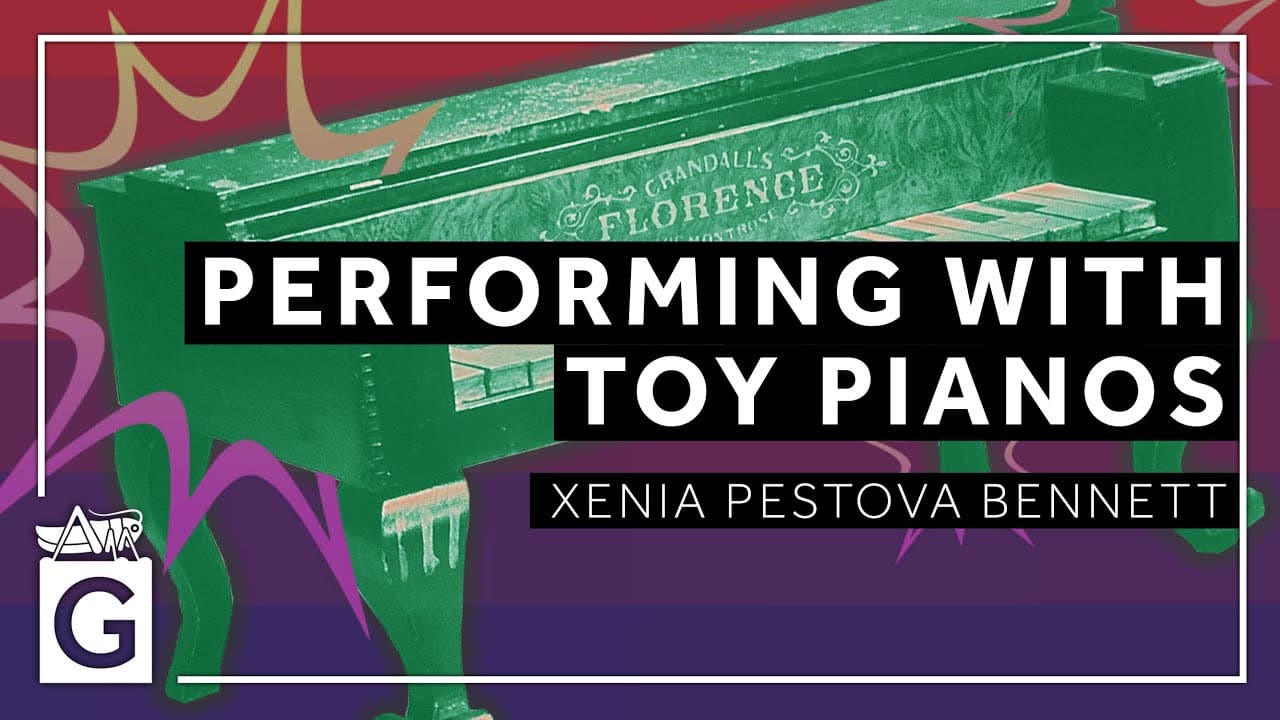
Performing with Toy Pianos
TL;DR
This comprehensive analysis explores the history, differences, and music written for toy pianos, highlighting its portability and theatrical qualities.
Transcript
um so as you already know i am a concert pianist university lecturer and i'm also very much interested in well-being and musicians health but tonight i will be talking about and playing a very different instrument the toy piano so we're all familiar with the grown-up piano and of course you can see one behind me this wonderful and versatile instrum... Read More
Key Insights
- 🎹 Toy pianos were initially considered toys, but John Cage's composition popularized them as a concert instrument.
- 💝 Albert Schoenhut played a significant role in popularizing toy pianos in the late 19th century.
- 🎹 Toy pianos have a different mechanism and sound compared to grand pianos, requiring a different approach to playing and performing.
- 🖐️ Theatricality and visual gestures play a significant role in toy piano performances.
- 💗 Composers have embraced the toy piano's limitations and quirkiness, creating a growing body of repertoire.
- 🎭 Toy pianos offer portability and the ability to perform in unconventional locations.
- 💄 Different toy piano models have unique characteristics, making each instrument individual and unpredictable.
Install to Summarize YouTube Videos and Get Transcripts
Explore YouTube Video Summarizer or Get YouTube Transcript Extractor
Questions & Answers
Q: Are toy pianos still manufactured today?
While some brands, like Michelson, are discontinued, you can find secondhand toy pianos online, like on eBay. Prices vary depending on the model and rarity.
Q: How do you play a miniature piano?
Playing techniques for toy pianos involve playing light and detached due to the unpredictable nature of the instrument. It requires adapting to the unique sound and resonance of each toy piano.
Q: Are the keys arranged in the same pitch range as a normal piano?
Yes, the keys are arranged in ascending order from low to high. However, the toy piano's sound is enharmonic and can create auditory illusions due to the nature of the metal rods.
Q: Is there a particular aesthetic quality in the toy piano's sound that you find appealing?
The toy piano's sound has interesting and quirky characteristics that can be aesthetically pleasing. However, the relationship with the instrument can be love-hate due to its individuality and unique challenges.
Summary & Key Takeaways
-
The toy piano offers a respite from the serious implications of the grand piano and allows for performances in unconventional locations.
-
Albert Schoenhut popularized toy pianos in the late 19th century, making them accessible to children and later embraced by composers and performers.
-
The toy piano has its own unique mechanism, sound, and limitations, requiring a different set of skills for performance.
Read in Other Languages (beta)
Share This Summary 📚
Summarize YouTube Videos and Get Video Transcripts with 1-Click
Try YouTube Summary with ChatGPT & Claude or YouTube Transcript Generator
Explore More Summaries from Gresham College 📚
Summarize YouTube Videos and Get Video Transcripts with 1-Click
Try YouTube Summary with ChatGPT & Claude or YouTube Transcript Generator