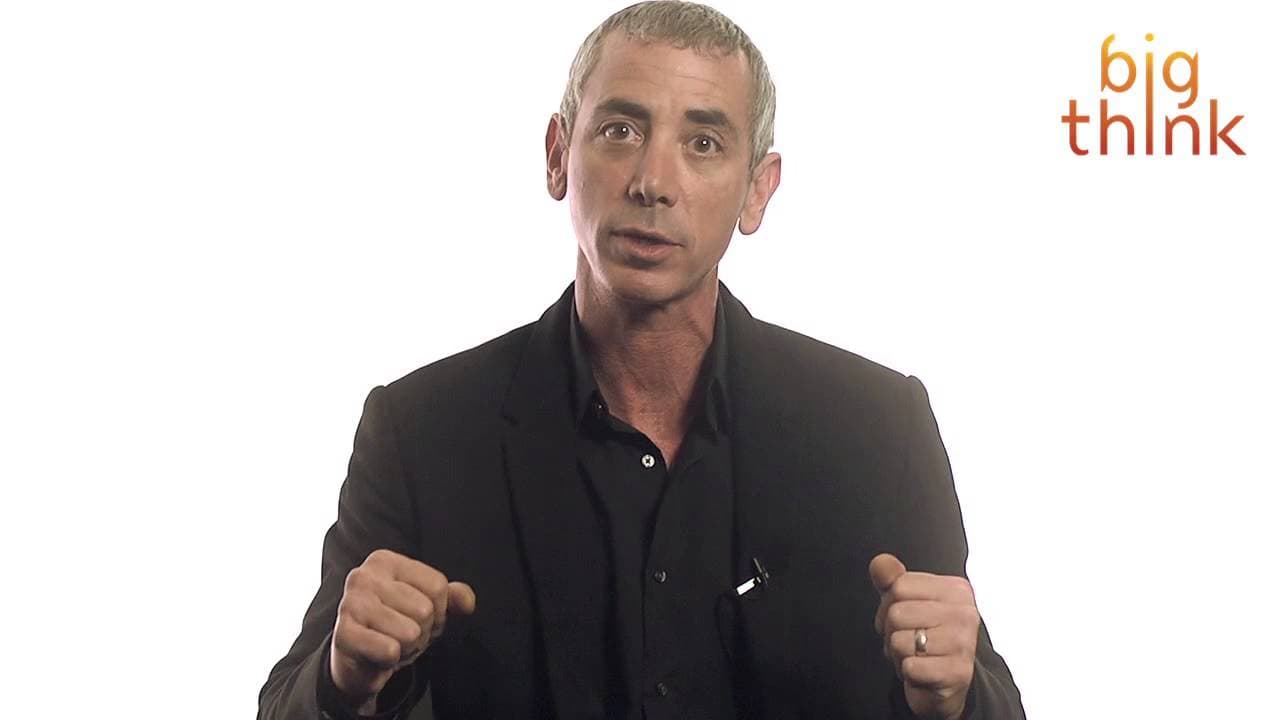
Slow Down Your Brain to Get More Done, with Steven Kotler | Big Think
TL;DR
Flow is an optimal state of consciousness in which we become fully absorbed in a task, leading to enhanced performance. This state is characterized by the shutting down of parts of the brain, resulting in altered perception of time and a sense of unity with the surrounding environment.
Transcript
Flow is technically defined as an optimal state of consciousness. A state of consciousness where we feel our best and we perform our best. It refers to those moments of total absorption when we get so focused on the task at hand that everything else disappears. So our sense of self, our sense of self-consciousness, they vanish. Time dilates which m... Read More
Key Insights
- 💐 Flow is an optimal state of consciousness characterized by total absorption and enhanced performance.
- ⏳ Time perception becomes distorted in flow, with time either slowing down or speeding up.
- 🥳 Transient hypofrontality, the shutting down of parts of the prefrontal cortex, underpins flow and leads to heightened creativity and risk-taking.
- 👨🔬 Flow research has a long history, with recent advancements in neurobiology providing a deeper understanding of its mechanisms.
Install to Summarize YouTube Videos and Get Transcripts
Explore YouTube Video Summarizer or Get YouTube Transcript Extractor
Questions & Answers
Q: What is flow and how does it affect our performance?
Flow is an optimal state of consciousness characterized by total absorption and enhanced performance. In flow, our sense of self and self-consciousness disappear, allowing us to fully focus on the task at hand. This leads to improved mental and physical performance.
Q: Why does time perception change in flow?
Time perception becomes distorted in flow because parts of the prefrontal cortex, responsible for time calculation, start to shut down. This inability to separate past, present, and future plunges us into what researchers call the "deep now," where time either slows down or speeds up.
Q: What is transient hypofrontality and its role in flow?
Transient hypofrontality refers to the temporary shutting down of the prefrontal cortex, specifically the dorsolateral prefrontal cortex in flow. This part of the brain houses our inner critic and self-judging voice. When it shuts down in flow, we experience a sense of liberation, increased creativity, and risk-taking.
Q: How does flow contribute to a sense of unity with the environment?
In flow, the brain's right parietal lobe, responsible for differentiating self from others, shuts down. This leads to a feeling of oneness with the environment, where individuals describe being "one with the waves" or experiencing "cosmic unity." The inability to distinguish between self and others contributes to this sense of unity.
Summary & Key Takeaways
-
Flow is a state of consciousness where we feel our best and perform our best, characterized by total absorption and the disappearance of self-consciousness.
-
Time perception becomes distorted in flow, with time either slowing down or speeding up.
-
The key neurobiological change underlying flow is transient hypofrontality, which refers to the temporary shutting down of the prefrontal cortex, leading to enhanced performance.
Read in Other Languages (beta)
Share This Summary 📚
Summarize YouTube Videos and Get Video Transcripts with 1-Click
Try YouTube Summary with ChatGPT & Claude or YouTube Transcript Generator
Explore More Summaries from Big Think 📚


Summarize YouTube Videos and Get Video Transcripts with 1-Click
Try YouTube Summary with ChatGPT & Claude or YouTube Transcript Generator