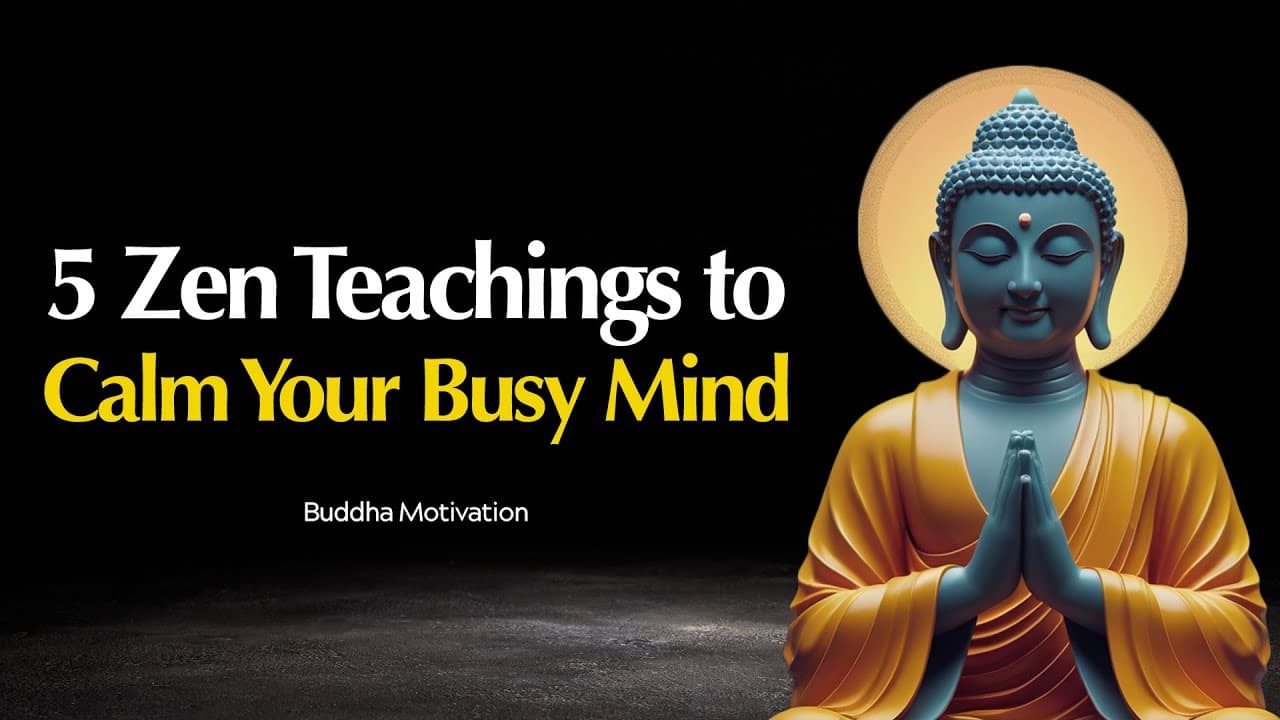
Stillness in the Storm - 5 Zen Teachings for a Restless Mind
TL;DR
Explore five Zen teachings to calm a restless mind.
Transcript
Read and summarize the transcript of this video on Glasp Reader (beta).
Key Insights
- Letting go is an act of trust, allowing us to release control and embrace the natural flow of life. When we cling too tightly to thoughts or fears, we suffer. By loosening our grip, we find mental peace.
- Sitting in stillness without striving helps us observe thoughts and emotions without entanglement. This practice teaches that peace comes from how we perceive, not from changing circumstances.
- Emptying the mind of preconceived notions and judgments opens us to new insights. Approaching life with a beginner's mind allows us to experience wonder and clarity in everyday moments.
- Zen emphasizes finding the sacred in ordinary tasks. Engaging fully in daily activities, like washing dishes or walking, becomes a form of meditation, grounding us in the present.
- The concept of 'nowhere to go, nothing to do' encourages us to stop striving for a future self and recognize that we are complete in this moment. Inner tension diminishes when we accept ourselves as we are.
- Zen teachings remind us that peace is not a destination but a state of being. By living from a place of peace, we navigate life's challenges with greater ease and clarity.
- The practice of mindfulness in Zen is about returning to the present moment repeatedly. Each breath and each action becomes an opportunity to reconnect with the inner stillness.
- Zen does not promise a life without problems but offers a profound way to live amidst them. By embracing these teachings, we cultivate a life where peace is not sought externally but lived internally.
Install to Summarize YouTube Videos and Get Transcripts
Explore YouTube Video Summarizer or Get YouTube Transcript Extractor
Questions & Answers
Q: What is the significance of letting go in Zen practice?
Letting go in Zen practice is significant because it involves releasing the need to control outcomes and embracing trust in the natural flow of life. By loosening our grip on thoughts and fears, we reduce suffering and allow ourselves to experience peace. This act of letting go is not a sign of weakness but a profound expression of trust and acceptance.
Q: How does sitting in stillness contribute to mindfulness?
Sitting in stillness contributes to mindfulness by allowing individuals to observe their thoughts and emotions without becoming entangled in them. This practice teaches that true peace comes from how we perceive and accept the present moment, rather than attempting to change external circumstances. It fosters a deep sense of presence and awareness, helping to calm the restless mind.
Q: What does it mean to empty your cup in a Zen context?
In a Zen context, emptying your cup means approaching life with an open and receptive mind, free from preconceived notions and judgments. This practice encourages a beginner's mind, allowing individuals to experience wonder and clarity in everyday moments. By emptying our mental cup, we create space for new insights and a deeper understanding of the world around us.
Q: How can ordinary tasks become a form of meditation in Zen?
Ordinary tasks become a form of meditation in Zen by engaging in them with full attention and mindfulness. Activities like washing dishes or walking are performed with a focus on the present moment, turning them into meditative practices. This approach grounds individuals in the present, allowing them to experience the sacredness and peace inherent in everyday actions.
Q: What is the teaching of 'nowhere to go, nothing to do' about?
The teaching of 'nowhere to go, nothing to do' in Zen is about embracing the present moment and recognizing that we are complete as we are. It encourages individuals to stop striving for a future self and to accept themselves fully in the now. This acceptance reduces inner tension and fosters a sense of peace and contentment with life as it is.
Q: How do Zen teachings redefine the concept of peace?
Zen teachings redefine the concept of peace by suggesting that it is not a destination or something to be sought externally. Instead, peace is a state of being that arises from within when we change our perception and interaction with the world. By living from a place of peace, we navigate life's challenges with greater ease and clarity.
Q: What role does mindfulness play in Zen teachings?
Mindfulness plays a central role in Zen teachings, as it involves returning to the present moment repeatedly and engaging fully with each experience. Through mindfulness, individuals cultivate a deep sense of presence and awareness, which helps calm the restless mind and fosters inner peace. It is about being fully present in each breath and action.
Q: How do Zen teachings help in dealing with life's challenges?
Zen teachings help in dealing with life's challenges by offering a profound way to live amidst difficulties. By embracing practices like letting go, sitting in stillness, and finding the sacred in ordinary tasks, individuals cultivate a mindset of acceptance and presence. This approach allows for greater ease and clarity in navigating challenges, as peace is lived internally rather than sought externally.
Summary & Key Takeaways
-
The video introduces five Zen teachings aimed at calming the mind: letting go, sitting in stillness, emptying the mind, finding the sacred in ordinary tasks, and embracing the present moment. These teachings guide viewers towards inner peace by encouraging mindfulness and a shift in perception.
-
Zen philosophy emphasizes the importance of presence and acceptance. By letting go of control and embracing the present, individuals can find peace within themselves. The teachings encourage a mindful approach to daily life, highlighting the sacredness in ordinary actions.
-
Through simple practices like sitting in stillness and approaching life with a beginner's mind, Zen teachings offer a path to mental clarity and peace. The video suggests that true peace is not found by changing circumstances but by changing how we perceive and interact with the world.
Read in Other Languages (beta)
Share This Summary 📚
Summarize YouTube Videos and Get Video Transcripts with 1-Click
Try YouTube Summary with ChatGPT & Claude or YouTube Transcript Generator
Explore More Summaries from Buddha Motivation 📚
Summarize YouTube Videos and Get Video Transcripts with 1-Click
Try YouTube Summary with ChatGPT & Claude or YouTube Transcript Generator