How to Use the Adapter Pattern in Software
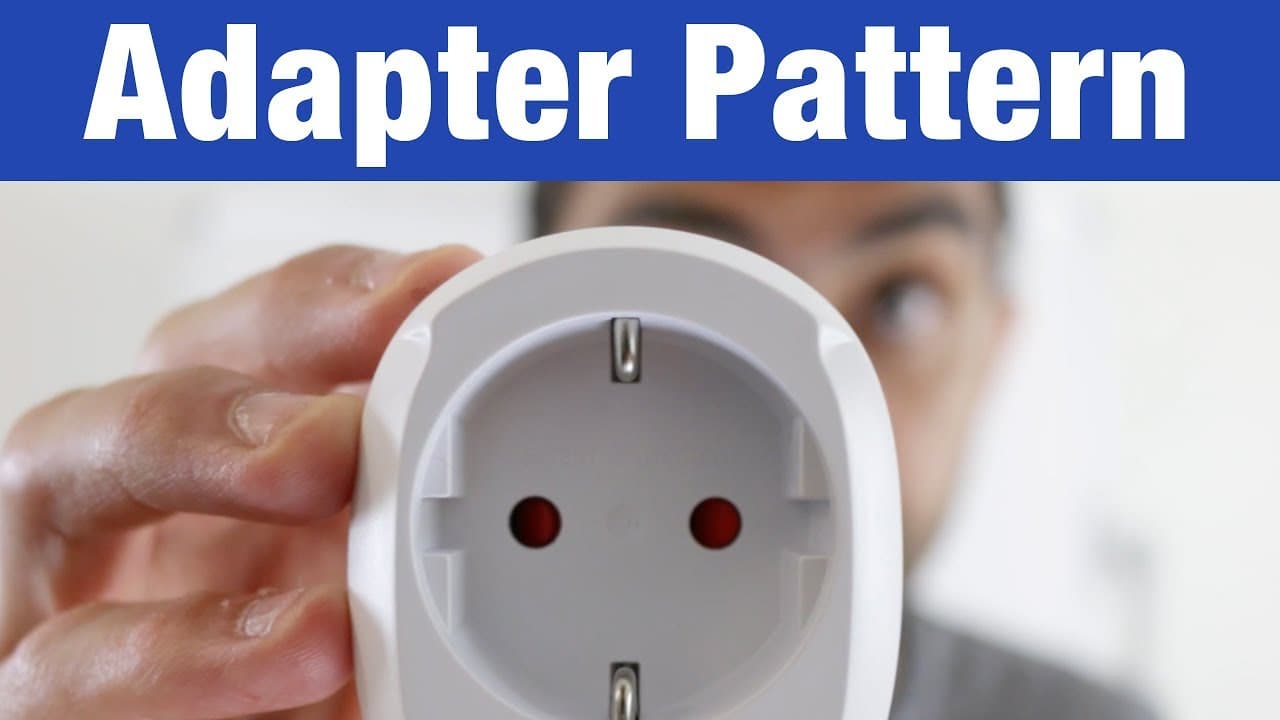
TL;DR
The Adapter Pattern is a design pattern used in software development to make incompatible interfaces compatible. It acts as a wrapper, allowing different systems to work together without altering their existing code. This pattern is particularly useful when integrating legacy systems with new functionalities.
Transcript
alright, what we're going to talk about today is.. these things ... adapters but within the content of software development, this of course means the adapter design pattern. The thing is there is 4 patterns that are very much a like, so it's difficult to tell which one is which and it's kind of difficult to sort of... figure out the new answers. ... Read More
Key Insights
- The Adapter Pattern makes two incompatible interfaces compatible.
- It is also known as a wrapper because it wraps one interface to match another.
- The pattern is useful for integrating legacy systems with new functionalities.
- It differs from the Facade Pattern, which simplifies complex interactions.
- Unlike the Proxy Pattern, which controls access, Adapter focuses on compatibility.
- The Decorator Pattern adds behavior without altering the original object.
- The Adapter Pattern is part of the structural design patterns in software.
- Using this pattern can reduce code duplication and improve system flexibility.
Install to Summarize YouTube Videos and Get Transcripts
Explore YouTube Video Summarizer or Get YouTube Transcript Extractor
Questions & Answers
Q: What is the Adapter Pattern in software design?
The Adapter Pattern in software design is a structural pattern that allows two incompatible interfaces to work together. It acts as a wrapper around one of the interfaces, enabling it to communicate with the other without altering the existing code. This pattern is particularly useful for integrating legacy systems with new functionalities, ensuring seamless interaction.
Q: How does the Adapter Pattern differ from the Facade Pattern?
The Adapter Pattern differs from the Facade Pattern in its purpose and application. While the Adapter Pattern focuses on making incompatible interfaces compatible by wrapping one interface to match another, the Facade Pattern is used to simplify complex systems by providing a simplified interface to a set of interfaces in a subsystem. The Facade Pattern hides the complexities, whereas the Adapter Pattern ensures compatibility.
Q: When should the Adapter Pattern be used in software development?
The Adapter Pattern should be used in software development when there is a need to integrate systems with incompatible interfaces. It is particularly beneficial when working with legacy systems that need to be integrated with new components. By using the Adapter Pattern, developers can ensure compatibility without modifying the existing code, thereby maintaining system integrity and reducing the risk of introducing errors.
Q: What are the benefits of using the Adapter Pattern?
The benefits of using the Adapter Pattern include enhanced system flexibility, reduced code duplication, and the ability to integrate legacy systems with new functionalities. By making incompatible interfaces work together, the Adapter Pattern allows developers to extend existing systems without altering their original code. This pattern also facilitates code reuse and helps maintain system integrity during integration.
Q: Can the Adapter Pattern be used for both class and object adapters?
Yes, the Adapter Pattern can be implemented as both class adapters and object adapters. Class adapters use inheritance to adapt one interface to another, while object adapters use composition, wrapping one object to match the interface of another. The choice between class and object adapters depends on the specific requirements and constraints of the software project.
Q: How does the Adapter Pattern enhance software flexibility?
The Adapter Pattern enhances software flexibility by allowing incompatible interfaces to work together without altering existing code. This capability enables developers to integrate new functionalities or systems with legacy components seamlessly. By using adapters, systems can be extended or modified with minimal impact on existing code, promoting a flexible and adaptable software architecture.
Q: What is the role of a wrapper in the Adapter Pattern?
In the Adapter Pattern, a wrapper plays the critical role of adapting one interface to be compatible with another. The wrapper acts as an intermediary, encapsulating the original interface and exposing a new interface that matches the expected one. This allows the two systems to communicate effectively without requiring changes to their existing interfaces, facilitating seamless integration.
Q: Why is the Adapter Pattern important for integrating legacy systems?
The Adapter Pattern is important for integrating legacy systems because it allows these systems to work with new software components without requiring changes to their existing interfaces. By using adapters, developers can ensure compatibility between old and new systems, enabling seamless integration and extending the functionality of legacy systems. This approach minimizes the risk of errors and maintains the integrity of the original system.
Summary & Key Takeaways
-
The Adapter Pattern is a structural design pattern that allows incompatible interfaces to work together by acting as a wrapper. It is particularly useful for integrating legacy systems with new software components without modifying existing code.
-
This pattern is different from the Facade Pattern, which simplifies complex systems, and the Proxy Pattern, which manages access to objects. The Adapter Pattern focuses on interface compatibility, ensuring seamless integration.
-
Understanding the Adapter Pattern is crucial for software developers dealing with legacy systems or those needing to ensure compatibility between different system components. It enhances flexibility and reduces the need for code duplication.
Read in Other Languages (beta)
Share This Summary 📚
Summarize YouTube Videos and Get Video Transcripts with 1-Click
Try YouTube Summary with ChatGPT & Claude or YouTube Transcript Generator
Explore More Summaries from Christopher Okhravi 📚


Summarize YouTube Videos and Get Video Transcripts with 1-Click
Try YouTube Summary with ChatGPT & Claude or YouTube Transcript Generator