How Did Reinforcement Learning Evolve Over Time?
TL;DR
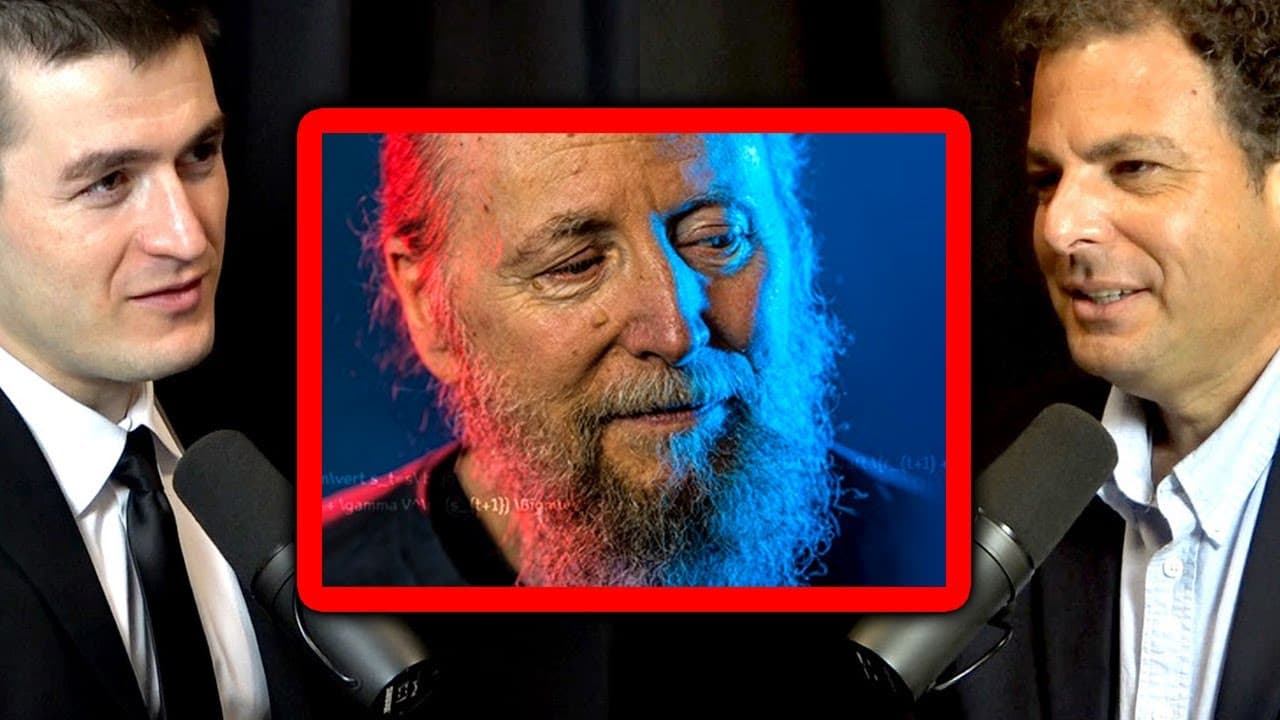
Reinforcement learning has a rich history, beginning in the 1980s alongside the rise of neural networks. Early efforts included attempts to teach computers to play games, paving the way for significant advancements in AI, especially through the contributions of researchers like Rich Sutton and Jerry Tesauro. Their interplay between cognitive science and machine learning offers insights that continue to shape the field.
Transcript
you mentioned reinforcement learning so you've have uh a couple of years in the field no uh quite you know quite a few uh quite a long career in artificial intelligence broadly but reinforcement learning specifically can you maybe give a hint about your sense of the history of the field and in some ways has changed with the advent of deep learning ... Read More
Key Insights
- 🤗 Neural networks and reinforcement learning have evolved hand in hand since the 80s, with early pioneers like Rich Sutton and Jerry Tesauro making significant contributions.
- 🏑 The intersection of neuroscience, cognitive psychology, and deep learning brings fresh perspectives to machine learning problems, as researchers from these fields approach them differently.
- 🖐️ Modularity and worst-case analysis play crucial roles in building reliable and adaptable AI systems.
- ❓ Jerry Tesauro's achievements in using neural networks for reinforcement learning demonstrate the importance of human expertise alongside technology.
- 😀 Reinforcement learning has faced challenges in achieving consistent and reliable results, particularly when neural networks are involved.
- 👻 Q-learning's off-policy learning capability revolutionized reinforcement learning by allowing systems to learn and make optimal decisions simultaneously.
- 💖 Reinforcement learning has often sparked excitement and speculation about its potential to solve complex problems, but practical implementation remains challenging.
Install to Summarize YouTube Videos and Get Transcripts
Explore YouTube Video Summarizer or Get YouTube Transcript Extractor
Questions & Answers
Q: How did you first become interested in computer science and programming?
I fell in love with computer science when I received a TRS-80 Model 1 computer in 1979. I spent hours programming in BASIC and exploring its capabilities, which sparked my passion for the field.
Q: When did you first learn about neural networks, and in what context?
I learned about neural networks in college through a psychology class, where we discussed their potential applications in understanding human behavior and cognition.
Q: What role did reinforcement learning play in your early exploration of AI?
During my college years, I became intrigued by the concept of teaching programs to learn how to behave. This led me to discover reinforcement learning, and I delved into Rich Sutton's TD (temporal difference) learning paper to understand the principles better.
Q: How did the introduction of Q-learning impact the field of reinforcement learning?
Q-learning introduced the concept of off-policy learning, which allowed systems to learn about the environment while simultaneously figuring out how to behave optimally. This breakthrough opened new possibilities and solved several challenges in reinforcement learning.
Summary & Key Takeaways
-
The interviewee shares their personal journey in the field of artificial intelligence, specifically reinforcement learning, dating back to the 80s when neural networks were emerging.
-
They discuss their early fascination with teaching their home computer to play tic-tac-toe and their introduction to reinforcement learning concepts in college, through psychology and cognitive science classes.
-
The conversation touches on the intersection of neuroscience and cognitive psychology with deep learning, highlighting the unique perspective these disciplines bring to machine learning problems.
Read in Other Languages (beta)
Share This Summary 📚
Summarize YouTube Videos and Get Video Transcripts with 1-Click
Try YouTube Summary with ChatGPT & Claude or YouTube Transcript Generator
Explore More Summaries from Lex Clips 📚



Summarize YouTube Videos and Get Video Transcripts with 1-Click
Try YouTube Summary with ChatGPT & Claude or YouTube Transcript Generator