Pronunciation: The linking /j/
TL;DR
The linking /j/ smooths transitions between words in fluent English.
Transcript
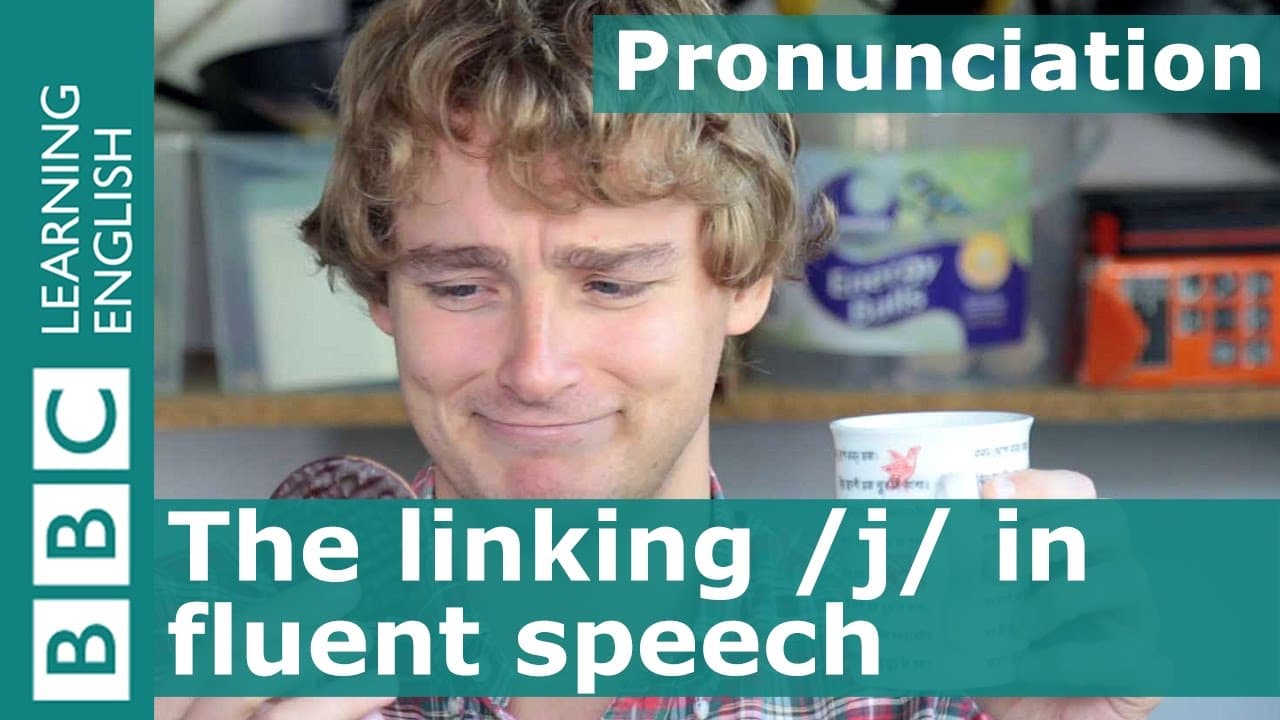
Hi. I'm Tim and this is my Pronunciation workshop. Here I'm gonna show you how English is really spoken. Come on, let's go inside. Are you a creature of habit? For example, do you have a routine in the mornings? Every morning, I like to have a cup of tea and a chocolate biscuit. Mmmm. This is what some people in London told us when we asked them wh... Read More
Key Insights
- The linking /j/ sound is used in English to create smoother transitions between words that end in certain vowel sounds and are followed by another vowel sound.
- Common vowel sounds that precede the linking /j/ include /aɪ/, /ɪː/, /eɪ/, and /ɔɪ/.
- The linking /j/ occurs naturally as the mouth changes shape between sounds, without the need for a fully pronounced /j/ sound.
- Examples of the linking /j/ include phrases such as 'I always' and 'lie on the beach,' where the transition is smoothed by the subtle /j/ sound.
- The workshop emphasizes listening and repeating exercises to help learners practice the linking /j/ in various phrases.
- The concept of the linking /j/ is part of natural, fluent English speech and helps in making conversations sound more fluid and connected.
- Tim's Pronunciation Workshop provides practical examples and encourages interactive learning through repetition and practice.
- Additional resources and further learning opportunities are available on the BBC Learning English website for those interested in improving their pronunciation.
Install to Summarize YouTube Videos and Get Transcripts
Explore YouTube Video Summarizer or Get YouTube Transcript Extractor
Questions & Answers
Q: What is the linking /j/ sound in English pronunciation?
The linking /j/ sound is a subtle sound used in English to create smoother transitions between words. It occurs when a word ending in certain vowel sounds, like /aɪ/, /ɪː/, /eɪ/, or /ɔɪ/, is followed by another word beginning with a vowel sound. This sound naturally occurs as the mouth changes shape between the sounds.
Q: Why is the linking /j/ important in fluent English speech?
The linking /j/ is important because it contributes to the fluidity and smoothness of spoken English. By naturally occurring between specific vowel sounds, it helps speakers connect words seamlessly, making conversations sound more natural and less choppy. This is a key aspect of achieving fluency in English.
Q: Can you provide examples of the linking /j/ in use?
Yes, examples of the linking /j/ include phrases like 'I always' and 'lie on the beach.' In these examples, the /j/ sound subtly links the words, making the transitions smoother. The sound is not fully pronounced but occurs naturally as the mouth moves between the vowel sounds.
Q: How can learners practice using the linking /j/ sound?
Learners can practice using the linking /j/ sound by engaging in listening and repetition exercises. Tim's Pronunciation Workshop provides examples for practice, encouraging learners to listen carefully to how the linking /j/ is used and then repeat the phrases. Consistent practice helps in mastering this aspect of pronunciation.
Q: What vowel sounds typically precede the linking /j/?
The vowel sounds that typically precede the linking /j/ include /aɪ/, /ɪː/, /eɪ/, and /ɔɪ/. When a word ends with one of these sounds and is followed by another word starting with a vowel sound, the linking /j/ naturally occurs to smooth the transition between the words.
Q: Is the linking /j/ sound always fully pronounced?
No, the linking /j/ sound is not always fully pronounced. It naturally occurs as the mouth changes shape between sounds, creating a smooth transition between words. It is important not to overemphasize or fully pronounce the /j/ sound, as it should be subtle and naturally integrated into speech.
Q: What resources are available for learning more about English pronunciation?
For those interested in learning more about English pronunciation, resources are available on the BBC Learning English website. Tim's Pronunciation Workshop is one such resource, offering practical examples and exercises to help learners improve their pronunciation and understand concepts like the linking /j/.
Q: What is the main goal of Tim's Pronunciation Workshop?
The main goal of Tim's Pronunciation Workshop is to teach learners how English is truly spoken by native speakers, focusing on aspects like the linking /j/ to improve fluency and naturalness in speech. The workshop provides practical examples, listening, and repetition exercises to help learners integrate these pronunciation techniques into their everyday language use.
Summary & Key Takeaways
-
Tim's Pronunciation Workshop introduces the concept of the linking /j/ sound, which helps in creating smooth transitions between words in fluent English. It naturally occurs when a word ending in certain vowel sounds is followed by another word starting with a vowel sound.
-
The workshop provides examples such as 'I always' and 'lie on the beach' to illustrate how the linking /j/ is used in everyday speech. It emphasizes that the sound should not be fully pronounced but rather occur naturally.
-
Listeners are encouraged to practice the linking /j/ through listening and repetition exercises, with further resources available on the BBC Learning English website. This technique aids in achieving more fluid and connected English speech.
Read in Other Languages (beta)
Share This Summary 📚
Summarize YouTube Videos and Get Video Transcripts with 1-Click
Try YouTube Summary with ChatGPT & Claude or YouTube Transcript Generator
Explore More Summaries from BBC Learning English 📚

Summarize YouTube Videos and Get Video Transcripts with 1-Click
Try YouTube Summary with ChatGPT & Claude or YouTube Transcript Generator