Davos Annual Meeting 2009 - Update 2009: Europe

TL;DR
Europe faces economic challenges but compared to other parts of the world, the situation is not so bad.
Transcript
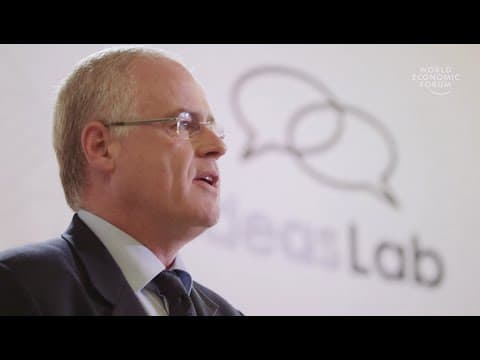
hello everybody my name is Charles Grant um welcome to the session on Europe there are very few sessions on Europe at Davos this year there's just this one and then there's one dinner on Europe as a actor in the world I think that is indicative of the fact that there are fewer problems in Europe than on many other continents those of us who live in... Read More
Key Insights
- 🥺 The economic crisis has led to slower growth and political challenges in Europe.
- 🌱 Balancing economic rescue plans and social unrest is a significant task for governments.
- 🖤 Lack of confidence in government actions and decisions is a common issue.
- 🤗 The EU needs to address energy policy, fiscal regulations, and competition to maintain an open economy.
- ❓ The future of the Eurozone and the possibility of EU enlargement remain subjects of debate.
Install to Summarize YouTube Videos and Get Transcripts
Explore YouTube Video Summarizer or Get YouTube Transcript Extractor
Questions & Answers
Q: How has the economic crisis affected the public's trust in the government?
The economic crisis has led to a lack of confidence in the government's actions and decision-making. Public employees, businessmen, and workers have all expressed their distrust.
Q: What are the main challenges for countries in Europe in balancing economic rescue plans and social unrest?
The main challenge is to implement the rescue plans while also addressing social unrest. This requires finding a balance between cutting public expenditures and salaries while managing the rise in unemployment.
Q: Is there a feeling that democracy is at risk in some European countries?
In some countries, there is a deep lack of confidence and trust in the government, which can lead to political crises. While democracy is considered safe in most countries, the lack of trust in government actions poses a risk.
Q: How are European governments handling the economic crisis?
European governments have varying responses to the economic crisis. Some are implementing expansionary fiscal policies, while others, like Poland, are adopting a cautious and conservative approach. Coordination at the EU level is being questioned.
Summary & Key Takeaways
-
Europe's economic growth has slowed down, with Latvia experiencing a 5% decline in economic output.
-
The country is facing political and social unrest due to necessary measures taken to stabilize the economy.
-
Balancing economic rescue plans and social unrest is a significant challenge for governments in every country.
-
Lack of confidence and trust in the government's actions is a common problem.
Read in Other Languages (beta)
Share This Summary 📚
Summarize YouTube Videos and Get Video Transcripts with 1-Click
Try YouTube Summary with ChatGPT & Claude or YouTube Transcript Generator
Explore More Summaries from World Economic Forum 📚
Summarize YouTube Videos and Get Video Transcripts with 1-Click
Try YouTube Summary with ChatGPT & Claude or YouTube Transcript Generator