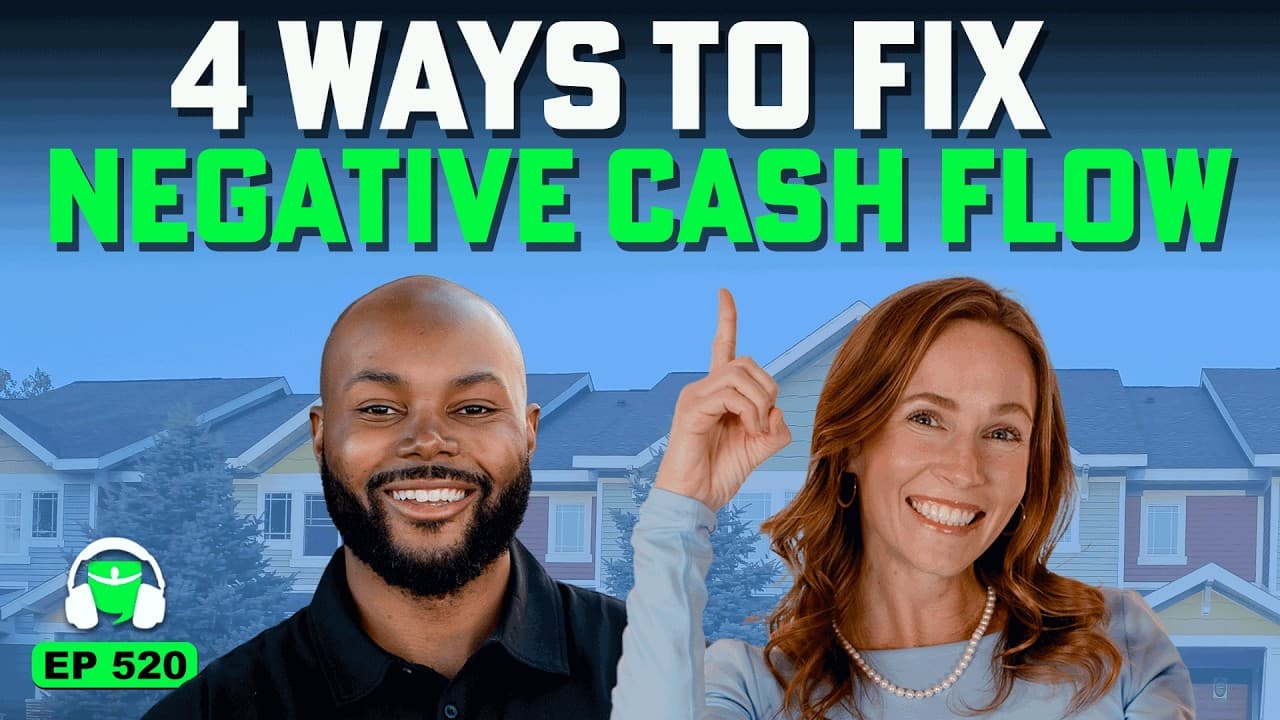
“Negative” Cash Flow? 4 Ways to Save Your Rental Property
TL;DR
Learn strategies to improve rental property cash flow and market insights.
Transcript
today we are going to figure out how to stop your Airbnb from bleeding money now things don't always go according to plan but there are tons of ways to optimize pricing asset management and amenities on your property so maybe you're spending too much money on operations or maybe you need to find an exit strategy we'll break this down and more next ... Read More
Key Insights
- House hacking can be a strategic way to build a real estate portfolio by living in one part of a property while renting out another, thus reducing living costs.
- Columbus, Ohio is emerging as a real estate hotspot with significant investments from major companies like Amazon and Intel, suggesting potential appreciation and growth.
- When choosing a market for investment, consider factors like median home price, rent-to-price ratio, and local economic indicators such as unemployment and population growth.
- For short-term rentals, amenities and property configuration, such as bedroom count, can significantly impact revenue. Market research is essential to understand local demand.
- Cleaning fees should be passed on to guests to maintain profitability in short-term rentals. Consider shopping around for competitive cleaning service rates.
- Reinvesting in property amenities can enhance rental appeal and revenue potential. Analyze local market data to determine worthwhile investments.
- Consider long-term appreciation potential when evaluating a property's performance, especially if current cash flow is negative.
- Tax advantages can sometimes offset short-term financial losses in real estate investments. Evaluate the overall financial picture, including potential tax savings.
Install to Summarize YouTube Videos and Get Transcripts
Explore YouTube Video Summarizer or Get YouTube Transcript Extractor
Questions & Answers
Q: What is house hacking and how can it benefit new investors?
House hacking is a strategy where an investor lives in one part of a property and rents out the other parts. This allows the investor to cover mortgage payments with rental income, reducing living expenses and enabling the acquisition of more properties with minimal down payment.
Q: Why is Columbus, Ohio considered a promising real estate market?
Columbus, Ohio is attracting attention due to substantial investments from companies like Amazon and Intel, which are expected to boost the local economy. The city offers a lower median home price compared to the national average and has favorable economic indicators like low unemployment and population growth.
Q: How do bedroom configurations affect short-term rental revenue?
The number of bedrooms in a short-term rental can affect its attractiveness to different guest demographics. Larger properties may attract families, while smaller ones might appeal to couples. Analyzing local market data can reveal which configurations are most profitable in a specific area.
Q: How should cleaning fees be managed in short-term rentals?
Cleaning fees should be charged to guests to avoid cutting into profits. It's important to ensure that the fees are competitive and reflective of local market standards. Consider switching cleaning services if current rates are too high or if service quality is lacking.
Q: What strategies can increase the ROI of a rental property in its second year?
To increase ROI, consider reinvesting in property enhancements that align with local market demands, such as adding popular amenities. Conducting competitive analysis can help identify specific upgrades that might yield higher rental income.
Q: When is it wise to hold a property for appreciation despite negative cash flow?
Holding a property for appreciation might be wise if the market shows strong potential for value increases and if the investor can afford short-term losses. Evaluating long-term economic trends and potential tax benefits is crucial in making this decision.
Q: What tax advantages can offset losses in rental properties?
Tax advantages such as depreciation, mortgage interest deductions, and other expense write-offs can offset some of the financial losses incurred from a rental property. These benefits can improve the overall financial viability of holding a property with negative cash flow.
Q: How can long-distance investors effectively choose a real estate market?
Long-distance investors should focus on economic indicators such as population growth, median income, and unemployment rates. Utilizing resources like Bigger Pockets and consulting with local agents can provide valuable insights into market dynamics and investment potential.
Summary & Key Takeaways
-
This episode discusses strategies to improve cash flow for rental properties, focusing on house hacking and market selection. Columbus, Ohio is highlighted as a promising investment location due to significant corporate investments.
-
Short-term rental profitability can be influenced by property configuration and market-specific amenities. Cleaning fees should be managed effectively to maintain profitability.
-
Investors are encouraged to consider long-term appreciation and tax benefits when dealing with properties that currently have negative cash flow. Reinvesting in property upgrades can also enhance revenue.
Read in Other Languages (beta)
Share This Summary 📚
Summarize YouTube Videos and Get Video Transcripts with 1-Click
Try YouTube Summary with ChatGPT & Claude or YouTube Transcript Generator
Explore More Summaries from Real Estate Rookie 📚






Summarize YouTube Videos and Get Video Transcripts with 1-Click
Try YouTube Summary with ChatGPT & Claude or YouTube Transcript Generator