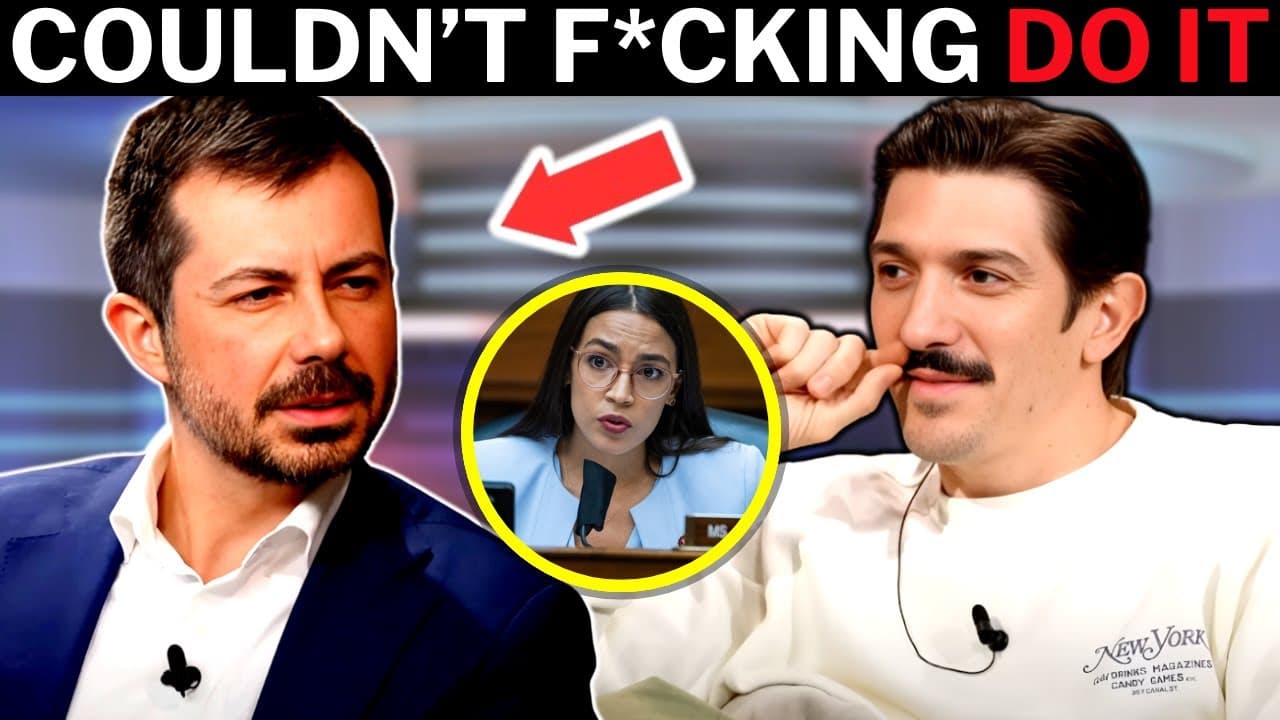
Mayor Pete SCHOOLS Andrew Schulz on his Own Show with TRUTH BOMBS
TL;DR
Pete Buttigieg debates tax fairness and government efficiency with Andrew Schulz.
Transcript
Read and summarize the transcript of this video on Glasp Reader (beta).
Key Insights
- Pete Buttigieg highlights the importance of fair taxation and effective government spending, comparing to Scandinavian countries with high trust in public services.
- Andrew Schulz expresses skepticism about tax efficiency in the U.S., citing poor infrastructure and education despite high taxes.
- Buttigieg advocates for policies that resonate with working-class Americans, emphasizing economic benefits and services like healthcare.
- The debate touches on the disconnect between Democratic Party leadership and progressive policies favored by the base.
- Buttigieg critiques the federal government's inefficiency, suggesting a need for streamlined regulations to improve service delivery.
- The conversation explores the challenges of implementing policies like Medicare for All within the Democratic Party framework.
- Schulz's humorous interjection about Scandinavia highlights common misconceptions about policy feasibility in diverse countries.
- The discussion underscores public disillusionment with government priorities, focusing on military spending over domestic improvements.
Install to Summarize YouTube Videos and Get Transcripts
Explore YouTube Video Summarizer or Get YouTube Transcript Extractor
Questions & Answers
Q: What is Pete Buttigieg's main argument in the debate?
Pete Buttigieg argues for fair taxation and efficient government spending, drawing comparisons to Scandinavian countries where high taxes are justified by effective public services. He emphasizes the need for policies that resonate with working-class Americans and improve public trust in government.
Q: How does Andrew Schulz view the U.S. tax system?
Andrew Schulz expresses skepticism about the U.S. tax system, citing poor infrastructure and education despite high taxes. He questions the efficiency of tax spending and highlights a general distrust in the government's ability to provide tangible benefits for taxpayers.
Q: What does Buttigieg say about the Democratic Party's approach to popular policies?
Buttigieg criticizes the Democratic Party for not fully embracing popular progressive policies like Medicare for All. He notes a disconnect between the party leadership, which is often hesitant to pursue these policies, and the base, which largely supports them.
Q: What does Buttigieg propose to improve government efficiency?
Buttigieg suggests that the government needs to streamline regulations and reduce procedural layers to improve efficiency. He believes that by making the government more effective, especially in areas like infrastructure and clean energy, public trust can be restored.
Q: How does the debate address public disillusionment with government?
The debate touches on public disillusionment by highlighting the disconnect between government spending priorities and the needs of citizens. Buttigieg and Schulz discuss how the focus on military spending and tax cuts overshadows the need for domestic improvements like better roads and schools.
Q: What humorous point does Andrew Schulz make during the debate?
Andrew Schulz humorously suggests that Scandinavian countries' success with high taxes is due to their homogeneous and attractive populations. This comment highlights a common misconception used to dismiss the feasibility of similar policies in the diverse U.S. context.
Q: What is the broader point about U.S. priorities discussed in the debate?
The debate underscores a broader point about U.S. priorities, questioning why there is ample funding for military endeavors and tax cuts, yet insufficient investment in domestic infrastructure and public services. This reflects a misalignment between government actions and public needs.
Q: What does Buttigieg say about the role of corporations in U.S. policy?
Buttigieg suggests that corporations have a significant influence on U.S. policy, particularly in preventing the adoption of progressive policies like universal healthcare. He implies that corporate lobbying is a barrier to implementing changes that would benefit the general population.
Summary & Key Takeaways
-
Pete Buttigieg debates Andrew Schulz on the fairness and efficiency of the U.S. tax system, advocating for policies that benefit the working class and improve public trust.
-
The conversation highlights the disconnect between Democratic leadership and progressive policies, with Buttigieg pushing for clearer economic messaging to resonate with voters.
-
Buttigieg critiques government inefficiency, advocating for streamlined regulations to enhance service delivery, while Schulz questions the effectiveness of high taxes given poor public infrastructure.
Read in Other Languages (beta)
Share This Summary 📚
Summarize YouTube Videos and Get Video Transcripts with 1-Click
Try YouTube Summary with ChatGPT & Claude or YouTube Transcript Generator
Explore More Summaries from Chris on Culture 📚

Summarize YouTube Videos and Get Video Transcripts with 1-Click
Try YouTube Summary with ChatGPT & Claude or YouTube Transcript Generator