How to Journal Like a Renaissance Philosopher
TL;DR
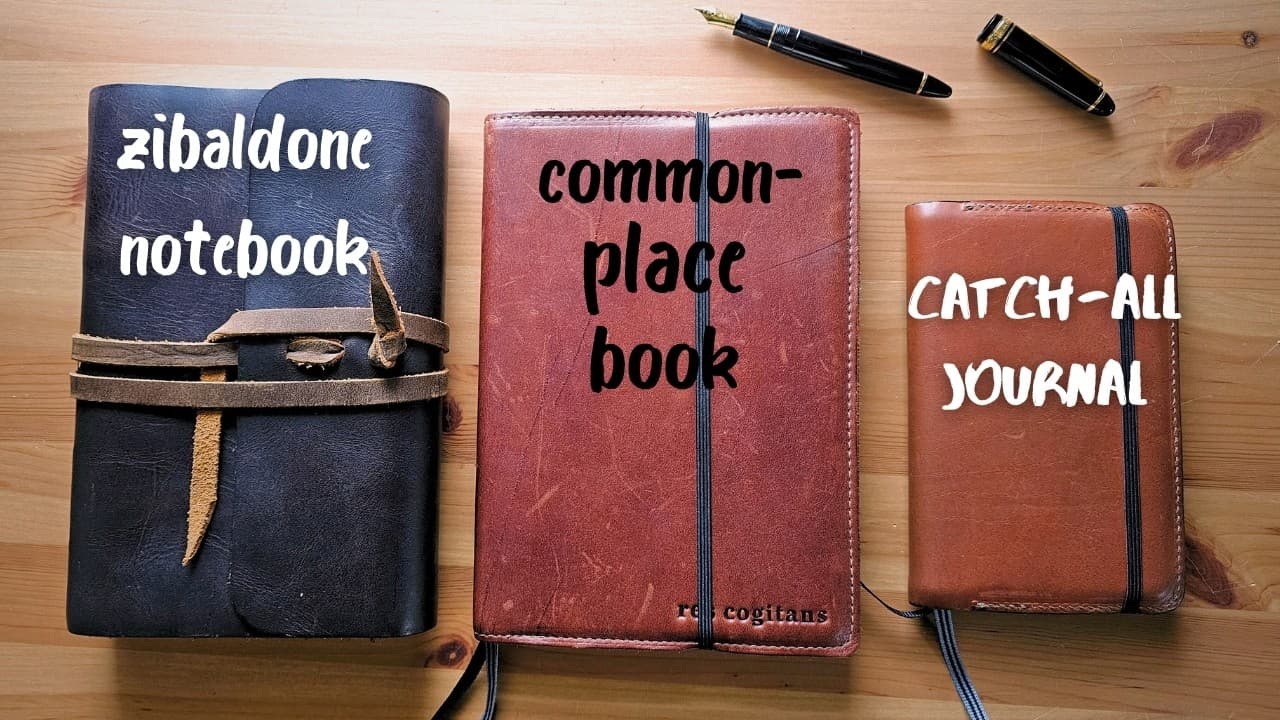
Commonplace books, zibaldone journals, and catchall notebooks each offer unique methods for organizing thoughts and quotations. A commonplace book categorizes quotes under specific headings, while a zibaldone is a more free-form collection of ideas. Catchall notebooks serve as temporary storage for thoughts. Choosing the right method depends on personal goals and organizational preferences.
Transcript
commonplace books are some of my favorite intellectual tools I've used them all throughout my formal academic career through three master's degrees but I also use them in my own personal study my own autodidactic journey to self-learn a bunch of stuff that I want to know about now in the past few years commonplace books have been having a moment he... Read More
Key Insights
- Commonplace books categorize quotations under specific headings for easy retrieval.
- Zibaldone journals are informal collections of quotes and ideas without specific organization.
- Catchall notebooks are used for jotting down immediate thoughts and ideas on the go.
- Commonplace books have historical roots in Renaissance education and were used by philosophers like Aristotle.
- The key to effective journaling is choosing a method that suits your organizational style and intellectual goals.
- Zibaldone journals are likened to a 'salad' of ideas, reflecting diverse interests of the user.
- Commonplace books can be either general or specific, depending on the user's focus.
- Writing quotes by hand, as in commonplace books, aids memory retention and deeper understanding.
Install to Summarize YouTube Videos and Get Transcripts
Explore YouTube Video Summarizer or Get YouTube Transcript Extractor
Questions & Answers
Q: How do you organize a commonplace book?
Organizing a commonplace book involves categorizing quotes and ideas under specific headings or commonplaces. This method allows for easy retrieval of information when needed. Users can choose headings based on their interests, such as 'Justice' or 'Philosophy', ensuring that related quotes are grouped together for efficient reference.
Q: What is a zibaldone journal?
A zibaldone journal is a free-form collection of thoughts, quotes, and ideas without strict organization. Originating from Italian culture, it is likened to a 'salad' of diverse content, reflecting the user's varied interests. Unlike commonplace books, zibaldone journals do not categorize entries, making them more spontaneous and informal.
Q: What are the benefits of using a catchall notebook?
Catchall notebooks are beneficial for capturing immediate thoughts, ideas, and quotes on the go. They serve as a temporary storage solution, allowing users to jot down information without worrying about organization. This method helps clear the mind, as ideas are recorded externally, and can later be transferred to more organized systems like commonplace books.
Q: Why are commonplace books historically significant?
Commonplace books hold historical significance as they were integral to Renaissance education and intellectual practices. Used by figures like Aristotle and Renaissance humanists, they served as tools for organizing knowledge and facilitating learning. These books allowed for systematic categorization of quotations, aiding in the development of critical thinking and scholarly work.
Q: How does writing by hand aid memory retention?
Writing by hand, as practiced in commonplace books, enhances memory retention by engaging cognitive processes involved in manual writing. The physical act of writing helps imprint information in the brain, making it easier to recall later. This method encourages active engagement with the material, leading to a deeper understanding and long-term retention of knowledge.
Q: What is the difference between a general and specific commonplace book?
A general commonplace book contains a wide range of quotes and ideas from various topics, serving as a comprehensive repository. In contrast, a specific commonplace book focuses on a particular subject, such as philosophy or artificial intelligence, with entries categorized under relevant headings. This specificity aids in targeted study and efficient information retrieval.
Q: How can zibaldone journals reflect personal interests?
Zibaldone journals reflect personal interests by allowing users to freely collect and record diverse thoughts, quotes, and ideas without strict organization. This method captures the user's unique intellectual journey, showcasing a wide array of topics and reflections that resonate with their individual curiosity and creativity, resulting in a personalized and eclectic compilation.
Q: What challenges might arise from using a zibaldone journal?
Challenges of using a zibaldone journal include difficulty in retrieving specific information due to its lack of structured organization. As entries are recorded in a spontaneous manner, finding a particular quote or idea later can be time-consuming. Regular review and reflection on the journal's content can help mitigate this issue, ensuring familiarity with its contents.
Summary & Key Takeaways
-
Commonplace books, zibaldone journals, and catchall notebooks each serve different purposes for organizing thoughts. A commonplace book organizes quotes under specific headings, aiding in retrieval. Zibaldone journals are more free-form, collecting various ideas without strict organization.
-
Catchall notebooks are useful for jotting down immediate thoughts and ideas, serving as temporary storage. The choice between these methods depends on personal preferences and goals. Commonplace books have historical significance, having been used by Renaissance thinkers.
-
Writing quotes by hand in a commonplace book helps with memory retention and understanding. Zibaldone journals, described as a 'salad' of ideas, reflect the user's diverse interests. Choosing the right journaling method enhances intellectual growth and organization.
Read in Other Languages (beta)
Share This Summary 📚
Summarize YouTube Videos and Get Video Transcripts with 1-Click
Try YouTube Summary with ChatGPT & Claude or YouTube Transcript Generator
Explore More Summaries from ParkNotes 📚

Summarize YouTube Videos and Get Video Transcripts with 1-Click
Try YouTube Summary with ChatGPT & Claude or YouTube Transcript Generator