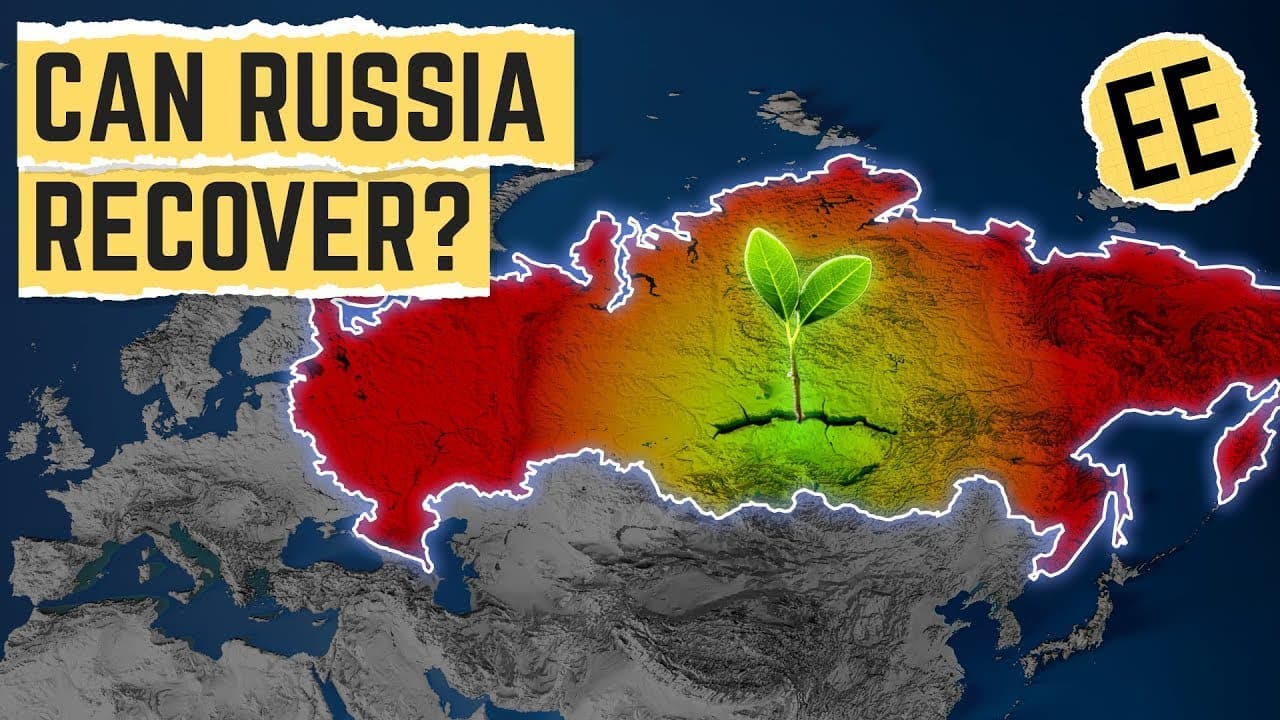
Can Russia Recover Like Germany Did After World War II?
TL;DR
Exploring Russia's potential economic recovery post-Ukraine war.
Transcript
The Russian invasion of Ukraine has been going on for more than 18 months now, and in that time has cost the world nearly. Both sides of the conflict have been pouring billions of dollars into military equipment that all goes towards blowing up billions more, crucial infrastructure inside and outside of the war zone has been destroyed all in the na... Read More
Key Insights
- The Russian invasion of Ukraine has resulted in nearly 500,000 casualties and extensive infrastructure damage, with no immediate resolution in sight.
- Rebuilding Ukraine is projected to cost around half a trillion dollars, a financial burden likely to fall on Ukraine or Russia through reparations.
- Russia's economic recovery post-war is complicated by its history of economic mismanagement, wealth inequality, and reliance on natural resources.
- Russia's economy is primarily a petrostate, heavily dependent on natural resource exports, which has insulated it somewhat from global sanctions.
- The privatization process post-USSR collapse led to wealth concentration among a few oligarchs, hindering broader economic development.
- Political instability and corruption in Russia deter foreign investment and impede economic diversification beyond the natural resource sector.
- A stable and transparent government is crucial for Russia to attract investment and develop a diversified, globally competitive economy.
- Historical parallels suggest that economic cooperation and rebuilding efforts, similar to post-WWII Europe, could aid in Russia's recovery.
Install to Summarize YouTube Videos and Get Transcripts
Explore YouTube Video Summarizer or Get YouTube Transcript Extractor
Questions & Answers
Q: What are the primary economic challenges facing Russia post-war?
Russia faces numerous challenges post-war, including political instability, corruption, and a heavy reliance on natural resources. The economy's lack of diversification, coupled with wealth inequality and a declining workforce, further complicates recovery efforts. Attracting foreign investment is difficult due to these issues, hindering economic modernization.
Q: How has Russia's reliance on natural resources affected its economy?
Russia's economy is heavily dependent on natural resource exports, particularly oil and gas, which has insulated it from some global sanctions. However, this reliance makes the economy vulnerable to commodity price fluctuations and limits diversification. This dependency also contributes to wealth concentration among a few oligarchs, exacerbating inequality.
Q: What historical parallels exist for Russia's potential economic recovery?
Historical parallels for Russia's recovery include post-WWII rebuilding efforts in Europe and Japan, where economic cooperation and aid led to significant recovery and growth. Similar strategies could be employed to aid Russia's recovery, promoting economic cooperation and diversification to build a stable and competitive economy.
Q: How did the privatization process post-USSR affect Russia's economy?
The privatization process post-USSR led to significant wealth concentration among a few oligarchs, as many Russian citizens sold their privatization vouchers due to poverty. This resulted in a lack of broad economic development and entrenched inequality, with a small elite controlling significant portions of the economy.
Q: What role does political instability play in Russia's economic challenges?
Political instability in Russia deters foreign investment and hinders economic diversification. Frequent changes in governance and corruption create an uncertain business environment, preventing the development of industries beyond natural resources. Stability and transparency are crucial for attracting investment and fostering economic growth.
Q: How might Russia's demographics impact its economic recovery?
Russia's demographics, characterized by a declining and aging population, pose significant challenges to economic recovery. The war has exacerbated this issue, with many young workers lost to conflict or emigration. A productive labor force is essential for economic diversification and growth, making demographic challenges a critical concern.
Q: What are the potential benefits of economic cooperation for Russia post-war?
Economic cooperation, similar to post-WWII efforts, could aid Russia's recovery by fostering mutual dependence and stability. Such cooperation could attract investment, diversify the economy, and promote growth. However, achieving this requires a stable and transparent government willing to engage with the global economy.
Q: How does wealth inequality affect Russia's economic prospects?
Wealth inequality in Russia, stemming from the privatization process and reliance on natural resources, limits economic development. A small elite controls significant wealth, while much of the population remains impoverished. Addressing this inequality is crucial for fostering a more inclusive and diversified economy, promoting broader prosperity.
Summary & Key Takeaways
-
The Russian invasion of Ukraine has led to significant casualties and infrastructure damage, with rebuilding costs estimated at $500 billion. The financial burden will likely fall on Ukraine or Russia, impacting their economies for decades.
-
Russia's economy, heavily reliant on natural resources, faces challenges in modernizing and diversifying. Political instability and corruption hinder foreign investment, while wealth inequality remains a significant issue.
-
A stable government and economic cooperation, akin to post-WWII rebuilding efforts, are crucial for Russia's economic recovery. Despite challenges, Russia's natural resource wealth offers potential for economic development if managed effectively.
Read in Other Languages (beta)
Share This Summary 📚
Summarize YouTube Videos and Get Video Transcripts with 1-Click
Try YouTube Summary with ChatGPT & Claude or YouTube Transcript Generator
Explore More Summaries from Economics Explained 📚

Summarize YouTube Videos and Get Video Transcripts with 1-Click
Try YouTube Summary with ChatGPT & Claude or YouTube Transcript Generator