How to Survive in the Coldest Village on Earth
TL;DR
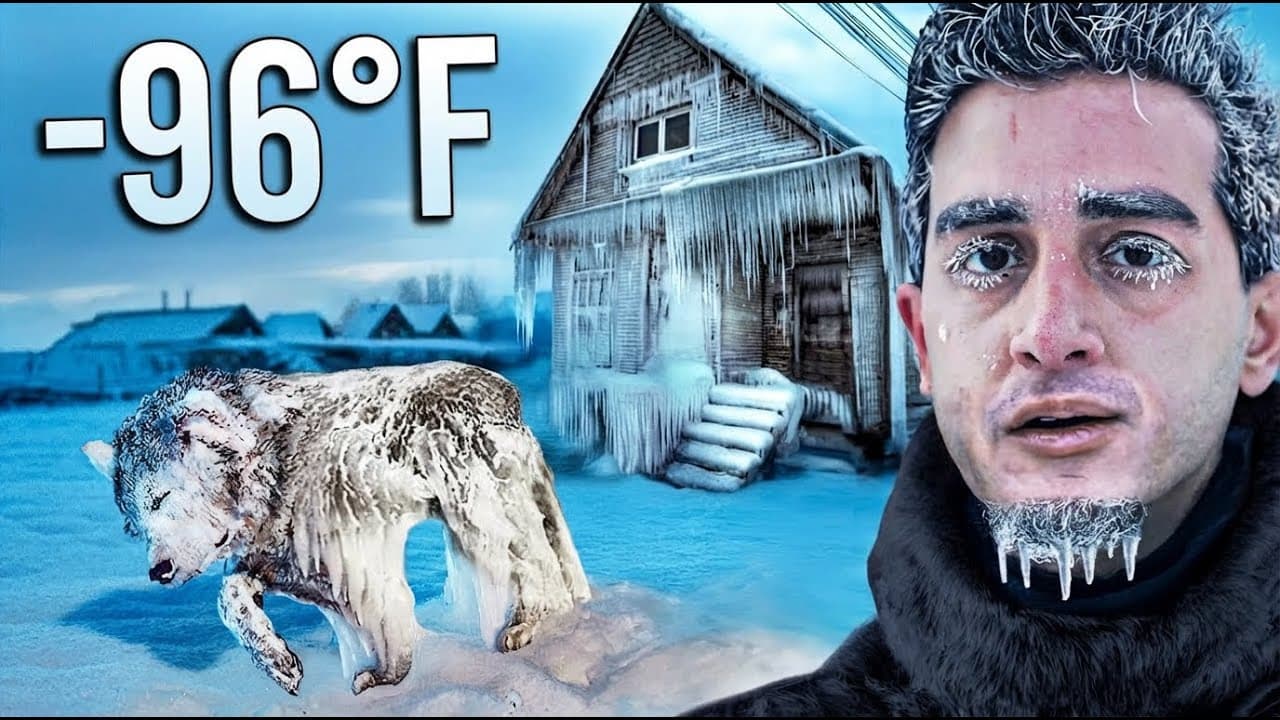
Oymyakon, the coldest inhabited place on Earth, presents extreme challenges for survival with temperatures plummeting to -71°C. Residents rely on layered clothing, central heating, and unique adaptations like Yakutian horses to endure the harsh climate. Essential activities like gathering water and maintaining vehicles require special methods due to the severe cold.
Transcript
A frozen wolf. If you don't move, you freeze. Imagine a village where temperatures drop as low as minus 71.2°C. Here, spending just a few extra minutes outside can lead to frostbite, the loss of a limb, or even end of life. - Is it frostbite? - Ohh! Yeah. After staying outside for just over 15 minutes, my nose turned white. Ice crystals began for... Read More
Key Insights
- Oymyakon is the coldest inhabited place on Earth with temperatures dropping to -71°C.
- Residents wear over 20 layers of clothing to survive the extreme cold.
- The village relies on a central heating system powered by a coal boiler to keep homes warm.
- Yakutian horses have adapted to endure the extreme cold without heated shelters.
- Vehicles require special defrosting methods to function in the freezing temperatures.
- Water is sourced by cutting and melting blocks of river ice, as pipes would freeze instantly.
- Houses are constructed with multiple layers of insulation to retain heat.
- Daily life includes unique practices such as using outdoor toilets and storing food in unheated rooms.
Install to Summarize YouTube Videos and Get Transcripts
Explore YouTube Video Summarizer or Get YouTube Transcript Extractor
Questions & Answers
Q: How do people in Oymyakon stay warm?
Residents of Oymyakon stay warm by wearing over 20 layers of clothing, including garments made from reindeer fur. They rely on a central heating system powered by a coal boiler, which distributes heat through pipes to most homes. Houses are constructed with multiple layers of insulation, and windows are triple-glazed to retain heat.
Q: What adaptations do Yakutian horses have for the cold?
Yakutian horses are uniquely adapted to endure the extreme cold of Oymyakon, with their ability to withstand temperatures as low as -70°C without heated shelters. They have a short stature, which helps conserve heat, and a thick fur coat that provides insulation. Their hooves are adapted to stand on frozen ground for extended periods.
Q: How is water sourced in Oymyakon?
In Oymyakon, water is sourced by cutting blocks of ice from the frozen river and melting them for daily use. This method is necessary because traditional water pipes would freeze instantly in the extreme cold. The ice blocks are stored in cold rooms or outside until needed, providing a supply of fresh water for drinking, cooking, and bathing.
Q: How do vehicles operate in Oymyakon's cold?
To operate vehicles in Oymyakon's extreme cold, locals use jet heaters to defrost them. Vehicles left outside for even a few hours without the engine running completely freeze. The defrosting process involves enclosing the vehicle with a cover and using heated air to thaw the engine, fuel, and other components.
Q: What is the role of central heating in Oymyakon?
Central heating is crucial for survival in Oymyakon, where temperatures can drop to -71°C. The village uses a coal-powered boiler that runs non-stop to provide heat to most homes through a network of pipes. This system ensures that indoor temperatures remain livable, as any failure could put residents at risk of freezing.
Q: Why are outdoor toilets used in Oymyakon?
Outdoor toilets are used in Oymyakon because plumbing systems are inoperable due to the extreme cold. Water pipes would freeze instantly, so residents use unheated cabins in their gardens as bathrooms. Waste freezes immediately upon exposure to the air, accumulating into frozen columns that need periodic removal.
Q: How do people in Oymyakon store food?
In Oymyakon, food is stored in unheated entrance rooms that serve as natural refrigerators. These rooms act as a buffer against the freezing temperatures, allowing residents to keep items like milk and meat frozen without electricity. The extreme cold preserves food effectively, making it an essential practice for survival.
Q: What challenges do residents face in Oymyakon?
Residents of Oymyakon face numerous challenges, including extreme cold that affects all aspects of life. Essential tasks like water collection, food storage, and transportation require special adaptations. The harsh climate impacts health, with risks of frostbite and hypothermia, necessitating unique survival strategies and community resilience.
Summary & Key Takeaways
-
Oymyakon, with temperatures reaching -71°C, is the coldest inhabited place on Earth. Residents use layered clothing and coal-powered heating to stay warm. Unique adaptations, like Yakutian horses and special vehicle defrosting, are necessary for survival.
-
In Oymyakon, essential tasks such as water collection involve cutting river ice, as pipes would freeze. Houses are built with multiple insulation layers, and daily life includes using outdoor toilets and storing food in unheated rooms.
-
The extreme cold in Oymyakon affects all aspects of life, from clothing and heating to transportation and food storage. Residents have developed unique methods to adapt and survive in this harsh environment.
Read in Other Languages (beta)
Share This Summary 📚
Summarize YouTube Videos and Get Video Transcripts with 1-Click
Try YouTube Summary with ChatGPT & Claude or YouTube Transcript Generator
Explore More Summaries from Ruhi Çenet 📚




Summarize YouTube Videos and Get Video Transcripts with 1-Click
Try YouTube Summary with ChatGPT & Claude or YouTube Transcript Generator