What Are Jinns and Their Role in Islam?
TL;DR
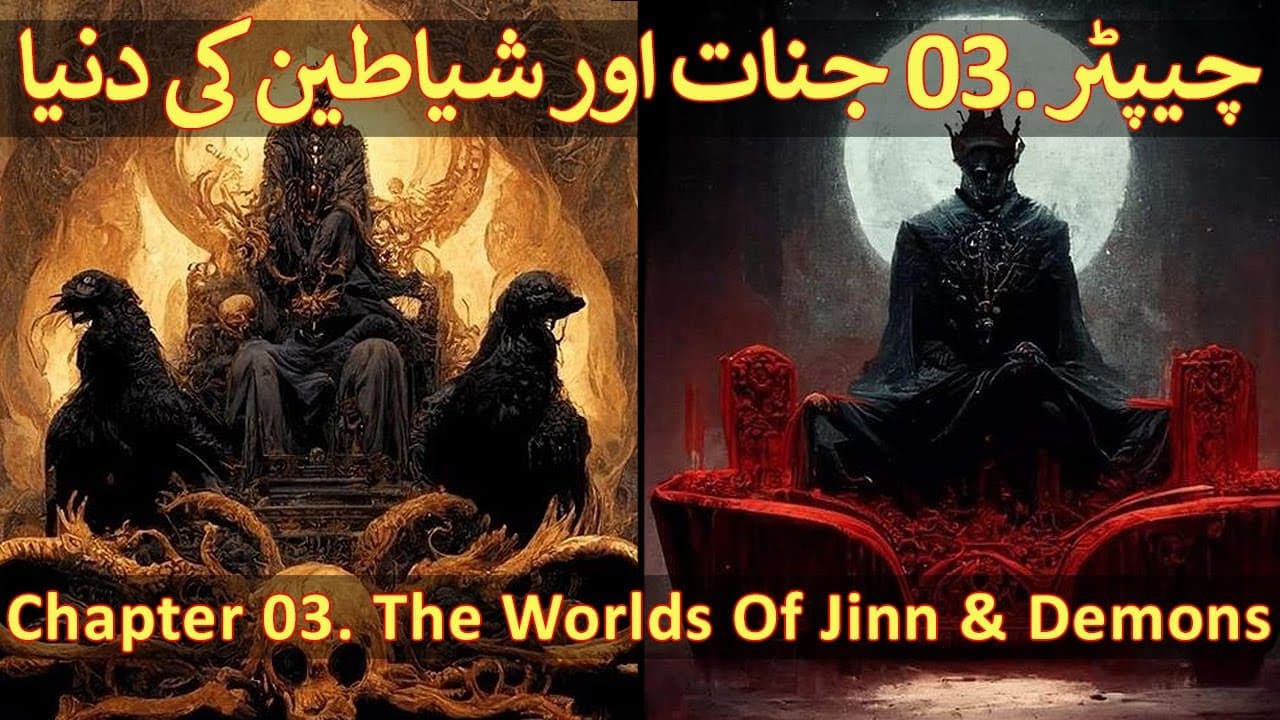
Jinns are invisible beings created by Allah from a smokeless flame of fire, existing alongside humans and angels. They possess unique abilities, such as shape-shifting and flying, and are mentioned in the Quran. The video explores their nature, appearances, and distinctions from demons, emphasizing their significant presence in Islamic theology.
Transcript
in the name of God; most gracious and most merciful today's chapter is about the Jinn a creature which can be found in all the mythologies, religions and cultures of the world but perhaps just as many people believe in them; equal number of people refuse to believe sometimes in the remote villages; evil jinns are held responsible for every probl... Read More
Key Insights
- Jinns are created from a smokeless flame of fire, distinct from humans and angels.
- The Quran mentions jinns 29 times, highlighting their importance in Islamic teachings.
- Jinns can shape-shift, fly, and possess diverse appearances, similar to various animals.
- Jinns and demons are different; demons are typically associated with evil acts.
- Prophet Suleiman had control over jinns, who assisted in building and diving tasks.
- Jinns have existed on Earth long before humans, according to Islamic tradition.
- Demons can be both human and jinn, acting as adversaries to prophets.
- Jinns are invisible to humans due to their unique composition, as explained in the Quran.
Install to Summarize YouTube Videos and Get Transcripts
Explore YouTube Video Summarizer or Get YouTube Transcript Extractor
Questions & Answers
Q: What are jinns according to Islamic belief?
Jinns are spiritual beings created by Allah from a smokeless flame of fire, existing alongside humans and angels. They possess unique abilities such as shape-shifting, flying, and becoming invisible. Their existence is well-documented in the Quran, where they are mentioned 29 times, emphasizing their significance in Islamic theology.
Q: How do jinns differ from demons in Islam?
In Islam, jinns and demons are distinct entities. Jinns are a separate creation made from fire, while demons, known as 'shayateen,' are typically associated with evil acts. Demons can be from both humans and jinns, acting as adversaries to prophets, whereas jinns can be good or evil, similar to humans.
Q: Can jinns interact with humans?
Yes, jinns can interact with humans, although they are usually invisible. They can influence human thoughts and actions and are known to possess individuals. Islamic teachings provide guidelines on protecting oneself from harmful jinns, emphasizing the importance of prayer and seeking refuge in Allah.
Q: What abilities do jinns possess?
Jinns possess various abilities, including shape-shifting, flying, and becoming invisible. They can take on different forms, such as animals or humans, and have been known to travel great distances quickly. These abilities are attributed to their creation from a smokeless flame of fire, as described in the Quran.
Q: What role did jinns play in Prophet Suleiman's reign?
During Prophet Suleiman's reign, jinns were under his command and assisted in various tasks. They helped build structures, dive for pearls, and perform other duties. Suleiman's ability to control jinns is seen as a testament to his wisdom and power, as granted by Allah, highlighting their role in his prophetic mission.
Q: Are there different types of jinns?
Yes, there are different types of jinns with varying characteristics. Some can fly, others can shape-shift into animals like snakes and dogs, and some are known to be invisible. Islamic texts describe these variations, emphasizing their diverse forms and abilities, which contribute to their mysterious nature.
Q: How does the Quran describe the creation of jinns?
The Quran describes jinns as being created from a smokeless flame of fire, distinct from humans, who are made from clay, and angels, who are made from light. This unique creation accounts for their abilities and invisibility, as they are composed of a material that is not perceivable by human senses.
Q: What is the significance of jinns in Islamic theology?
Jinns hold significant importance in Islamic theology as beings with free will, capable of choosing between good and evil. Their existence is a testament to Allah's diverse creations, and they serve as a reminder of the unseen world. The Quran and Hadiths provide guidance on interacting with jinns and understanding their role in the spiritual realm.
Summary & Key Takeaways
-
Jinns are spiritual beings created from a smokeless flame of fire, mentioned frequently in the Quran. They coexist with humans and angels, possessing unique abilities such as shape-shifting and flying. The video delves into their nature, existence, and distinctions from demons, underscoring their significant role in Islamic theology.
-
The concept of jinns dates back to ancient civilizations and religions, with references found in various cultures. The video explores their appearances, abilities, and interactions with humans, drawing from Quranic verses and Hadiths to provide a comprehensive understanding of these mysterious beings.
-
Jinns have a complex relationship with humans, often misunderstood as demons. The video highlights their diverse forms and powers, including historical accounts of their interactions with prophets like Suleiman. Through religious texts, it offers insights into their existence and significance in the Islamic worldview.
Read in Other Languages (beta)
Share This Summary 📚
Summarize YouTube Videos and Get Video Transcripts with 1-Click
Try YouTube Summary with ChatGPT & Claude or YouTube Transcript Generator
Explore More Summaries from Furqan Qureshi Blogs 📚

Summarize YouTube Videos and Get Video Transcripts with 1-Click
Try YouTube Summary with ChatGPT & Claude or YouTube Transcript Generator