Is the US Dollar Facing Its End Due to Inflation?
TL;DR
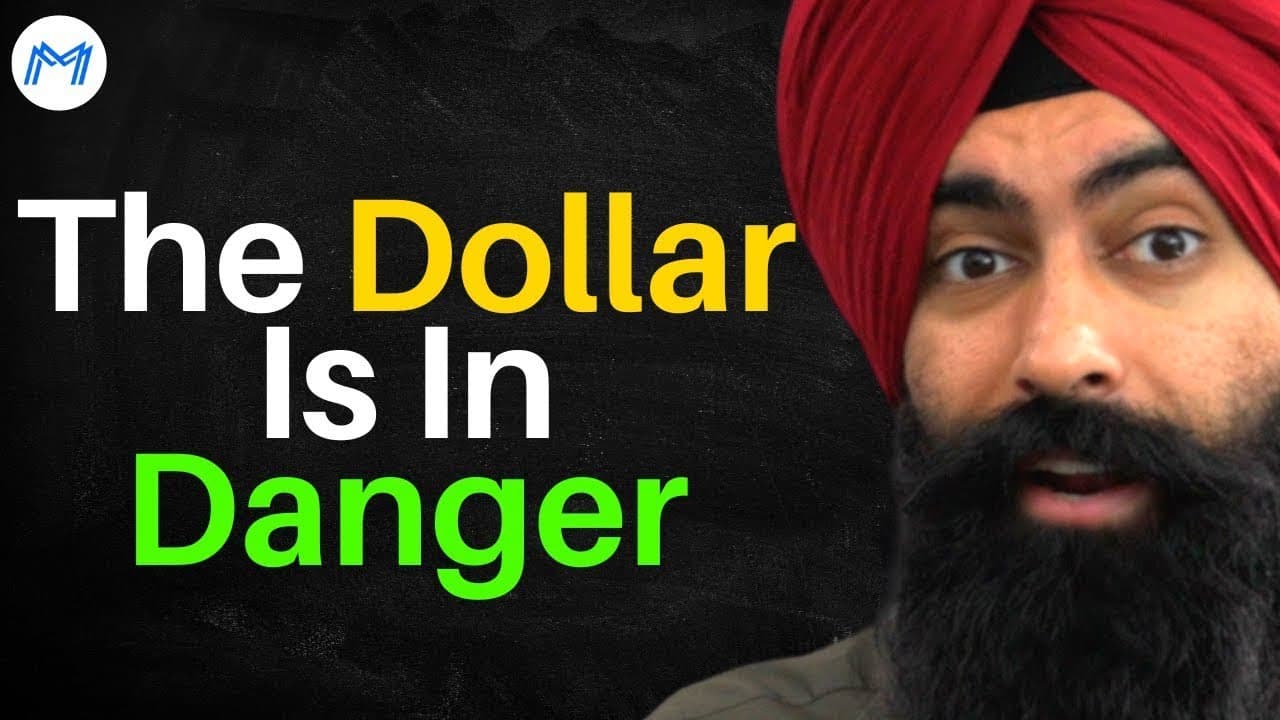
The US dollar is at risk as it has shifted from being backed by gold to a debt-based economy. This transition, combined with the US becoming the largest debtor nation, raises concerns over inflation and the long-term sustainability of the dollar. Maintaining confidence in the currency is crucial, and individuals should consider investing in assets to mitigate potential risks.
Transcript
there are two dates that change the United States dollar Forever 1971 and 1985. in 1971 president Richard Nixon took the dollar off of the gold standard temporarily which meant our dollars what we call money went from being backed by physical gold to being backed by the government saying that our dollars have value I have directed secretary Connoll... Read More
Key Insights
- 🌍 The US dollar's shift away from the gold standard and its transition from being a creditor nation to a debtor nation have had significant implications for the value and role of the currency.
- 🖐️ Government spending plays a vital role in stimulating economic growth and job creation, but it also raises concerns about inflation and long-term sustainability.
- 🌸 The status of the US dollar as the world's reserve currency provides certain benefits, but increasing borrowing and spending levels pose risks of loss of confidence from other countries.
- 👨💼 Investing in assets such as stocks, real estate, and businesses can provide protection against inflation and currency devaluation.
Install to Summarize YouTube Videos and Get Transcripts
Explore YouTube Video Summarizer or Get YouTube Transcript Extractor
Questions & Answers
Q: How did the transition from the gold standard to a debt-driven economy in 1971 impact the value of the US dollar?
The decoupling of the US dollar from the gold standard allowed the government to print money backed by its own promise, leading to a shift in the value of the dollar based on economic factors rather than the intrinsic value of gold.
Q: What are the implications of the US becoming the largest debtor nation in 1985?
Being the largest debtor nation means the US relies on borrowing money from other countries rather than lending to them. While this borrowing isn't an issue due to the US dollar's status as the reserve currency, it raises concerns about the sustainability of debt levels and potential loss of faith in the currency.
Q: How does the US government's spending stimulate the economy?
Government spending creates jobs and stimulates economic growth by providing funds for infrastructure projects, hiring employees, and investing in various sectors. This increases overall spending in the economy, leading to job creation and economic expansion.
Q: What are the key risks associated with the US government's borrowing and spending?
Excessive borrowing and spending can lead to inflation, where the value of each dollar decreases, causing prices to rise. Additionally, if the US dollar loses credibility and other nations distance themselves from it, there may be long-term consequences for the economy.
Summary & Key Takeaways
-
In 1971, President Richard Nixon temporarily took the United States off the gold standard, shifting the dollar from being backed by physical gold to being backed by the government's promise of value.
-
In 1985, the United States transitioned from being the largest creditor nation in the world to the largest debtor nation, meaning it borrowed more money from other countries than it lent.
-
The US government's significant borrowing and spending, combined with its status as the world's reserve currency, have helped stimulate economic growth, but also raise concerns about inflation and loss of confidence in the dollar.
Read in Other Languages (beta)
Share This Summary 📚
Summarize YouTube Videos and Get Video Transcripts with 1-Click
Try YouTube Summary with ChatGPT & Claude or YouTube Transcript Generator
Explore More Summaries from Minority Mindset 📚

Summarize YouTube Videos and Get Video Transcripts with 1-Click
Try YouTube Summary with ChatGPT & Claude or YouTube Transcript Generator