How Did the 1834 Poor Law Reforms Impact Welfare?
TL;DR
The 1834 Poor Law reforms aimed to address the inefficiencies of England's existing welfare system, which was criticized for encouraging dependency and fraud. The reforms introduced workhouses and restricted aid to those willing to work, reflecting classical economists' views on welfare. These changes were controversial, echoing modern debates on welfare policies.
Transcript
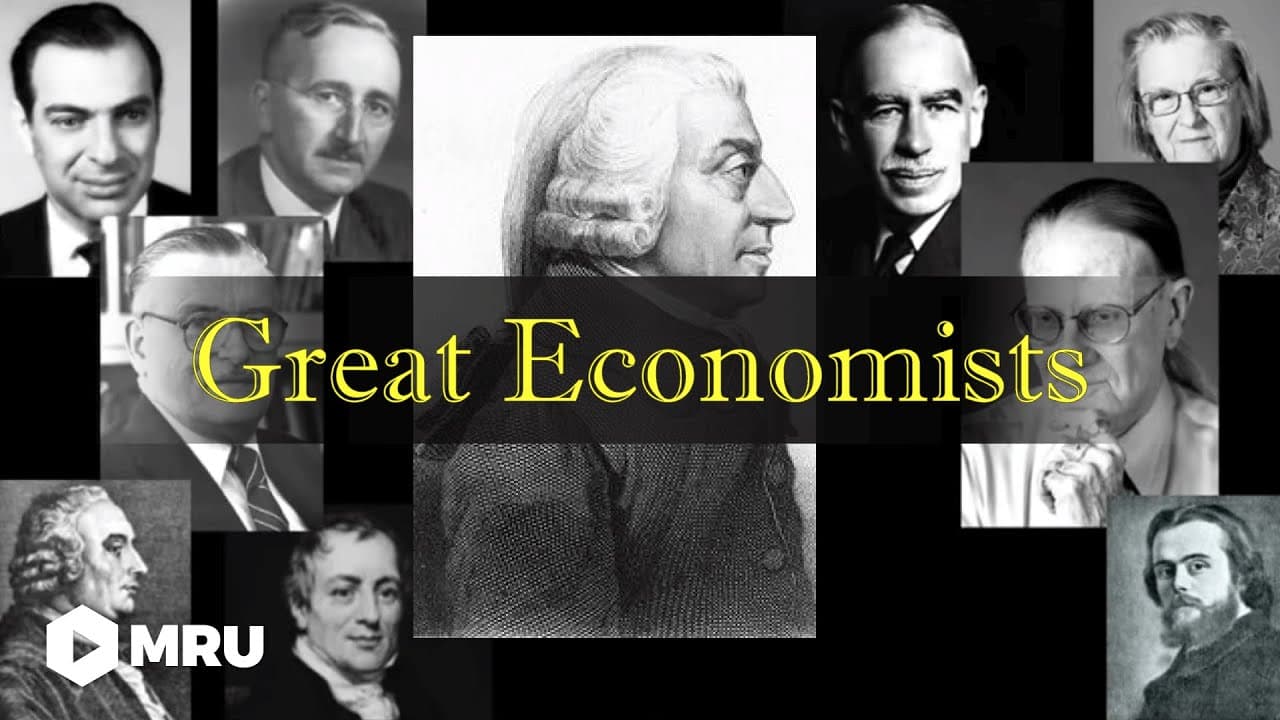
Just as welfare reform is a controversial topic today, so is it debated by the classical economists. So let's go back and look at the Poor Law reforms of 1834 and the debates leading up to that. The Poor Laws in England date from a series of experiments under the Tudor monarchs and eventually they are finalized under the rule of Queen Elizabet... Read More
Key Insights
- The Poor Laws transferred relief responsibility from the church to the state in England, unlike in Scotland where it remained a church duty.
- By the early 19th century, poor relief in England was deemed ineffective, with rising costs and a significant portion of the population reliant on aid.
- Critics, including Malthus, argued that the Poor Laws encouraged poverty by supporting larger families and reducing work incentives.
- The 1834 Poor Law Report, influenced by Nassau Senior and Edwin Chadwick, criticized existing Poor Laws for fostering dependency and fraud.
- The report recommended workhouses for aid recipients, abolishing 'outdoor relief' to discourage fraudulent claims and increase work incentives.
- It highlighted the need for centralizing administration to reduce corruption and inefficiency in local oversight of poor relief.
- The report's recommendations were enacted into law, influencing subsequent welfare policies and debates on government aid.
- The economic growth in England post-1840s obscured the potential long-term impacts of the new Poor Laws relative to the old system.
Install to Summarize YouTube Videos and Get Transcripts
Explore YouTube Video Summarizer or Get YouTube Transcript Extractor
Questions & Answers
Q: How did the 1834 Poor Law reforms change welfare in England?
The 1834 Poor Law reforms introduced workhouses, requiring aid recipients to work, and abolished 'outdoor relief' to reduce fraud and dependency. These changes aimed to encourage self-reliance and were influenced by classical economists. The reforms centralized administration to improve oversight and reduce local corruption.
Q: What were the criticisms of the Poor Laws before 1834?
Critics argued that the Poor Laws encouraged dependency and fraud, with rising costs and a significant portion of the population reliant on aid. Malthus and others believed the laws supported larger families, reducing work incentives, and ultimately perpetuated poverty. These criticisms influenced the 1834 reforms.
Q: Who were the key figures behind the 1834 Poor Law Report?
Nassau Senior, a leading classical economist, and Edwin Chadwick, known for public health reforms, were key figures behind the 1834 Poor Law Report. Senior wrote much of the report, advocating laissez-faire principles, while Chadwick's influence led to recommendations for administrative centralization and improved oversight.
Q: What did the 1834 Poor Law Report recommend?
The report recommended requiring workhouses for aid recipients, abolishing 'outdoor relief', and centralizing administration to reduce local corruption. It aimed to discourage fraudulent claims and increase work incentives, reflecting classical economists' views on self-reliance and efficient welfare distribution.
Q: How did the Poor Laws differ between England and Scotland?
In England, the Poor Laws transferred relief responsibility from the church to the state, while in Scotland, relief remained a church and parish responsibility. This difference in administration reflected varying approaches to welfare and local community involvement in supporting the poor during that period.
Q: Why were wage subsidies criticized in the context of the Poor Laws?
Wage subsidies were criticized because they often benefited employers rather than employees. The Poor Law Report highlighted that subsidies intended for workers were sometimes captured by employers, reducing the intended financial support for the poor and blurring lines between deserving aid recipients and regular workers.
Q: What was the economic context leading to the Poor Law reforms?
By the early 19th century, England's economy was volatile, with rising poor relief costs and a significant population reliant on aid. Critics argued the Poor Laws encouraged dependency and fraud, necessitating reforms to address inefficiencies and align welfare policies with classical economic principles.
Q: What impact did the 1834 Poor Law reforms have on subsequent welfare policies?
The 1834 Poor Law reforms influenced subsequent welfare policies by emphasizing work requirements and centralized administration. These changes aimed to reduce fraud and dependency, echoing in modern welfare debates. The reforms' focus on self-reliance and efficient aid distribution shaped future approaches to government assistance.
Summary & Key Takeaways
-
The 1834 Poor Law reforms in England aimed to address inefficiencies in the existing welfare system, criticized for fostering dependency and fraud. The reforms introduced workhouses, requiring recipients to work for aid, reflecting classical economists' views. These changes were controversial and echo modern welfare debates.
-
The Poor Law Report, influenced by economists like Nassau Senior and Edwin Chadwick, recommended centralizing administration and abolishing 'outdoor relief'. This was to reduce fraud and encourage self-reliance among aid recipients. The report's enactment into law significantly shaped welfare policies.
-
Critics like Malthus argued that the Poor Laws encouraged poverty by supporting larger families and reducing work incentives. Despite the reforms, the economic growth post-1840s made it difficult to assess the long-term impacts of the new Poor Laws compared to the old system.
Read in Other Languages (beta)
Share This Summary 📚
Summarize YouTube Videos and Get Video Transcripts with 1-Click
Try YouTube Summary with ChatGPT & Claude or YouTube Transcript Generator
Explore More Summaries from Marginal Revolution University 📚

Summarize YouTube Videos and Get Video Transcripts with 1-Click
Try YouTube Summary with ChatGPT & Claude or YouTube Transcript Generator