Learn 40 Common Spanish Adjectives | How to Pronounce & Use Them (Beginner-Friendly)
TL;DR
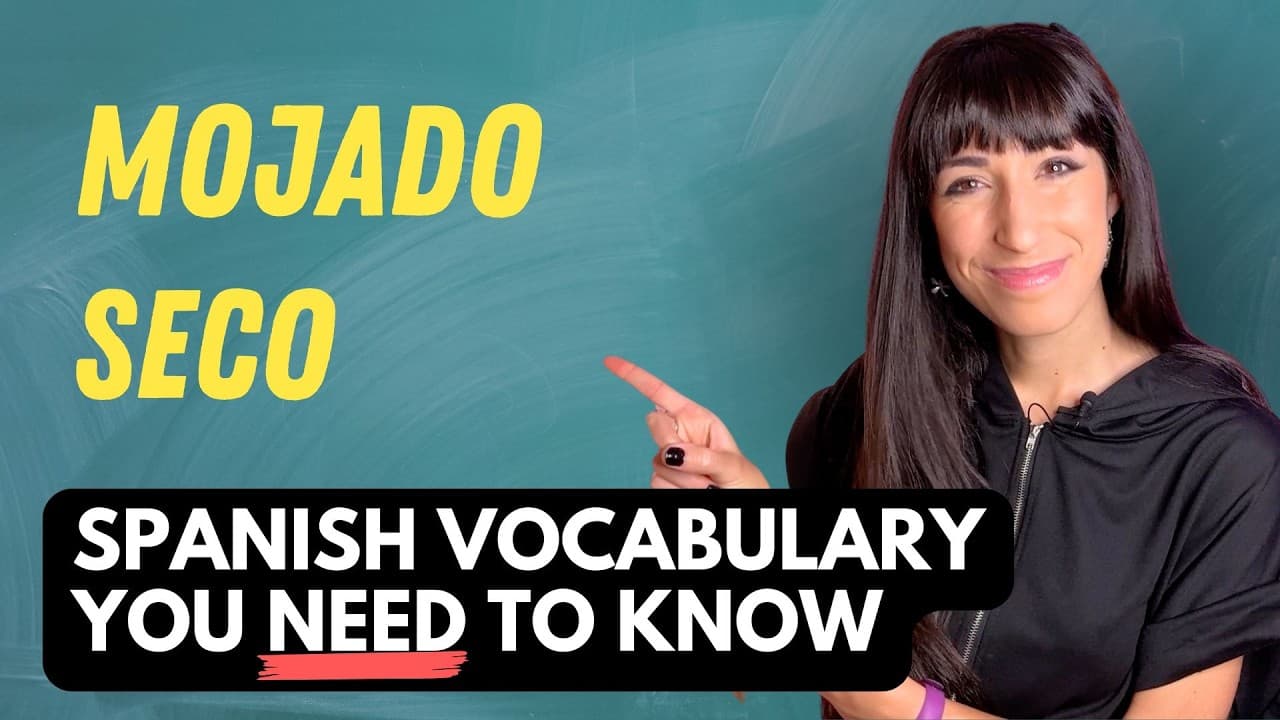
Learn basic Spanish adjectives and their usage.
Transcript
Read and summarize the transcript of this video on Glasp Reader (beta).
Key Insights
- Spanish adjectives must match the gender and number of the nouns they describe. Masculine forms often end in -o, while feminine forms end in -a, with exceptions.
- Plural adjectives in Spanish typically add an -s if the singular form ends in a vowel and -es if it ends in a consonant.
- Some adjectives have the same form for both masculine and feminine, such as 'grande' (big).
- Spanish often omits pronouns because verb forms indicate the subject, and adjectives can imply the noun's gender and number.
- The video provides a list of 40 essential Spanish adjectives, with their pronunciation in masculine and feminine, singular and plural forms.
- Understanding basic Spanish adjectives is crucial for beginners to accurately describe nouns and communicate effectively.
- The video encourages viewers to engage by commenting on additional adjectives they wish to learn.
- Additional resources, such as courses and articles, are available on the My Daily Spanish website for further learning.
Install to Summarize YouTube Videos and Get Transcripts
Explore YouTube Video Summarizer or Get YouTube Transcript Extractor
Questions & Answers
Q: What is the general rule for forming plural adjectives in Spanish?
In Spanish, plural adjectives generally add an -s to the singular form if it ends in a vowel. If the singular form ends in a consonant, -es is added. This rule aligns with the pluralization of nouns in Spanish, ensuring that adjectives agree in number with the nouns they describe.
Q: How do Spanish adjectives indicate gender?
Spanish adjectives indicate gender by their endings. Typically, masculine adjectives end in -o, while feminine adjectives end in -a. However, there are exceptions where adjectives have the same form for both genders, such as 'grande' (big). This gender agreement is essential for proper adjective usage in Spanish.
Q: Why are pronouns often omitted in Spanish sentences?
Pronouns are often omitted in Spanish because the verb conjugation indicates the subject. The verb form provides enough information about who is performing the action, making pronouns unnecessary. Additionally, adjectives can also imply the gender and number of the noun, further reducing the need for explicit pronouns.
Q: What resources are available for further learning?
For further learning, viewers are encouraged to visit the My Daily Spanish website, which offers various courses and books. Additionally, there is an article on their blog specifically about common Spanish adjectives. These resources provide more in-depth knowledge and practice opportunities for learners.
Q: How does the video engage with its audience?
The video engages with its audience by inviting viewers to comment on other adjectives they wish to learn. This interactive approach encourages participation and helps tailor future content to the audience's interests. The video also promotes liking and subscribing for more educational content.
Q: What is the significance of learning adjectives for Spanish beginners?
Learning adjectives is crucial for Spanish beginners as it enables them to describe nouns accurately and communicate effectively. Adjectives provide essential details about nouns, such as size, color, and quality, making them fundamental components of basic sentence construction and everyday conversation.
Q: What are some examples of adjectives with the same form for both genders?
Some examples of adjectives with the same form for both genders include 'grande' (big) and 'inteligente' (intelligent). These adjectives do not change their endings based on the noun's gender, simplifying their usage in sentences while still requiring agreement in number.
Q: What is the main focus of Lucía's lesson in the video?
The main focus of Lucía's lesson is to teach viewers 40 basic Spanish adjectives, including their pronunciation and different forms. She emphasizes the importance of matching adjectives with nouns in gender and number, providing a foundational understanding for beginners to enhance their Spanish language skills.
Summary & Key Takeaways
-
The video introduces 40 basic Spanish adjectives, explaining their pronunciation and forms. It emphasizes the importance of matching adjectives with nouns in gender and number, and provides examples of common adjectives.
-
Lucía from My Daily Spanish guides viewers through the grammar rules of Spanish adjectives, highlighting how they change based on the noun's gender and number, and offers practical examples.
-
Viewers are encouraged to interact by suggesting other adjectives to learn and to explore additional resources, such as online courses and articles, for more comprehensive Spanish language learning.
Read in Other Languages (beta)
Share This Summary 📚
Summarize YouTube Videos and Get Video Transcripts with 1-Click
Try YouTube Summary with ChatGPT & Claude or YouTube Transcript Generator
Explore More Summaries from My Daily Spanish 📚


Summarize YouTube Videos and Get Video Transcripts with 1-Click
Try YouTube Summary with ChatGPT & Claude or YouTube Transcript Generator