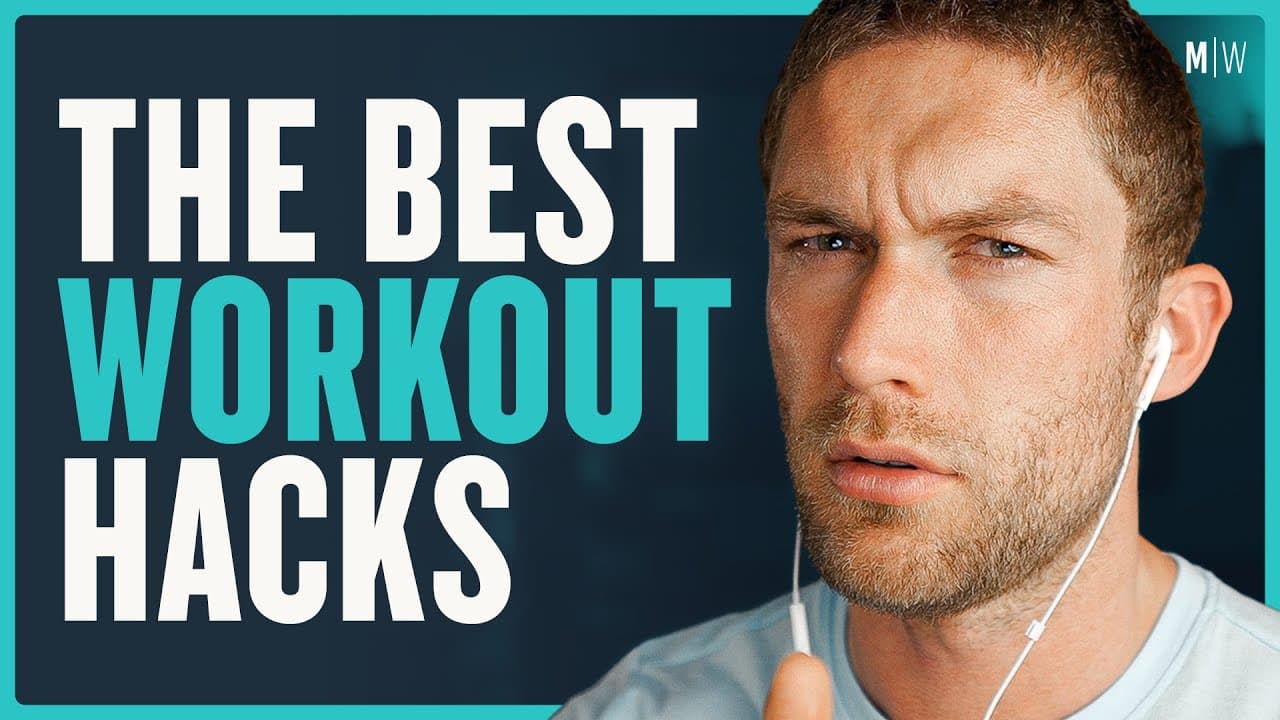
What Gym Life Hacks Improve Your Training? | Modern Wisdom Podcast 423
TL;DR
Useful gym life hacks include bench pressing with your feet off the floor to isolate the chest, using chest-supported barbell rows for stricter back training, and avoiding routine dependence on pre-workout. The episode explains how these variations limit assistance from other body parts, reduce lower-back involvement, and make lighter loads productive. Read on for the exact setups and reasoning.
Transcript
landmine pressed for shoulders and it's so safe just feels right doesn't it just feel like the right thing to do but that's because you've managed to take a movement that was supposed to be pressing vertically and made it go a little bit more close to a bench press if you lie under it like that i would say don't use a pre-workout these things are f... Read More
Key Insights
- 💪 Exercise variations like bench press with feet up and seated calf raises can effectively target specific muscle groups and enhance the effectiveness of your workouts.
- 💦 Motivation in fitness can come from creating routines, using sacred playlists, and reframing your mindset to view workouts as a privilege.
- 🍉 Avoid relying heavily on stimulants and prioritize the quality of your movements and progressive overload for better long-term results.
Install to Summarize YouTube Videos and Get Transcripts
Explore YouTube Video Summarizer or Get YouTube Transcript Extractor
Questions & Answers
Q: What gym life hacks can make training more productive and efficient?
Try exercise variations that reduce unwanted assistance from the rest of the body, such as a feet-up bench press or chest-supported barbell row. The speakers also advise against relying on pre-workout and note that people almost never regret going to the gym.
Q: What is the benefit of doing a bench press with your feet up?
Keeping your feet off the floor prevents you from applying force through the floor and makes the movement more focused on the chest. It also limits the load, requires less arching, and can reduce the lower-back cramping that sometimes occurs during a regular bench press.
Q: How should you position your legs during a feet-up bench press?
Your feet should be off the floor, though they do not necessarily need to rest on the bench or extend straight out. The key is that the feet cannot press into the floor to help move the weight.
Q: Why is a feet-up bench press harder than a regular bench press?
The variation removes force from the floor and reduces assistance from the legs and lower body. It also provides less stability and prevents the pronounced arch used in a powerlifting-style bench press.
Q: Can a feet-up bench press help when regular benching irritates the lower back?
The episode recommends it for people whose aggravated lower back cramps during barbell or dumbbell bench variations. Lying flatter without driving through the feet removes much of the lower-body contribution and can make light weights effective.
Q: Why use a chest-supported barbell row instead of a bent-over row?
As bent-over or Pendlay rows get heavier, a lifter may increasingly move the torso instead of keeping each repetition strict. The speakers say that beyond roughly 80 or 100 kilos, balance can make a strict unsupported row difficult, so chest support helps produce a stricter back workout.
Q: How do you set up a chest-supported barbell row?
Set the bench two incline positions above flat and raise the seat as well. Rest your knees on the seat or brace your toes against the bench’s feet, make yourself as stable as possible, and use normal plates to preserve enough range of motion.
Q: Should you use a pre-workout before training?
One speaker advises against using pre-workout, describing it as a false economy. The broader recommendation is to build a training approach that does not depend on it.
Summary & Key Takeaways
-
Try exercise variations like bench press with feet up or seated calf raises in between sets to target specific muscle groups and make your workouts more effective.
-
Motivate yourself by creating a routine, having a sacred playlist, or reminding yourself of the privilege of being able to train.
-
Avoid relying too heavily on stimulants like pre-workouts and focus on the quality of your movements and progressively overloading your exercises.
-
Watch engaging TV series like "Dopesick" or "Midnight Mass" for thought-provoking entertainment.
Read in Other Languages (beta)
Share This Summary 📚
Summarize YouTube Videos and Get Video Transcripts with 1-Click
Try YouTube Summary with ChatGPT & Claude or YouTube Transcript Generator
Explore More Summaries from Chris Williamson 📚





Summarize YouTube Videos and Get Video Transcripts with 1-Click
Try YouTube Summary with ChatGPT & Claude or YouTube Transcript Generator