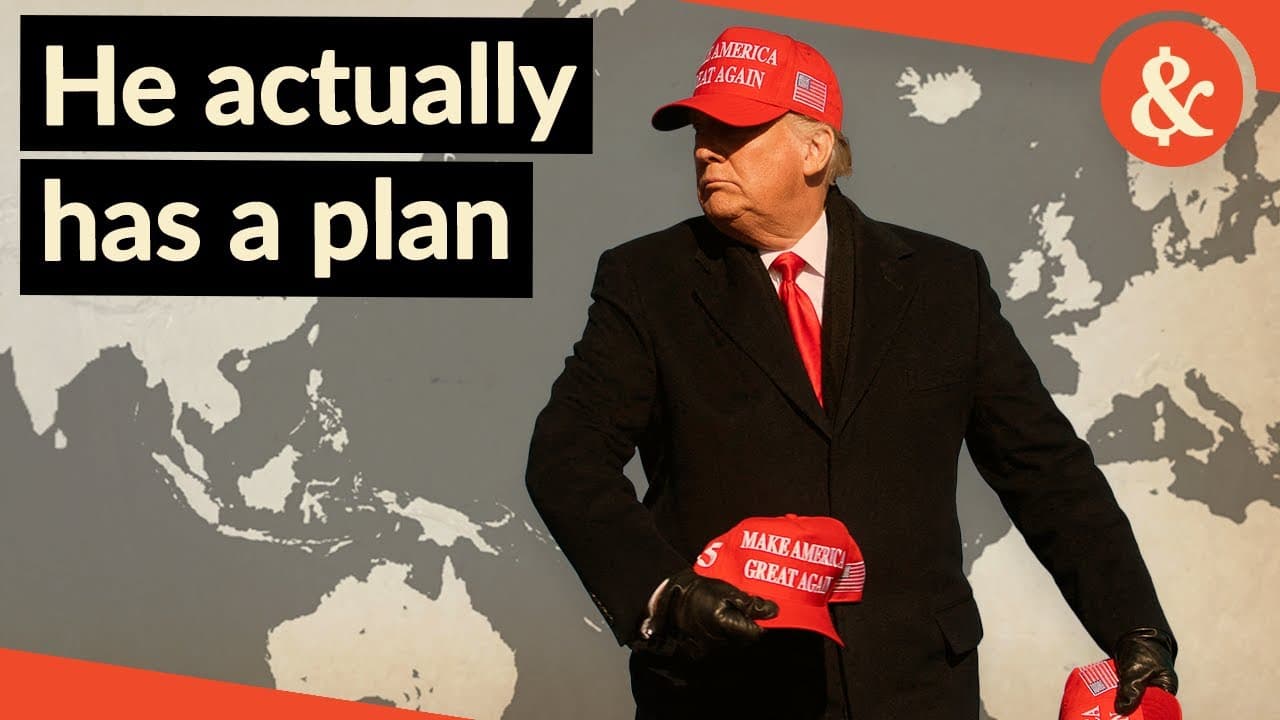
Why Trump's tariff chaos actually makes sense (big picture)
TL;DR
Trump's tariffs aim to reshape global trade for US benefit.
Transcript
Read and summarize the transcript of this video on Glasp Reader (beta).
Key Insights
- Trump's tariffs are part of a larger plan to reorient global trade in favor of the US by creating negotiating leverage.
- Historically, the US has led two major global economic orders: Bretton Woods and the neoliberal order, both of which have contributed to current economic dynamics.
- The Trump administration views deindustrialization as a national security threat and aims to revitalize US manufacturing.
- Trump's strategy includes categorizing countries into green, yellow, and red buckets, affecting their trade relations with the US.
- Reciprocal tariffs are intended to level the playing field, countering currency manipulation and non-tariff barriers.
- Trump's team believes the US dollar's reserve currency status is crucial for maintaining economic power and aims to preserve it.
- A potential 'Mar-a-Lago Accord' could establish new trade agreements, similar to past accords like Bretton Woods.
- The success of this plan hinges on whether countries are willing to join the new US-centric economic order, despite trust issues.
Install to Summarize YouTube Videos and Get Transcripts
Explore YouTube Video Summarizer or Get YouTube Transcript Extractor
Questions & Answers
Q: What is the main goal of Trump's tariff policy?
The main goal of Trump's tariff policy is to create negotiating leverage to reshape global trade relations in favor of the United States. By imposing tariffs on both allies and adversaries, the administration aims to reindustrialize the US and address national security concerns related to deindustrialization.
Q: How does the current tariff chaos fit into Trump's larger economic strategy?
The current tariff chaos is seen as a temporary phase to generate negotiating leverage. Trump's team believes that by applying tariffs broadly, they can later negotiate reciprocal tariffs and other trade agreements that better serve US interests, ultimately leading to a restructured global trade system.
Q: Why is deindustrialization a concern for the Trump administration?
Deindustrialization is a concern because it has led to a decline in US manufacturing capabilities, which the administration views as a national security threat. The loss of industrial power is seen as a disadvantage in potential military conflicts and has negatively impacted regions that historically supported Trump.
Q: What historical economic orders are referenced in the analysis?
The analysis references two major historical economic orders: the Bretton Woods system (1944-1973) and the neoliberal world order (1980s-2016). Both were US-led and have shaped current global economic dynamics, with the former establishing fixed currency values and the latter promoting free trade and flexible exchange rates.
Q: What is the significance of the 'green, yellow, and red buckets' in Trump's plan?
The 'green, yellow, and red buckets' categorize countries based on their trade relations with the US. Green countries receive favorable trade terms and security benefits, while red countries face higher tariffs and fewer advantages. This classification aims to incentivize countries to align with US interests in the new global order.
Q: How does the plan address the US dollar's reserve currency status?
The plan aims to maintain the US dollar's reserve currency status while reindustrializing the US. Trump's team believes that by negotiating new trade agreements, they can achieve a weaker dollar that supports manufacturing competitiveness without losing the benefits of the dollar's global dominance.
Q: What is the proposed 'Mar-a-Lago Accord'?
The 'Mar-a-Lago Accord' is a proposed new trade agreement that would aim to establish a US-centric global economic order, similar to past agreements like Bretton Woods. It would involve currency adjustments and trade benefits for countries aligning with US interests, potentially stabilizing the dollar and supporting US manufacturing.
Q: What challenges does Trump's economic strategy face?
A major challenge is gaining the trust of other countries to join the new US-centric economic order, especially after tearing up previous agreements. Without sufficient international cooperation, the US may struggle to balance maintaining the dollar's reserve status and revitalizing manufacturing, potentially leading to economic and geopolitical tensions.
Summary & Key Takeaways
-
Trump's tariffs are not random but part of a strategic plan to reshape global trade in favor of the US by creating negotiating leverage. This approach draws on historical precedents like the Bretton Woods system.
-
The administration's economic team, led by figures like Scott Bessent and Steven Miran, sees deindustrialization as a threat and aims to revitalize US manufacturing while maintaining the dollar's reserve currency status.
-
The strategy involves categorizing countries into groups with varying trade benefits and negotiating new agreements to ensure the US remains economically dominant while addressing national security concerns.
Read in Other Languages (beta)
Share This Summary 📚
Summarize YouTube Videos and Get Video Transcripts with 1-Click
Try YouTube Summary with ChatGPT & Claude or YouTube Transcript Generator
Explore More Summaries from Money & Macro 📚

Summarize YouTube Videos and Get Video Transcripts with 1-Click
Try YouTube Summary with ChatGPT & Claude or YouTube Transcript Generator