How to Create and Use a Knowledge Graph
TL;DR
Building a knowledge graph is simpler than many think. The process involves setting up a Neo4j instance, importing data, and defining a data model. This approach allows for easy querying and visualization, making it useful for applications like fraud detection and AI integration. With guidance from resources like 'The Developer’s Guide', users can effectively leverage knowledge graphs in various domains.
Transcript
all right good morning good evening good afternoon and thank you for joining our live stream today today the topic is how to build a knowledge graph i'm very excited about this topic and I'm very happy to have Jennifer Rif join me today hi Jennifer hi good how are you good good to see you again on this on this stream good to see you join again um f... Read More
Key Insights
- Knowledge graphs organize data into nodes, relationships, and properties, reflecting real-world connections.
- Neo4j Aura offers a user-friendly platform for creating and managing knowledge graphs, with options for free and pro tiers.
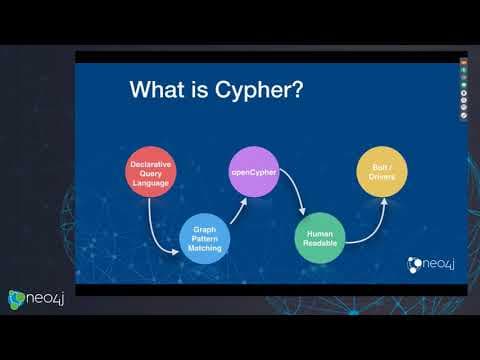
- Cypher, Neo4j's query language, is designed to be intuitive and readable, allowing users to easily specify and retrieve data patterns.
- Knowledge graphs enhance data integration and contextual understanding, proving valuable in domains like healthcare and supply chain management.
- The 'How to Build a Knowledge Graph' ebook provides step-by-step guidance for setting up and querying a knowledge graph.
- Knowledge graphs can serve as data sources for AI systems, improving the accuracy and explainability of AI-generated outputs.
- Refactoring data in a knowledge graph is generally easier compared to traditional databases, offering flexibility in data modeling.
- Neo4j Bloom and other tools provide no-code or low-code options for exploring and querying graphs, making them accessible to non-technical users.
Install to Summarize YouTube Videos and Get Transcripts
Explore YouTube Video Summarizer or Get YouTube Transcript Extractor
Questions & Answers
Q: How do you build a knowledge graph with Neo4j?
Building a knowledge graph with Neo4j involves setting up a Neo4j instance, such as Neo4j Aura, and importing data typically in CSV format. Users define a data model by mapping nodes, relationships, and properties, which reflect real-world entities and their connections. The process is guided by resources like the 'How to Build a Knowledge Graph' ebook, providing a step-by-step approach.
Q: What are the key components of a knowledge graph?
The key components of a knowledge graph include nodes, which represent entities; relationships, which define connections between nodes; and properties, which provide additional context or metadata. These components work together to model data in a way that reflects real-world relationships, making it easier to analyze and query complex datasets.
Q: How does Cypher facilitate querying in Neo4j?
Cypher, Neo4j's query language, facilitates querying by allowing users to specify data patterns using an intuitive, ASCII-art-like syntax. It supports operations like MATCH, CREATE, and MERGE, enabling users to retrieve, create, and update data efficiently. Cypher's readability and expressiveness make it accessible for both technical and non-technical users.
Q: What are the benefits of using a knowledge graph?
Knowledge graphs offer several benefits, including improved data integration, contextual understanding, and the ability to model complex relationships. They provide a flexible data model that can be easily refactored, and their visual nature aids in comprehension. Knowledge graphs are particularly valuable in domains like healthcare, supply chain management, and AI integration.
Q: How do knowledge graphs enhance AI applications?
Knowledge graphs enhance AI applications by serving as data sources for retrieval-augmented generation (RAG), improving the accuracy and relevance of AI-generated outputs. They provide rich context by storing relationships within the data, which can be used by AI systems to generate more informed and explainable results, thus enhancing the overall performance of AI applications.
Q: What misconceptions exist about knowledge graphs?
Common misconceptions about knowledge graphs include the belief that they are overly complex or difficult to implement. In reality, tools like Neo4j Aura and resources like the 'How to Build a Knowledge Graph' ebook make the process accessible. Another misconception is that knowledge graphs can solve all data-related problems, whereas they are best suited for specific use cases involving complex relationships.
Q: How does Neo4j Aura support knowledge graph creation?
Neo4j Aura supports knowledge graph creation by providing a cloud-based platform that simplifies database setup and management. It offers a free tier for initial exploration and a pro tier for more advanced use cases. Neo4j Aura includes tools for data import, model definition, and querying, making it an ideal environment for building and scaling knowledge graphs.
Q: What role do organizing principles play in knowledge graphs?
Organizing principles in knowledge graphs serve to categorize or group data into meaningful structures, enhancing the ability to analyze and query the graph. They help differentiate knowledge graphs from simple transactional systems by providing a framework for organizing nodes and relationships based on specific criteria, such as product categories or patient diagnoses, thus improving the graph's utility and relevance.
Summary & Key Takeaways
-
Building a knowledge graph involves creating a Neo4j instance, importing data, and defining a data model. This process is facilitated by tools like Neo4j Aura and the 'How to Build a Knowledge Graph' ebook, which provide step-by-step guidance. Knowledge graphs are useful for applications in various domains, including fraud detection and AI integration.
-
Cypher, Neo4j's query language, allows for intuitive querying of data patterns, making it easy to specify and retrieve relevant information. Neo4j Bloom and other no-code tools enable users to explore and interact with graphs visually, enhancing accessibility and comprehension.
-
Knowledge graphs are valuable for data integration and contextual understanding, organizing data into nodes, relationships, and properties that reflect real-world connections. They offer flexibility in data modeling and can serve as data sources for AI systems, improving accuracy and explainability.
Read in Other Languages (beta)
Share This Summary 📚
Summarize YouTube Videos and Get Video Transcripts with 1-Click
Try YouTube Summary with ChatGPT & Claude or YouTube Transcript Generator
Explore More Summaries from Neo4j 📚
Summarize YouTube Videos and Get Video Transcripts with 1-Click
Try YouTube Summary with ChatGPT & Claude or YouTube Transcript Generator