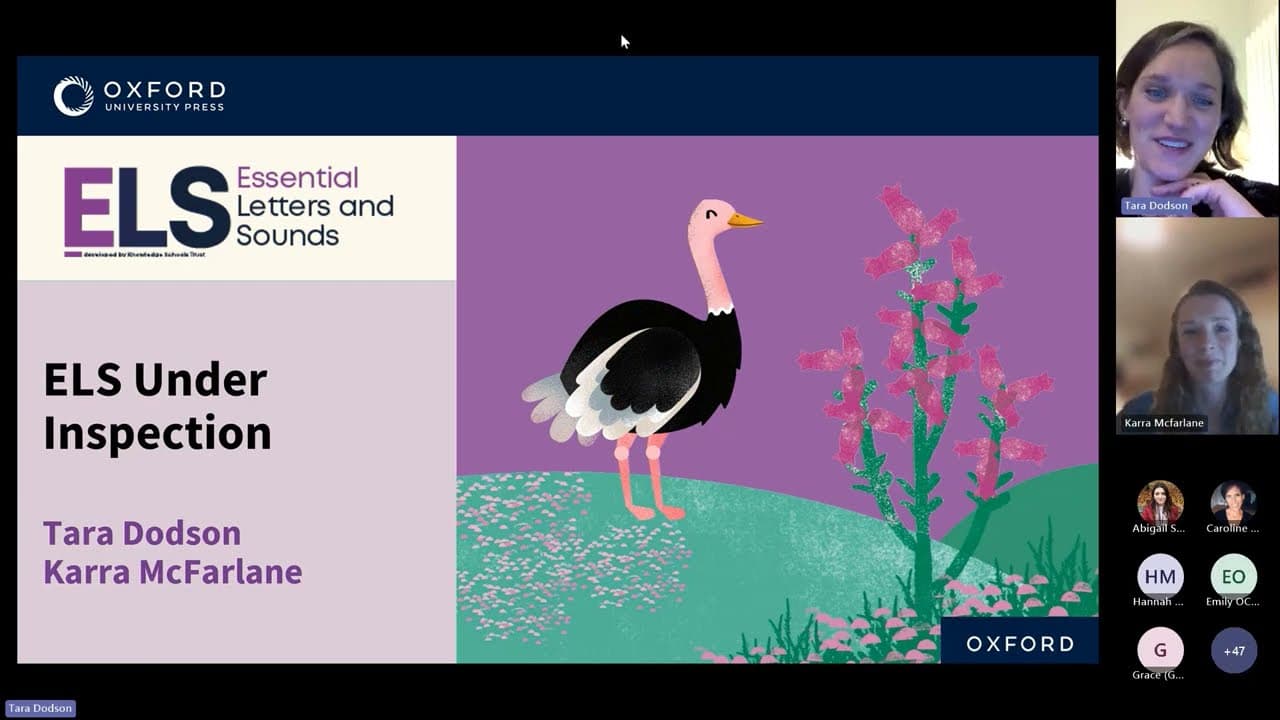
ELS Under Inspection with Tara Dodson & Karra Mcfarlane
TL;DR
This content discusses the importance of early reading education and offers tips for a successful inspection, including prioritizing reading, providing staff training, matching texts to phonics knowledge, supporting struggling readers, and fostering a love for reading.
Transcript
right thank you all for joining us today I think there's a few more just joining but I think most people are here now um so today we are going to look at El under inspection um Tara Dodson who is one of the authors of el is going to talk to you about what um ofstead inspectors might look for an inspection um and go into bits of detail about what yo... Read More
Key Insights
- 💪 Prioritizing reading education is essential for building strong literacy skills in students.
- 🚚 Staff training and ongoing professional development are crucial for delivering effective phonics instruction.
- 🧑🎓 Matching reading materials to students' phonics knowledge ensures appropriate and engaging reading experiences.
- 🤩 Providing targeted support and interventions for struggling readers is key to help them catch up with their peers.
Install to Summarize YouTube Videos and Get Transcripts
Explore YouTube Video Summarizer or Get YouTube Transcript Extractor
Questions & Answers
Q: What is the importance of staff training in delivering effective phonics instruction?
Staff training is crucial to ensure a consistent and high-quality phonics program. Training equips staff with the necessary knowledge and skills to effectively deliver phonics instruction and support struggling readers. It also ensures that all staff members are on the same page and can successfully implement the phonics program.
Q: How can schools ensure that reading books match students' phonics knowledge?
Schools should carefully select reading materials that align with students' current phonics knowledge. This can be done by providing a progression map and matching texts to the progression of the program. Regular assessments can also help identify which books are appropriate for students at different stages of their phonics journey.
Q: How can schools support struggling readers in their phonics instruction?
Schools should have targeted interventions and additional support systems in place for struggling readers. This may involve small-group or one-on-one interventions, where teachers can provide focused, individualized support to help these students catch up with the phonics program. Regular assessments and monitoring of progress are essential to ensure these interventions are effective.
Q: How can schools foster a love for reading in students?
Schools can foster a love for reading by creating a positive and engaging reading environment. This can include regular opportunities for students to read independently, listen to stories, and participate in songs and rhymes. Teachers and staff enthusiasm for reading can inspire and motivate students to develop a love for reading.
Summary & Key Takeaways
-
The content emphasizes the significance of early reading education and offers insights into what Ofsted inspectors may look for during inspections.
-
Tara Dodson discusses the inspection framework for primary schools, focusing on deep dives into reading and Foundation subjects, as well as the importance of phonics for teaching reading.
-
The content emphasizes the need for staff training, adequate resources, and the use of evidence-based practices to ensure effective phonics instruction and support struggling readers.
Read in Other Languages (beta)
Share This Summary 📚
Summarize YouTube Videos and Get Video Transcripts with 1-Click
Try YouTube Summary with ChatGPT & Claude or YouTube Transcript Generator
Explore More Summaries from Oxford Education 📚



Summarize YouTube Videos and Get Video Transcripts with 1-Click
Try YouTube Summary with ChatGPT & Claude or YouTube Transcript Generator