How To Make High Converting Ads That Print Money (Dropshipping Sauce)
TL;DR
Learn ad frameworks to boost dropshipping sales significantly.
Transcript
Read and summarize the transcript of this video on Glasp Reader (beta).
Key Insights
- Understanding ad psychology is crucial for creating high-converting ads that can significantly boost sales in dropshipping and micro-branded stores.
- Five key marketing frameworks—PAS, Us vs. Them, BS vs. FS, BNA, and Myth Busting—are essential for crafting effective ads, each serving a unique purpose in engaging potential customers.
- The PAS framework focuses on identifying a problem, agitating it, and presenting the product as a solution, making it versatile for various ad formats.
- The Us vs. Them framework highlights the superiority of your product over competitors by emphasizing unique benefits and features.
- BS vs. FS framework involves showcasing either the benefits or features of a product, depending on the audience's awareness level, to enhance ad effectiveness.
- The BNA framework uses before-and-after scenarios to illustrate the transformative impact of a product, appealing to customers' desire for change.
- Myth Busting involves debunking common misconceptions about a product or market, educating the audience, and positioning the product as a credible solution.
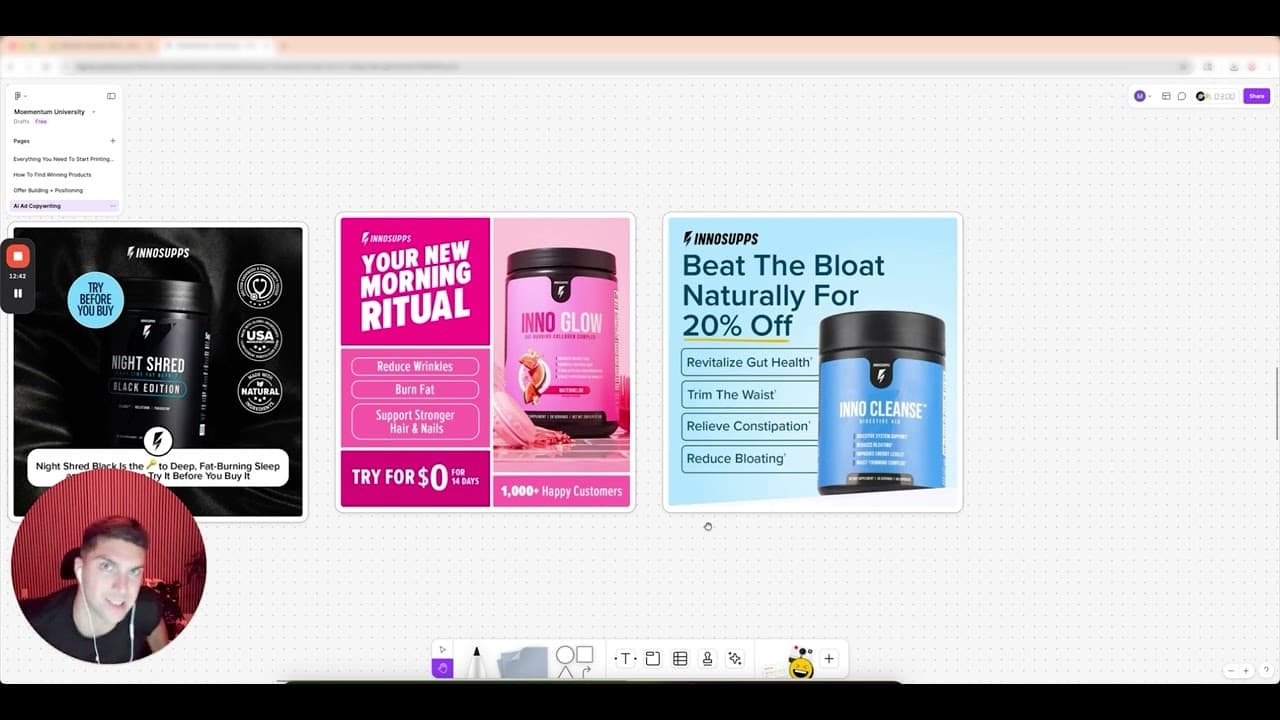
- Successful static ads follow a hook-benefit-CTA structure, often integrating frameworks like PAS or Us vs. Them to maximize engagement and conversion.
Install to Summarize YouTube Videos and Get Transcripts
Explore YouTube Video Summarizer or Get YouTube Transcript Extractor
Questions & Answers
Q: What are the five key marketing frameworks discussed in the video?
The five key marketing frameworks discussed are PAS (Problem, Agitation, Solution), Us vs. Them, BS vs. FS (Benefit Stack vs. Feature Stack), BNA (Before and After), and Myth Busting. Each framework serves a unique purpose in crafting ads that engage and convert potential customers by addressing their specific needs and concerns.
Q: How does the PAS framework work in ad creation?
The PAS framework involves identifying a common problem faced by the target audience, agitating the problem to emphasize its impact, and then presenting the product as a viable solution. This approach is effective in various ad formats and helps in creating a compelling narrative that resonates with potential customers, ultimately driving conversions.
Q: Why is the Us vs. Them framework effective?
The Us vs. Them framework is effective because it highlights the superiority of your product over competitors by emphasizing its unique benefits and features. This approach creates a clear distinction between your product and others in the market, persuading potential customers to choose your offering based on its perceived advantages.
Q: What role does the BS vs. FS framework play in marketing?
The BS vs. FS framework involves showcasing either the benefits or features of a product, depending on the audience's awareness level. By tailoring the message to highlight what the target audience values most—whether it's the benefits or specific features—marketers can enhance the ad's effectiveness and increase the likelihood of conversion.
Q: How can marketers use the BNA framework?
Marketers can use the BNA framework by presenting before-and-after scenarios that illustrate the transformative impact of their product. This approach appeals to customers' desire for change and improvement, helping them visualize the benefits of using the product and encouraging them to make a purchase based on the potential positive outcomes.
Q: What is the significance of the Myth Busting framework?
The Myth Busting framework is significant because it involves debunking common misconceptions about a product or market. By educating the audience and correcting false beliefs, marketers can build trust and credibility, positioning their product as a knowledgeable and reliable solution, which can lead to increased customer interest and conversions.
Q: What structure should static ads follow?
Static ads should follow a hook-benefit-CTA structure, which involves capturing the audience's attention with a compelling hook, highlighting the product's benefits, and concluding with a clear call-to-action. This format is effective in engaging viewers and guiding them towards taking the desired action, such as making a purchase or signing up for more information.
Q: How does the AIDA model apply to video ads?
The AIDA model—Attention, Interest, Desire, Action—applies to video ads by guiding the structure of the content to maximize engagement and conversion. The ad should start with an attention-grabbing element, maintain interest through relevant information, create desire by showcasing benefits, and conclude with a strong call-to-action, encouraging viewers to take the next step.
Summary & Key Takeaways
-
The video emphasizes the importance of understanding ad psychology and using specific marketing frameworks to create high-converting ads for dropshipping. By applying frameworks like PAS, Us vs. Them, and BS vs. FS, marketers can effectively engage potential customers and drive sales.
-
Static ads should adhere to a hook-benefit-CTA format, utilizing frameworks such as PAS or Us vs. Them to enhance their appeal. The video also advises against relying solely on AI-generated ads, suggesting the use of templates and designers for better results.
-
Video ads should follow the AIDA model—Attention, Interest, Desire, Action—to capture viewers' interest and drive conversions. The video provides examples of successful ads and encourages marketers to analyze and replicate winning concepts for their campaigns.
Read in Other Languages (beta)
Share This Summary 📚
Summarize YouTube Videos and Get Video Transcripts with 1-Click
Try YouTube Summary with ChatGPT & Claude or YouTube Transcript Generator
Explore More Summaries from MoehayekBiz 📚
Summarize YouTube Videos and Get Video Transcripts with 1-Click
Try YouTube Summary with ChatGPT & Claude or YouTube Transcript Generator