How Do Innovation, Market, and IP Relate to Each Other?
TL;DR
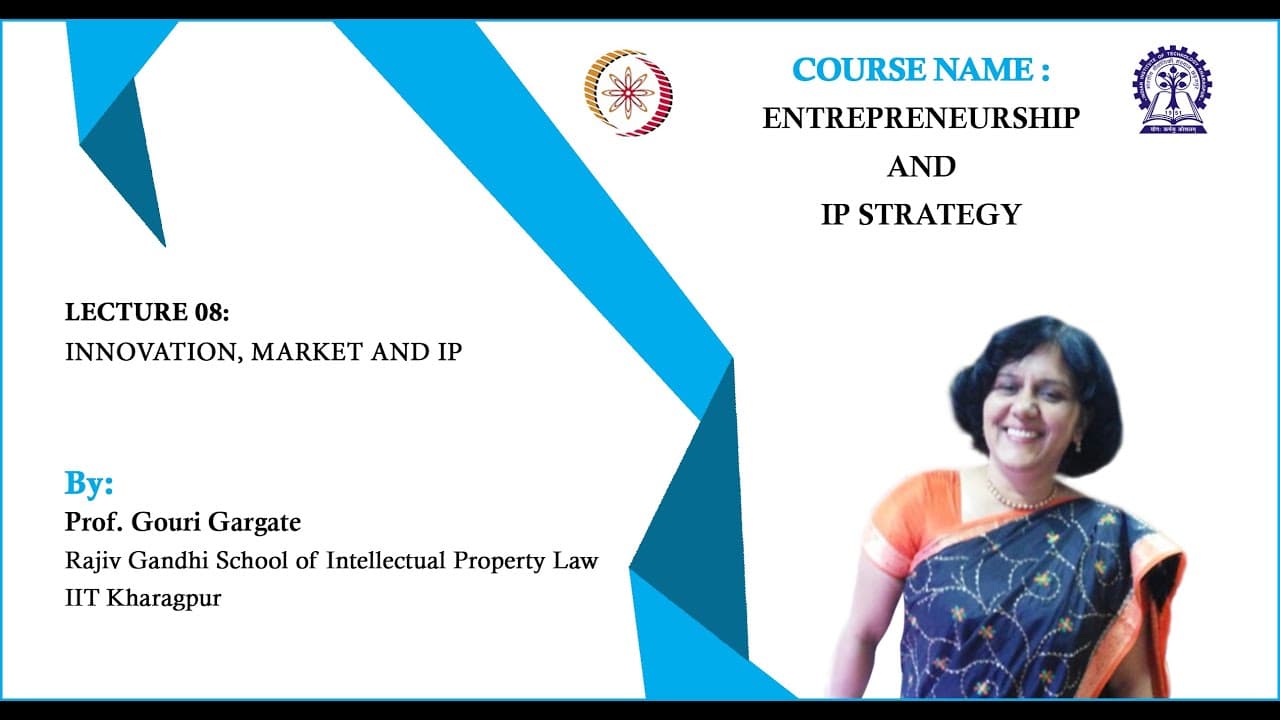
Innovation, market dynamics, and intellectual property (IP) are closely interlinked, with IP serving as a protection mechanism for innovations that enhance wealth creation. In a knowledge economy, leveraging intangible assets like IP is crucial for economic success. Not every business needs IP, but understanding its role is vital for entrepreneurs to navigate technological changes and market demands effectively.
Transcript
Read and summarize the transcript of this video on Glasp Reader (beta).
Key Insights
- Innovation, market, and IP are interconnected, with IP serving as a tool to protect innovation and create wealth.
- The knowledge economy emphasizes the importance of intangible assets like IP, crucial for economic development.
- IP examples include Google and Stanford University, showcasing how IP can generate significant wealth through licensing.
- Not all entrepreneurial ventures require IP; its necessity depends on the nature of the business, such as technology or design.
- IP management involves roles like IP director and knowledge manager, highlighting its importance in corporate structures.
- Innovation can lead to creative destruction, reshaping markets and industries, as seen with the internet and laser technology.
- The rapid pace of technological change necessitates continuous learning for entrepreneurs to stay competitive.
- The IP management process includes generation, protection, and commercialization, paralleling the innovation process.
Install to Summarize YouTube Videos and Get Transcripts
Explore YouTube Video Summarizer or Get YouTube Transcript Extractor
Questions & Answers
Q: How are innovation, market, and IP interconnected?
Innovation, market, and IP are interconnected as IP serves as a protective tool for innovation, ensuring that creators can secure their inventions and generate wealth. The market is impacted by innovation, which can create new industries and reshape existing ones. IP helps protect these innovations, allowing businesses to capitalize on their creative efforts.
Q: Why is the knowledge economy important for IP?
The knowledge economy is important for IP because it emphasizes the value of intangible assets, such as intellectual property, as key drivers of economic development. In a knowledge economy, businesses and countries that effectively manage and protect their IP can gain a competitive advantage, as IP becomes a significant source of wealth and innovation.
Q: What role does IP play in the economic development of developed nations?
In developed nations, IP plays a crucial role in economic development by serving as a tool for protecting innovations and creating competitive advantages. These countries often have robust IP systems that encourage innovation, leading to wealth creation through licensing, commercialization, and strategic use of IP assets. This helps drive technological advancements and economic growth.
Q: Can you provide an example of how IP can generate wealth?
An example of how IP can generate wealth is the case of Stanford University, which received significant financial returns through licensing a single patent. This demonstrates how effectively managing and protecting IP can lead to substantial revenue streams, as organizations can license their innovations to other businesses, creating a continuous source of income.
Q: Is IP necessary for all entrepreneurial ventures?
IP is not necessary for all entrepreneurial ventures. Its necessity depends on the nature of the business. For technology-driven ventures, patents may be crucial, while industries like publishing or film may rely more on copyrights. Design-oriented businesses might prioritize industrial design protection. Each venture must assess its specific needs regarding IP protection.
Q: What is the impact of innovation on existing markets and industries?
Innovation can have a transformative impact on existing markets and industries by introducing new products or services that disrupt traditional offerings. This process, known as creative destruction, can lead to the emergence of new industries while rendering existing ones obsolete. Examples include the rise of the internet and digital photography, which reshaped their respective markets.
Q: How can entrepreneurs stay competitive in a rapidly changing technological landscape?
Entrepreneurs can stay competitive in a rapidly changing technological landscape by engaging in continuous learning and monitoring market trends. They should stay informed about technological advancements, competitor activities, and industry shifts. Strategic IP planning and protection are also crucial, as they allow entrepreneurs to secure their innovations and gain a competitive edge.
Q: What are the stages of the IP management process?
The IP management process involves three key stages: IP generation, IP protection, and IP commercialization. IP generation involves creating new ideas and innovations. IP protection focuses on securing legal rights to these innovations through patents, trademarks, or copyrights. Finally, IP commercialization involves monetizing the protected IP through licensing, sales, or other revenue-generating activities.
Summary & Key Takeaways
-
The lecture explores the connection between innovation, market, and IP, highlighting how IP protects innovation and aids wealth creation. It discusses the knowledge economy's focus on intangible assets, with IP being a crucial economic tool.
-
Examples like Google and Stanford University illustrate IP's wealth-generating potential. The lecture emphasizes that not all ventures need IP, as its necessity varies based on the business type, such as technology or design.
-
The IP management process involves generation, protection, and commercialization, paralleling the innovation process. The lecture stresses the importance of continuous learning and strategic IP planning for entrepreneurial success.
Read in Other Languages (beta)
Share This Summary 📚
Summarize YouTube Videos and Get Video Transcripts with 1-Click
Try YouTube Summary with ChatGPT & Claude or YouTube Transcript Generator
Explore More Summaries from NPTEL IIT Kharagpur 📚






Summarize YouTube Videos and Get Video Transcripts with 1-Click
Try YouTube Summary with ChatGPT & Claude or YouTube Transcript Generator