What Type of TV Should You Buy in 2025?
TL;DR
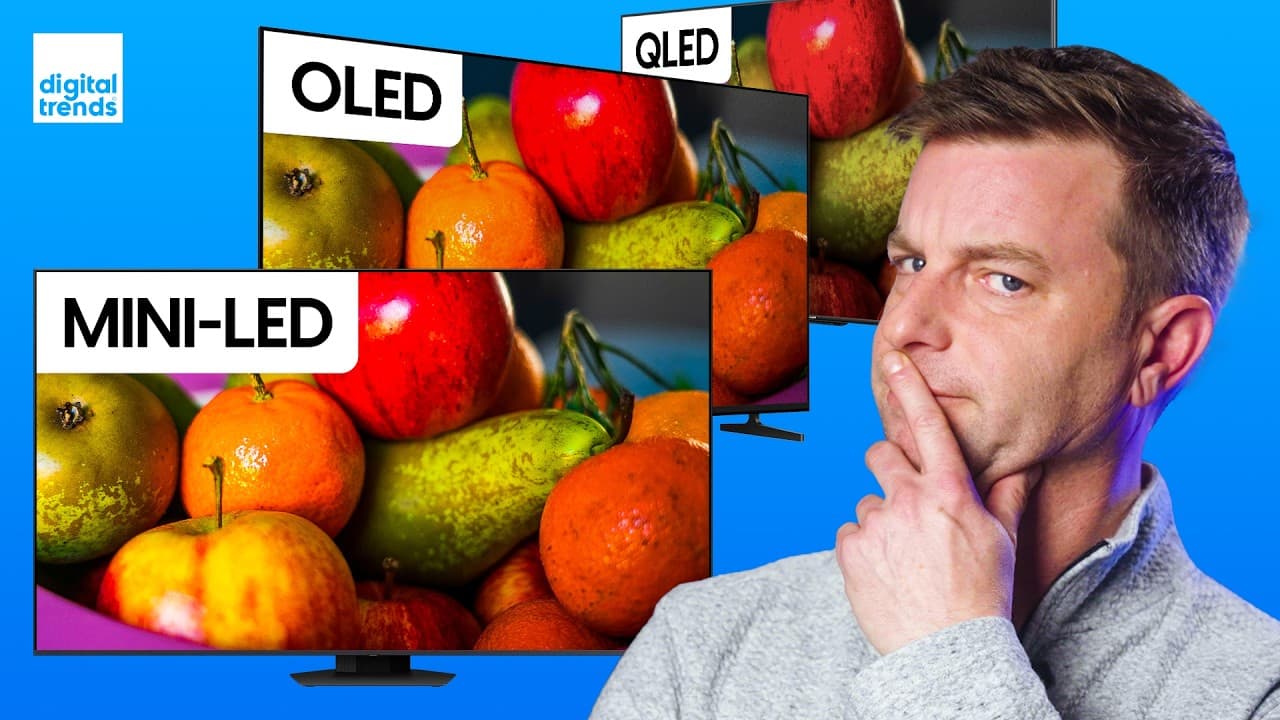
In 2025, choose a TV based on your needs: for budget options, select a direct lit LED; for best picture quality, opt for miniLED or QLED. OLED TVs, especially QD OLED and four stack OLED, offer the best performance, featuring perfect blacks and stunning contrast. Avoid edge lit TVs as they provide poor picture quality and longevity.
Transcript
Read and summarize the transcript of this video on Glasp Reader (beta).
Key Insights
- The video addresses the confusion around various TV technologies and helps viewers understand which TV to buy in 2025.
- Caleb Denison explains the two main types of TV display technologies: LCD/LED and OLED, highlighting their strengths and weaknesses.
- LCD/LED TVs are categorized into edge lit, direct lit, full array local dimming, QLED, and miniLED, each offering different levels of brightness and contrast.
- OLED TVs, known for their perfect black levels and contrast, come in three types: W OLED, QD OLED, and four stack/tandem OLED.
- Edge lit TVs are not recommended due to uneven brightness and heat issues, while direct lit TVs are a budget-friendly option with uniform brightness.
- Full array local dimming improves contrast by allowing zones of LED backlights to be turned off or dimmed for better black levels.
- Quantum dots enhance TV brightness and color, making QLED TVs ideal for enjoying HDR and Dolby Vision content.
- MiniLED TVs, offering superior brightness and contrast, are considered top-tier LED TVs and are becoming more affordable.
Install to Summarize YouTube Videos and Get Transcripts
Explore YouTube Video Summarizer or Get YouTube Transcript Extractor
Questions & Answers
Q: What are the main types of TV display technologies available in 2025?
In 2025, the main types of TV display technologies are LCD/LED and OLED. LCD/LED TVs include variations such as edge lit, direct lit, full array local dimming, QLED, and miniLED. OLED TVs come in three types: W OLED, QD OLED, and four stack/tandem OLED. Each technology offers different strengths and weaknesses in terms of brightness, contrast, and color.
Q: Why is edge lit TV technology not recommended?
Edge lit TV technology is not recommended because it often results in uneven brightness across the screen and generates excessive heat at the edges, which can cause premature failure. This outdated technology is inexpensive to implement but does not provide the brightness or contrast levels that other technologies like direct lit or full array local dimming can offer.
Q: What is the advantage of full array local dimming in TVs?
Full array local dimming offers the advantage of improved contrast by allowing the grid of LED backlights to be broken down into zones that can be turned off or dimmed. This results in better black levels and a more beautiful picture, as it prevents light from spilling into dark areas of the screen, enhancing the overall viewing experience.
Q: How do quantum dots enhance TV picture quality?
Quantum dots enhance TV picture quality by increasing brightness and color accuracy. These tiny particles are used in QLED TVs to produce more vibrant and colorful images, making them ideal for viewing high dynamic range (HDR) and Dolby Vision content. Various brands use different names for this technology, but the underlying principle of improved brightness and color remains consistent.
Q: What are the benefits of miniLED TVs?
MiniLED TVs offer several benefits, including superior brightness and contrast compared to traditional LED TVs. The smaller size of miniLEDs allows for more precise control over the backlighting, resulting in better picture quality. MiniLED TVs are considered top-tier in the LED category and are becoming more affordable, making them an attractive option for consumers seeking high-quality displays.
Q: Why are OLED TVs praised for their picture quality?
OLED TVs are praised for their picture quality because they provide perfect black levels and excellent contrast, thanks to their ability to turn off individual pixels completely. This results in vibrant colors and a more immersive viewing experience. OLED TVs also avoid issues like halo or blooming, which can occur in LCD-type TVs, further enhancing their reputation for superior picture quality.
Q: What are the differences between W OLED, QD OLED, and four stack/tandem OLED?
W OLED is the standard issue OLED with a white subpixel to boost brightness. QD OLED incorporates quantum dots to enhance brightness and color, making them more expensive but highly praised. Four stack/tandem OLED is an evolution of W OLED, offering increased brightness and color, positioning it alongside QD OLED as a top-tier option. Each type has unique advantages and price points.
Q: What should consumers consider when choosing a TV in 2025?
When choosing a TV in 2025, consumers should consider their budget, desired picture quality, and usage needs. Direct lit TVs are budget-friendly, while full array local dimming offers better contrast. For enhanced color and brightness, QLED and miniLED TVs are recommended. OLED TVs provide superior picture quality, with QD OLED and four stack/tandem OLED being the top choices for enthusiasts seeking the best performance.
Summary & Key Takeaways
-
Caleb Denison provides a comprehensive guide to buying a TV in 2025, explaining the differences between OLED, QLED, and LED technologies. He categorizes LCD/LED TVs into edge lit, direct lit, full array local dimming, QLED, and miniLED, and discusses the strengths and weaknesses of each type.
-
The video emphasizes the importance of understanding TV display technologies to make an informed purchase decision. Denison highlights the advantages of OLED TVs, which offer perfect black levels and contrast, and explains the different types of OLED technologies available.
-
Denison advises viewers to avoid edge lit TVs due to their outdated technology and recommends considering direct lit TVs for budget-friendly options. He also suggests looking into full array local dimming and miniLED TVs for better picture quality, especially for viewers who prioritize brightness and contrast.
Read in Other Languages (beta)
Share This Summary 📚
Summarize YouTube Videos and Get Video Transcripts with 1-Click
Try YouTube Summary with ChatGPT & Claude or YouTube Transcript Generator
Explore More Summaries from Digital Trends 📚



Summarize YouTube Videos and Get Video Transcripts with 1-Click
Try YouTube Summary with ChatGPT & Claude or YouTube Transcript Generator