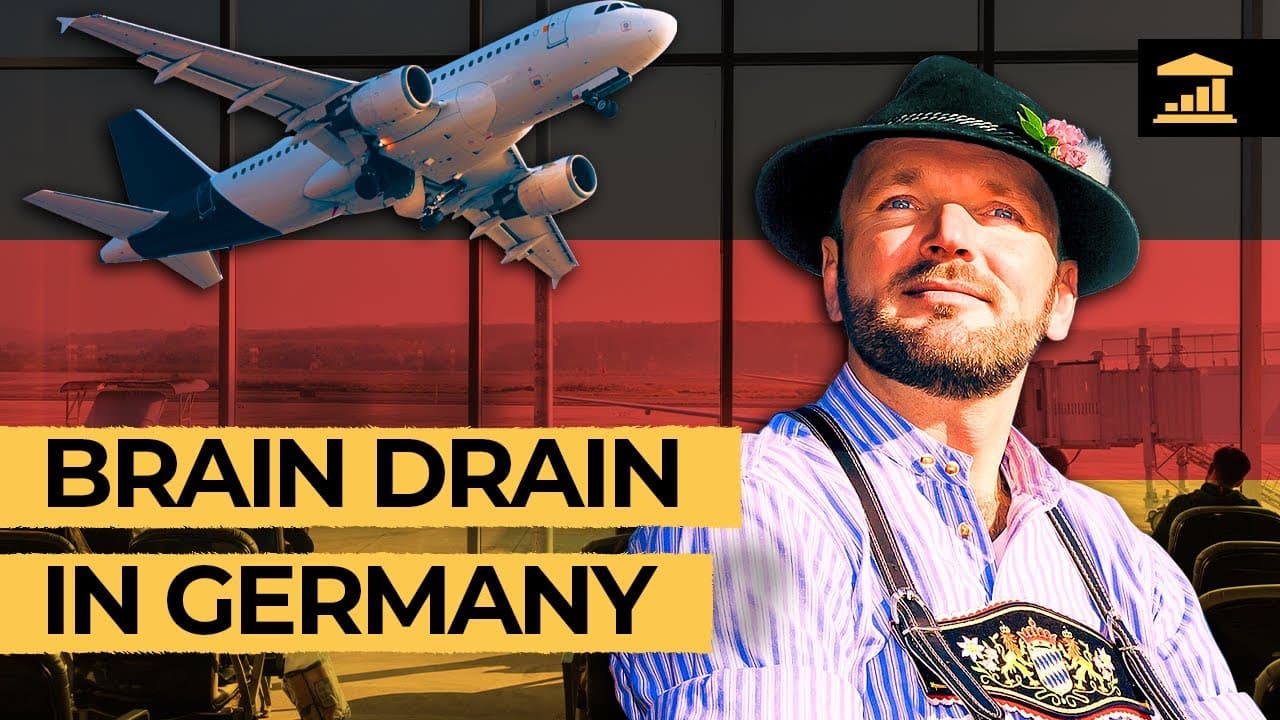
Why Is Talent Fleeing Germany?
TL;DR
Germany is facing a problem of attracting highly skilled workers despite its reputation for high productivity and a strong economy, which could have negative implications for its future growth.
Transcript
Germany is not only a very wealthy country, it's also a country famous for running like clockwork and for producing things of very high quality. [That at least is the reputation, if it’s German, it's good]. The fact is that over recent decades Germany experienced one of the most significant economic miracles in history. We have already told you abo... Read More
Key Insights
- 🔍 Germany is a top 10 country in terms of well-being and development, known for its wealth, productivity, and skilled workforce. However, it faces a serious problem: its inability to attract skilled labor.
- 🌍 Germany's population is predicted to shrink, leading to an aging population and a decrease in available labor. This, coupled with the lack of talent retention, poses an economic challenge for the country.
- 🌐 Germany's immigration policies have been aimed at attracting young talent and maintaining demographic expansion, but it has struggled to compete with other countries in attracting skilled immigrants.
- ✅ The bureaucratic German immigration system is complex and a disincentive for companies, especially small and medium-sized enterprises, to hire skilled workers from outside the European Union.
- 🚦 Cultural factors, such as language barriers, integration issues, high living costs, and clashes with local culture, also contribute to Germany's unattractiveness as a destination for skilled workers.
- 🔑 Germany must address these challenges and make reforms to its immigration policies to attract qualified foreigners. Measures such as opportunity cards and allowing individuals with work experience or education to work in Germany, even without recognized qualifications, have been introduced.
- 🌱 Reversing the decline in skilled labor is crucial for Germany's economic growth and productivity. The government is actively working to address the issue and boost the arrival of new talent.
- ⚖️ The success of these reforms remains to be seen, but it's important for Germany to take action to ensure a stable and skilled workforce for the future.
Install to Summarize YouTube Videos and Get Transcripts
Explore YouTube Video Summarizer or Get YouTube Transcript Extractor
Questions & Answers
Q: Why is Germany struggling to attract skilled workers despite its strong economy?
Germany's struggle to attract skilled workers can be attributed to several factors. Firstly, the shrinking population and aging workforce have led to a limited pool of talent available within the country. Additionally, the complex and bureaucratic immigration system in Germany, which involves multiple ministries and agencies, makes it difficult for skilled professionals from outside the European Union to navigate the process. Furthermore, the language barrier and cultural differences pose challenges for foreign workers, contributing to their hesitation in choosing Germany as a destination for work.
Q: How has Germany attempted to address its skilled labor shortage?
The German government has recognized the need to address the skilled labor shortage and has implemented reforms to attract skilled immigrants. These reforms include easing the eligibility requirements for skilled immigrants from third countries, accepting vocational training as proof of qualification, and reducing administrative formalities. However, the effectiveness of these reforms remains to be seen, as the COVID-19 pandemic has disrupted immigration patterns and slowed the arrival of new immigrants, both skilled and unskilled.
Q: What are the implications of Germany's struggle to attract skilled workers?
Germany's struggle to attract skilled workers has significant implications for its economy and future growth. The country already faces a brain drain, with skilled workers leaving for other destinations. This not only exacerbates the shortage of skilled labor but also poses a threat to Germany's formidable industry and its position as Europe's economic driver. If the skilled labor shortage is not addressed, it could lead to a decline in productivity, economic growth, and job vacancies that cannot be filled.
Q: How does Germany's immigration system contribute to the difficulty in attracting skilled professionals?
Germany's immigration system is complex and bureaucratic, involving multiple ministries and layers of government. This poses a major disincentive for German companies and particularly affects small and medium-sized enterprises that lack the resources to navigate the system. The requirements and documentation for incorporating skilled workers from outside the European Union are more difficult and costly compared to hiring workers within the EU. As a result, many skilled professionals prefer destinations with simpler immigration processes and fewer barriers to entry, even if Germany offers high-quality jobs and career opportunities.
Summary & Key Takeaways
-
Germany is experiencing a shrinking population and an aging workforce, leading to a lack of available labor and increased economic impact.
-
The country has struggled to attract skilled workers, ranking worse than comparable countries in terms of attracting talent.
-
The bureaucratic German immigration system, complex regulations, and language barriers contribute to the difficulty in attracting skilled professionals.
-
The government has implemented reforms to make it easier for skilled immigrants to come to Germany, but the effectiveness of these reforms remains to be seen.
Read in Other Languages (beta)
Share This Summary 📚
Summarize YouTube Videos and Get Video Transcripts with 1-Click
Try YouTube Summary with ChatGPT & Claude or YouTube Transcript Generator
Explore More Summaries from VisualPolitik EN 📚






Summarize YouTube Videos and Get Video Transcripts with 1-Click
Try YouTube Summary with ChatGPT & Claude or YouTube Transcript Generator