How Can Shipping Containers Be a Profitable Business?
TL;DR
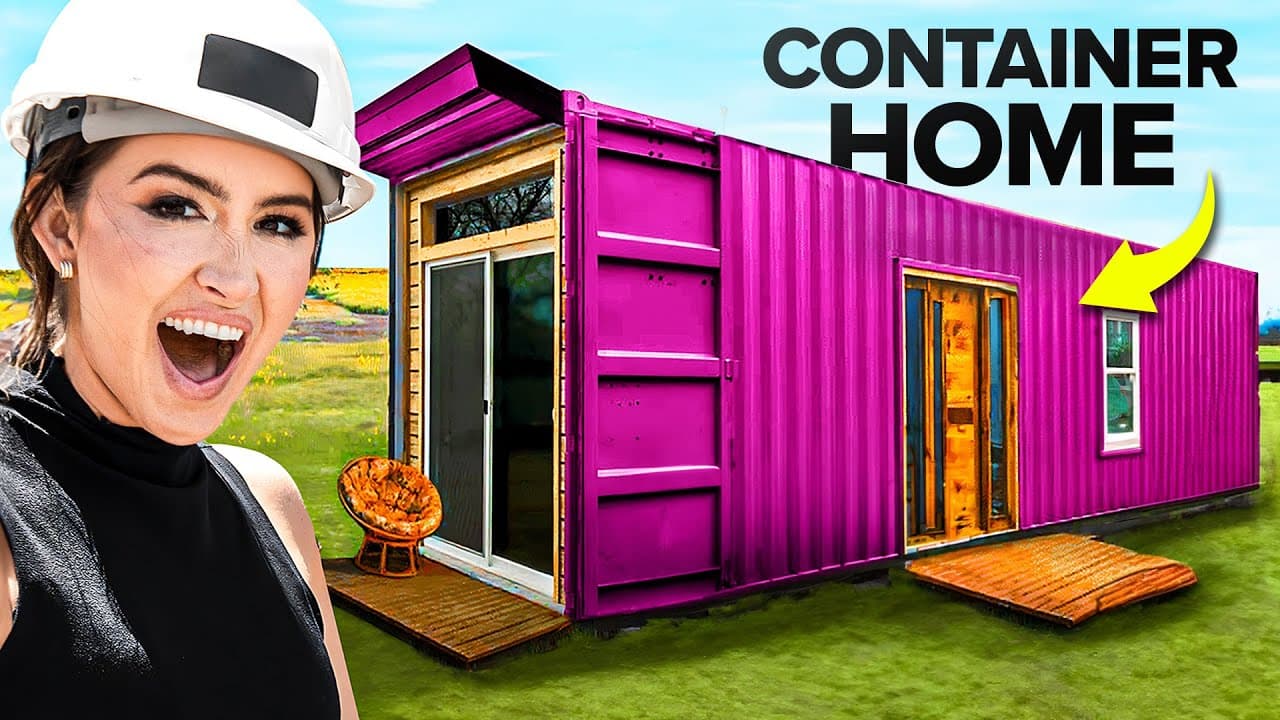
Shipping containers can be a highly profitable business by transforming surplus containers into homes and commercial spaces. With an initial investment as low as $15,000, businesses like Bob's can grow to over $15 million in five years by offering cost-effective, efficient construction solutions and financing options for customers looking to invest in container homes.
Transcript
imagine buying a shipping container for 3,500 bucks and selling it 3 weeks later for $35,000 our man Bob thought he could use all the old recycled containers and turn them into profit and it looks like he did he did $1.5 million in his first year now 5 years later they're doing a whole lot more how much more they're doing 15 million this year and i... Read More
Key Insights
- Bob's container business started with a $15,000 investment and grew to $15 million in five years, showcasing the potential of shipping containers.
- Shipping containers are cost-effective and time-efficient, taking weeks to build compared to traditional construction methods.
- The business leverages the surplus of containers in the US due to higher imports than exports, transforming them into homes, bars, and more.
- Financing options, including mortgages, make it easier for people to purchase container homes and start Airbnb ventures.
- The business operates like an e-commerce platform, offering a streamlined online purchasing experience with transparent pricing.
- Agile construction methods allow for efficient building processes, reducing costs and speeding up production.
- The company emphasizes customer-driven product development, using feedback to refine and expand their offerings.
- Sharing information and maintaining detailed SOPs ensures quality control and operational efficiency, enabling scalability.
Install to Summarize YouTube Videos and Get Transcripts
Explore YouTube Video Summarizer or Get YouTube Transcript Extractor
Questions & Answers
Q: What inspired Bob to start his container business?
Bob was inspired by the film 'War Dogs' and a city project bid that involved converting shipping containers into offices. Despite having no prior experience, he saw an opportunity in the unregulated container market and decided to fill the gap by offering a reliable service.
Q: How does the container business model differ from traditional construction?
The container business model operates like an e-commerce platform, offering transparent pricing and a streamlined purchasing process. It uses agile construction methods that allow for concurrent building stages, reducing time and costs compared to traditional sequential construction methods.
Q: What are the advantages of using shipping containers for construction?
Shipping containers offer a cost-effective and time-efficient alternative to traditional construction. They are readily available due to surplus imports, can be transformed into various structures, and provide a fast turnaround with lower costs, making them ideal for homes, bars, and commercial spaces.
Q: How does financing work for purchasing container homes?
The business offers various financing options, including mortgages and commercial lines of credit, making it easier for customers to purchase container homes. This approach opens up opportunities for individuals to own affordable homes or start Airbnb ventures with minimal upfront investment.
Q: What role does customer feedback play in the business?
Customer feedback is crucial for product development. The business uses consumer-driven insights to refine and expand their offerings, ensuring that they meet market demands and preferences. This approach helps in creating products that are more likely to succeed in the market.
Q: How does the business ensure quality and efficiency?
The business maintains detailed Standard Operating Procedures (SOPs) that ensure quality control at each stage of construction. These SOPs are tied to milestone payments for contractors, aligning interests and ensuring that quality standards are met before progressing to the next phase.
Q: What challenges did Bob face in scaling the business?
Bob faced challenges in scaling too quickly, which led to a need to slow down and adopt sustainable growth practices. Listening to customer needs and focusing on financing options were critical in overcoming these challenges and ensuring continued growth.
Q: What potential does the container business offer for new entrepreneurs?
The container business offers significant potential for new entrepreneurs due to its low entry cost, high demand, and the ability to leverage agile construction methods. With proper financing and a focus on customer-driven product development, entrepreneurs can achieve rapid growth and profitability.
Summary & Key Takeaways
-
Bob's container business has grown significantly by transforming surplus shipping containers into homes and commercial spaces, leveraging cost and time efficiency.
-
The business model includes e-commerce elements, offering a transparent and streamlined purchasing process, and emphasizes customer-driven product development.
-
Agile construction methods and strategic financing options have facilitated rapid growth, while maintaining quality and operational efficiency through detailed SOPs.
Read in Other Languages (beta)
Share This Summary 📚
Summarize YouTube Videos and Get Video Transcripts with 1-Click
Try YouTube Summary with ChatGPT & Claude or YouTube Transcript Generator