How Waste Plastic is Converted into Fuel | Plastic Pyrolysis | Karthi Explains
TL;DR
Plastic pyrolysis converts waste plastic into fuel efficiently.
Transcript
Read and summarize the transcript of this video on Glasp Reader (beta).
Key Insights
- Plastic pollution is a significant environmental issue due to its resistance to degradation and high production levels.
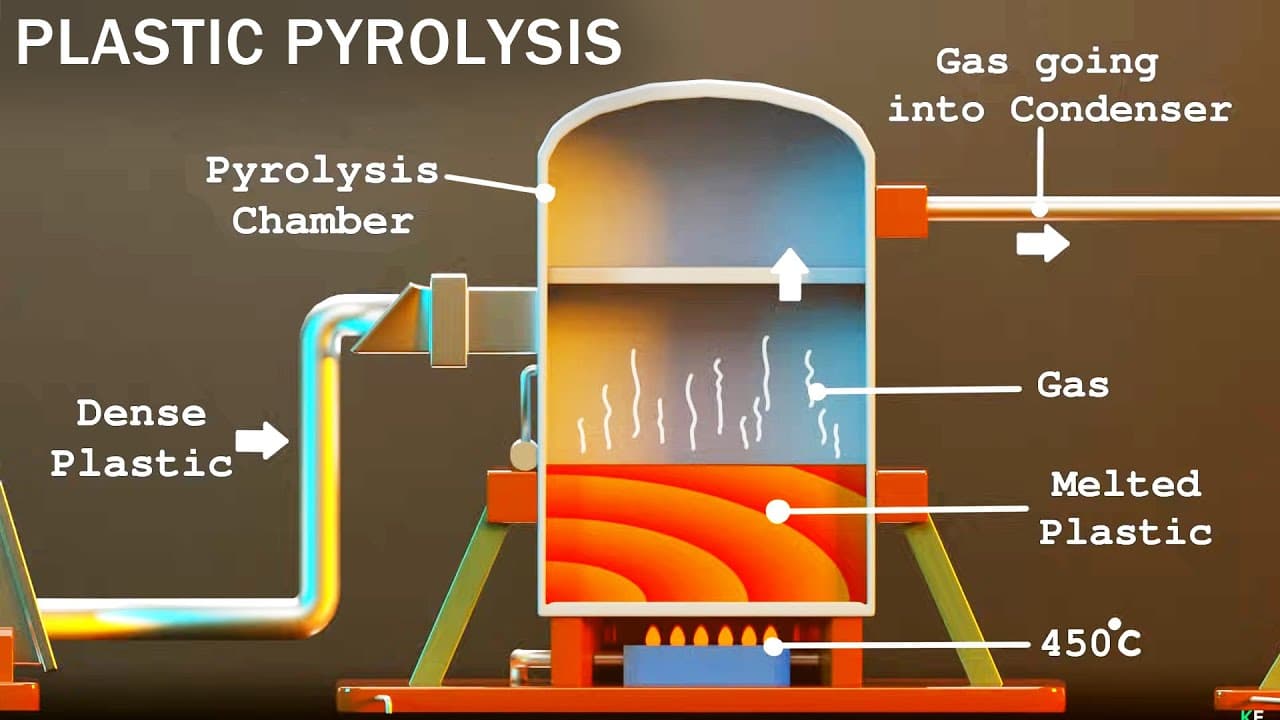
- Plastic pyrolysis is a method to convert waste plastic into fuel by heating it in an oxygen-free environment.
- The process involves breaking down long polymer chains into shorter hydrocarbon chains using heat and catalysts.
- The conversion yields approximately 80% oil, 15% gas, and 5% carbon black or ash.
- The oil produced can be used in various industries, including cement, glass, and power generation.
- Plastic pyrolysis is energy-intensive but helps reduce landfill waste and greenhouse gas emissions.
- The process creates job opportunities and can benefit public health through waste cleanup.
- Despite its advantages, plastic pyrolysis is complex and not entirely sustainable due to its energy demands.
Install to Summarize YouTube Videos and Get Transcripts
Explore YouTube Video Summarizer or Get YouTube Transcript Extractor
Questions & Answers
Q: What is plastic pyrolysis?
Plastic pyrolysis is a chemical recycling process that converts waste plastic into fuel. It involves heating plastic in an oxygen-free environment, breaking down long polymer chains into shorter hydrocarbons. This process yields oil, gas, and carbon black, which can be used in various industries, reducing plastic waste and emissions.
Q: How does the pyrolysis process work?
The pyrolysis process involves several steps: pretreatment to remove foreign matter, shredding plastic into small pieces, densification, heating in a pyrolysis chamber with a catalyst, condensation of gases into liquid, and refining the liquid into oil. This method effectively converts plastic waste into usable resources.
Q: What are the benefits of plastic pyrolysis?
Plastic pyrolysis reduces landfill waste and greenhouse gas emissions by converting plastic into fuel. It creates job opportunities and benefits public health through waste cleanup. The oil produced can be used in various industries, providing an alternative energy source and reducing reliance on traditional fossil fuels.
Q: What are the drawbacks of plastic pyrolysis?
The main drawback of plastic pyrolysis is its high energy consumption, making it less sustainable. The process is complex and requires careful management to ensure safety and efficiency. Additionally, the technology is not yet widely adopted, limiting its impact on reducing global plastic pollution.
Q: What is the role of catalysts in pyrolysis?
Catalysts play a crucial role in the pyrolysis process by lowering the temperature required for the reaction and increasing the yield of the desired products. Common catalysts include fly ash from coal combustion and zeolite. They help break down the chemical bonds in plastic, facilitating efficient conversion into fuel.
Q: What are the products of plastic pyrolysis?
Plastic pyrolysis produces approximately 80% oil, 15% gas, and 5% carbon black or ash. The oil can be refined and used in various industries, such as cement and power generation. The gas is often recycled to heat the reactor, and carbon black can be used in construction or as a coal replacement.
Q: How does plastic pyrolysis impact the environment?
Plastic pyrolysis positively impacts the environment by reducing plastic waste in landfills and lowering greenhouse gas emissions. It provides an alternative energy source and decreases reliance on fossil fuels. However, its high energy consumption and the complexity of the process pose challenges to its sustainability.
Q: Why is plastic pyrolysis not entirely sustainable?
Plastic pyrolysis is not entirely sustainable due to its high energy demands, which can outweigh the benefits of the process. While it effectively reduces waste and emissions, the energy consumption required for heating and maintaining the reaction makes it challenging to achieve long-term sustainability without improvements in efficiency.
Summary & Key Takeaways
-
Plastic pyrolysis is a process where waste plastic is converted into fuel by heating it in an oxygen-free environment. This method breaks down long polymer chains into shorter hydrocarbons, producing oil, gas, and carbon black. The oil can be used in various industries, reducing landfill waste and emissions.
-
The pyrolysis process involves several steps: pretreatment, shredding, densification, pyrolysis, condensation, and refining. A catalyst is used to lower the reaction temperature and increase yield. The process is complex and energy-intensive but offers significant environmental and economic benefits.
-
Plastic pyrolysis helps mitigate plastic pollution by converting waste into usable resources. While it creates jobs and reduces environmental impact, it is not entirely sustainable due to high energy consumption. The process is beneficial but requires careful management to maximize its advantages.
Read in Other Languages (beta)
Share This Summary 📚
Summarize YouTube Videos and Get Video Transcripts with 1-Click
Try YouTube Summary with ChatGPT & Claude or YouTube Transcript Generator