Self-Assembling Robots and the Potential of Artificial Evolution | Emma Hart | TED
TL;DR
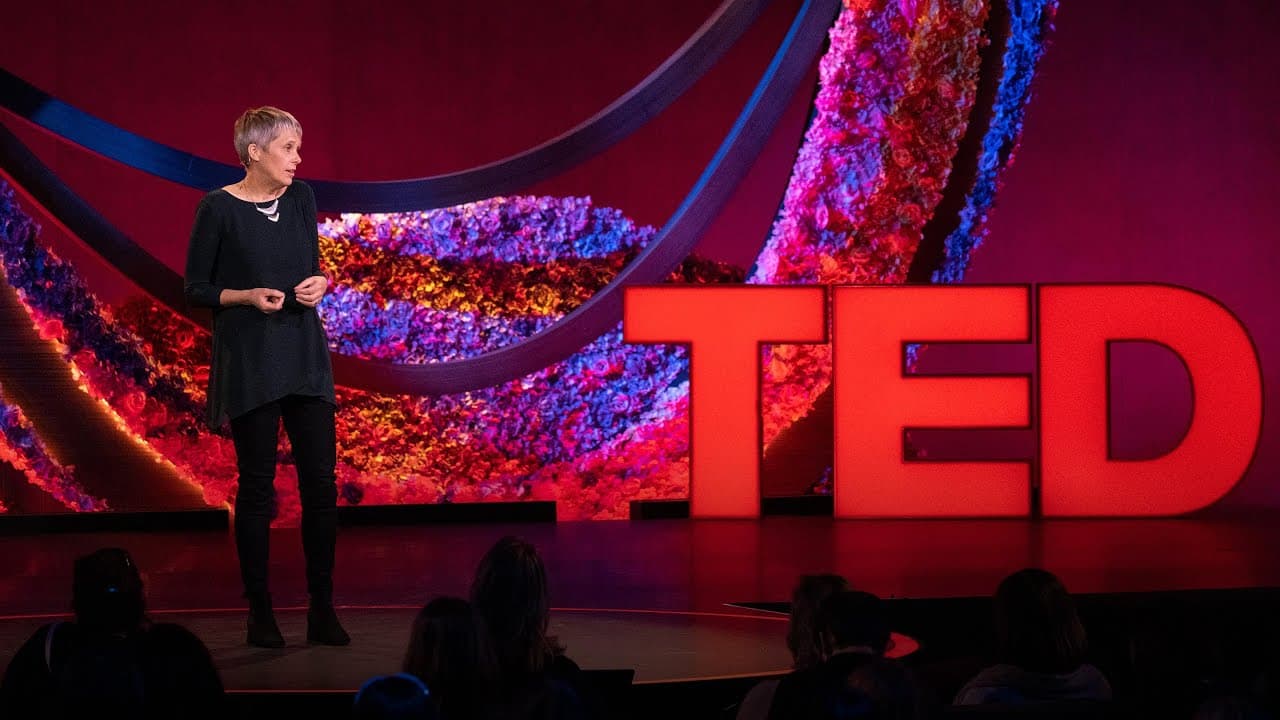
This content explores a radical new technology that enables robots to be created, reproduce, and evolve over time, with the potential to revolutionize robot design and fabrication.
Transcript
Imagine a scientist who wants to send a robot to explore in a faraway place, a place whose geography might be completely unknown and perhaps inhospitable. Now imagine that instead of first designing that robot and sending it off in the hope that it might be suitable, instead, she sends a robot-producing technology that figures out what kind of robo... Read More
Key Insights
- 🤖 Robotics can be designed, reproduced, and evolved using technology, allowing robots to adapt to new surroundings and environments, potentially saving time and effort in designing specialized robots.
- 🌎 Designing robots for unknown environments, such as nuclear reactors or deep ocean trenches, can be challenging, as they may encounter unexpected obstacles or tasks that they are not equipped to handle.
- 🌿 Evolution in nature provides inspiration for evolving robots, as biological species have adapted to thrive in specific environments. This artificial evolution aims to discover designs that may not have been considered by human engineers.
- 🔬 Artificial evolution utilizes three main ingredients: physical variations in individuals, reproduction with inheritance and occasional mutation of traits, and natural selection. These components can be replicated using a mixture of hardware and software.
- 🖨️ A digital blueprint of a robot is created, which describes its brain, body, sensory mechanisms, and means of locomotion. This blueprint can then be turned into a physical robot using 3D printing technology and automated assembly arms.
- 🏫 Newborn robots go through a learning phase in a "kindergarten" to refine their motor skills and adapt their brains to their new bodies.
- 📈 Robots are scored based on their ability to perform a task, and the highest-scoring robots are selected for reproduction. This selective breeding process results in successive generations of robots that continually optimize their form and behavior for their task and environment.
- 💻 A simulation is created, allowing virtual populations of robots to evolve and be tested quickly. The useful traits discovered in simulation can then be applied to the physical robot population, reducing the need for physically producing and testing every robot design.
Install to Summarize YouTube Videos and Get Transcripts
Explore YouTube Video Summarizer or Get YouTube Transcript Extractor
Questions & Answers
Q: What is the purpose of the robot-producing technology being developed by the scientist in the video?
The purpose of the robot-producing technology being developed by the scientist is to enable robots to be created, reproduce, and evolve over long periods of time. This technology aims to design and optimize robots in the environment in which they need to live and work, potentially saving years of wasted effort and producing robots that are uniquely adapted to their surroundings.
Q: How does the scientist propose to design robots for unknown and inhospitable environments?
The scientist proposes to harness the creativity of evolution by creating an artificial version of evolution that allows robots to evolve in a similar manner as biological organisms. By replicating the three ingredients of evolution - variations in physical traits, reproduction with inheritance and occasional mutation, and natural selection - robots can be designed and optimized using a combination of hardware and software.
Q: How is evolving robots different from evolving passive objects?
Evolving robots is more challenging than evolving passive objects because robots need both bodies and brains to make sense of the information in the world around them and translate it into appropriate behaviors. While evolving passive objects like tables only require physical variations and reproduction, robots need to evolve both physically and intellectually for optimal performance in their environment.
Q: What are the three ingredients needed for evolution to occur in robots?
The three ingredients needed for evolution to occur in robots are a population of individuals with physical variations, a reproductive method that allows offspring to inherit traits from their parents and occasionally acquire new ones through mutation, and a means of natural selection. These ingredients can be replicated using a combination of hardware and software to evolve robots over successive generations.
Q: How does the simulation technology assist in the evolutionary design of robots?
The simulation technology allows for the creation of a virtual population of robots inside a computer, where models of robots can be created and tested in seconds rather than hours for physically producing them. This enables scientists to quickly explore the potential of different robot types, shapes, and sizes, and estimate their usefulness before physically making them. Additionally, by allowing physical robots to breed with their virtual counterparts, useful traits discovered in simulation can quickly spread into the physical robot population for further refinement.
Summary & Key Takeaways
-
Scientists are working on a technology that enables robots to be created, reproduced, and evolved over long periods of time, allowing them to adapt to unknown and inhospitable environments.
-
The technology uses artificial evolution, replicating the three ingredients of evolution - physical variations, reproduction, and natural selection - to breed successive generations of robots that are optimized for specific tasks and environments.
-
The process involves designing a digital blueprint of the robot, using 3D printing and automated assembly to create the physical robot, allowing it to refine its skills in a "kindergarten" stage, scoring the robots based on their ability to perform a task, and selectively reproducing the best robots. A digital simulation is also used to quickly explore and test different robot designs.
Read in Other Languages (beta)
Share This Summary 📚
Summarize YouTube Videos and Get Video Transcripts with 1-Click
Try YouTube Summary with ChatGPT & Claude or YouTube Transcript Generator
Explore More Summaries from TED 📚

Summarize YouTube Videos and Get Video Transcripts with 1-Click
Try YouTube Summary with ChatGPT & Claude or YouTube Transcript Generator