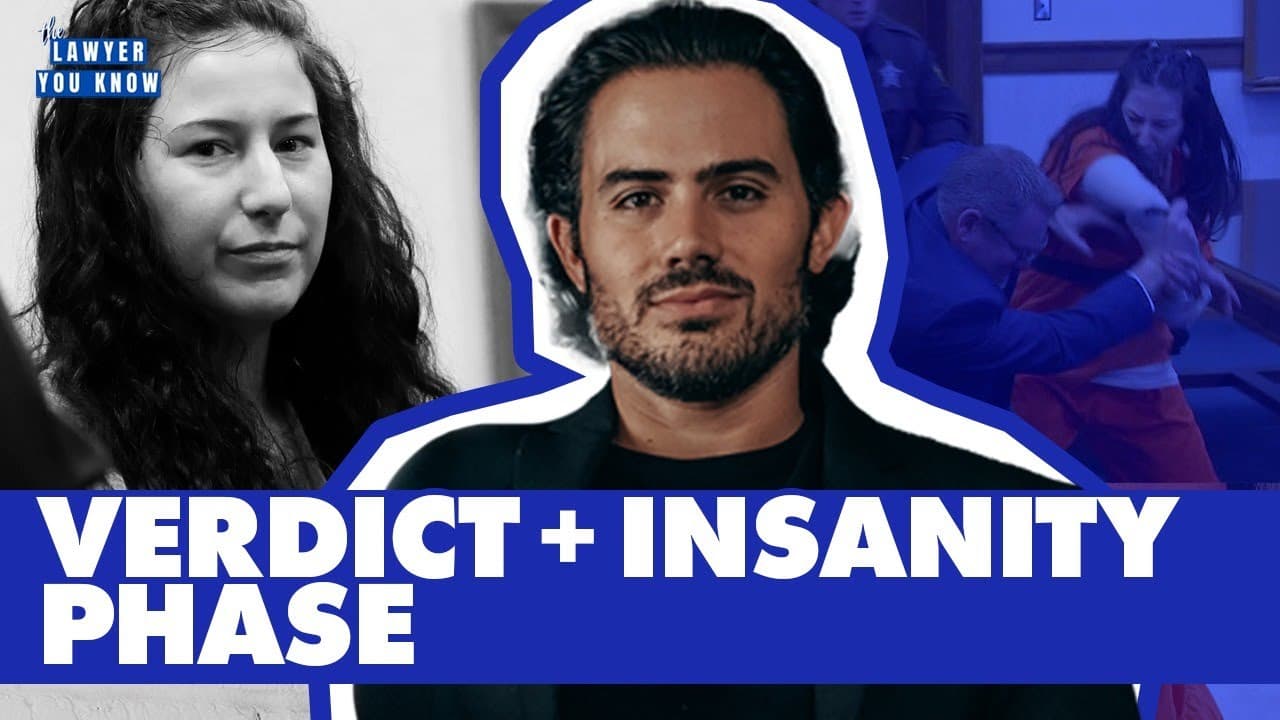
LIVE! Real Lawyer Reacts: Taylor Schabusiness Verdict + Insanity Phase
TL;DR
The verdict of the first phase of the trial finds the defendant guilty, while expert testimony in the second phase focuses on mental disease or defect.
Transcript
foreign what's up everybody welcome back in to another video where we get to hang out and talk about a trial that's going on an unusual one that's got some different procedural uh things happening in it that we haven't seen before at least in the case that we've covered here on YouTube together so in today's video we're going to watch the verdict o... Read More
Key Insights
- 🧘 The defendant's guilty verdict in the first phase of the trial weakens the defense's position in the second phase.
- ❓ The defendant's incriminating interview immediately after the crime disproves the insanity defense.
- ❓ The defense relies on expert testimony to demonstrate the defendant's mental disease or defect, while the state challenges their methodology and conclusions.
Install to Summarize YouTube Videos and Get Transcripts
Explore YouTube Video Summarizer or Get YouTube Transcript Extractor
Questions & Answers
Q: How did the verdict of the first phase of the trial impact the second phase?
The guilty verdict in the first phase sets the stage for the defense to argue the defendant's mental disease or defect as a reason for her not being responsible for the criminal conduct.
Q: What does the defense need to prove in the second phase?
The defense must demonstrate to a reasonable certainty that at the time the crime was committed, the defendant had a mental disease or defect which resulted in her inability to appreciate the wrongfulness of her conduct or conform to the law's requirements.
Q: What role does the interview play in the trial?
The defendant's incriminating interview conducted right after the incident undermines the insanity defense, as she demonstrated knowledge of the details, acknowledged the wrongfulness of her actions, and attempted to conceal the evidence.
Q: How do the expert testimonies differ?
One expert supports the defendant's not guilty by reason of insanity plea, arguing that she lacked substantial capacity to appreciate the wrongfulness of her conduct. Another expert, court-appointed and considered less biased, maintains that the defendant does not have a mental disease or defect that affected her ability to conform to the law.
Summary & Key Takeaways
-
The first phase of the trial resulted in the defendant being found guilty of first-degree intentional homicide, mutilating a corpse, and third-degree sexual assault.
-
The second phase of the trial revolves around determining whether the defendant is not responsible by reason of mental disease or defect.
-
Expert witnesses provide contrasting opinions on the defendant's mental state and its impact on her capacity to understand the wrongfulness of her actions.
Read in Other Languages (beta)
Share This Summary 📚
Summarize YouTube Videos and Get Video Transcripts with 1-Click
Try YouTube Summary with ChatGPT & Claude or YouTube Transcript Generator
Explore More Summaries from Lawyer You Know 📚


Summarize YouTube Videos and Get Video Transcripts with 1-Click
Try YouTube Summary with ChatGPT & Claude or YouTube Transcript Generator